
If you’ve ever wondered if niacinamide helps with acne scars, you’re one of many filling up their search bars with similar questions. Long after breakouts heal, it’s not uncommon for them to leave lingering concerns—like dark spots and uneven texture—that impact skin health and confidence. And when you’re swimming in a sea of brands and trendy, “promising” ingredients, it can be hard to know what to trust.
Here’s the truth: niacinamide is an active ingredient long used in skincare routines, valued for its stability and versatility. It helps strengthen the skin barrier, reduce acne, fade dark spots, and regulate oil production. At Emerge, we believe proper skincare is the foundation of everything—maintaining balance and creating the environment for long-term skin health.
And when combined with a thoughtful, multimodal approach, niacinamide proves to be a strategic component in achieving smoother, more even, and visibly refined skin.
In this guide, we’ll take a closer look at whether niacinamide actually helps with acne scars, where it fits into your regimen, and how to use it effectively. Real results don’t come from DIY hacks and influencer-driven products—they come from medical aesthetics and clinically proven ingredients.
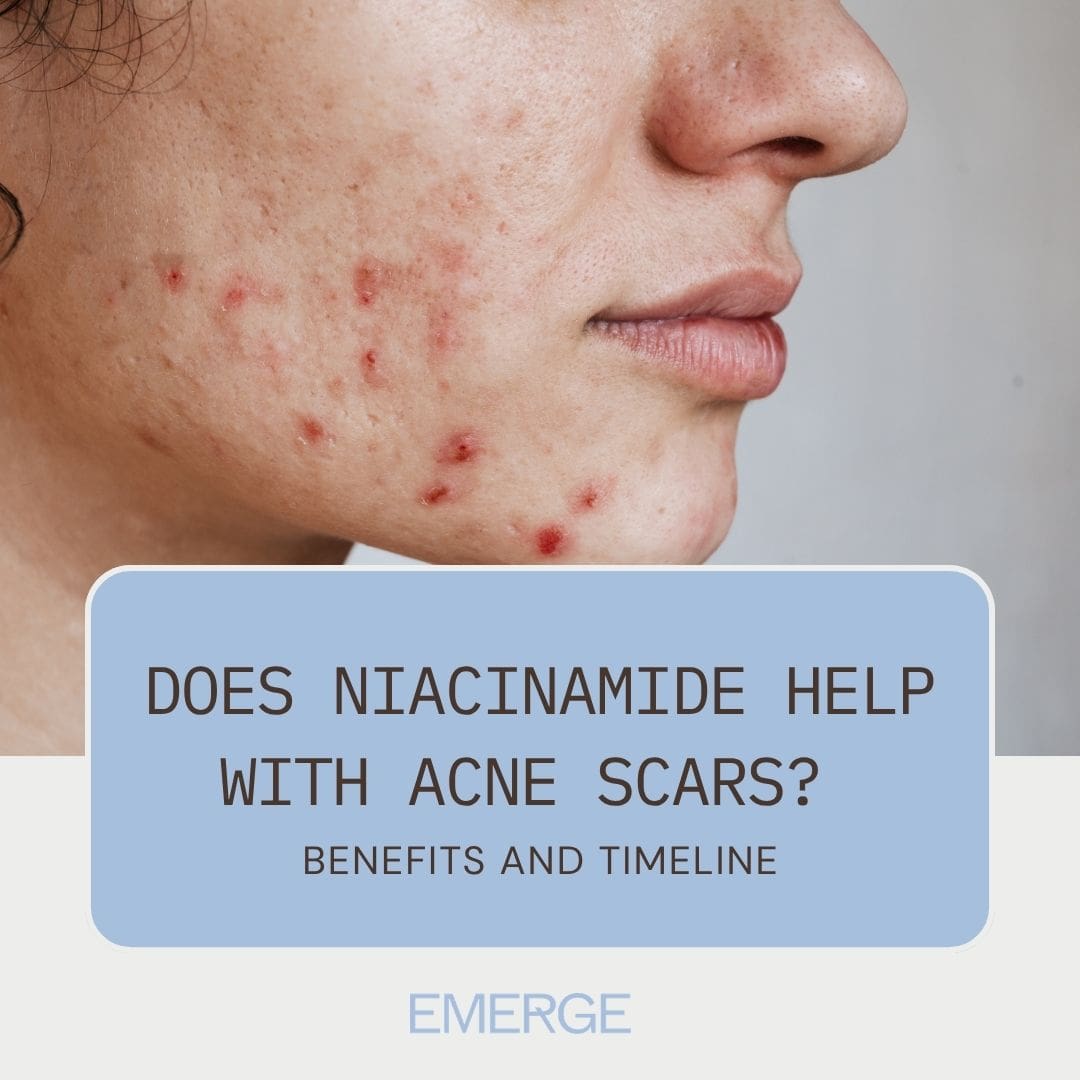
Does Niacinamide Help with Acne Scars? Benefits and Timeline
Niacinamide isn’t a quick-fix for acne scars—no topical product is. It is, however, a strategic, sustainable way to improve skin health over time. When used consistently, it can help visibly refine skin tone, calm irritation, reduce inflammation, and improve hydration.
Ultimately, incorporating a well-formulated, medical-grade niacinamide product into your routine encourages a more proactive skincare routine. And when you combine it with advanced, non-surgical regenerative treatments? That’s the approach that encourages a noticeable, long-lasting difference.
Below, we’ll explore what niacinamide is, what specific benefits it offers, and how it works. We’ll also discuss minimally invasive medical aesthetic procedures that enhance results and improve overall skin health.
Your skin, routine, and treatment deserve a thoughtful, expert-level plan—not guesswork.
What Is Niacinamide?
Niacinamide is a water-soluble form of vitamin B3 (niacin) that plays a key role in maintaining healthy, resilient skin. We’ll cover the benefits of niacinamide in a bit. But for now, here’s exactly how this powerful skincare ingredient works:
- Increases ceramide synthesis. This refers to the biochemical production of ceramides, which play a key role in maintaining the skin barrier and regulating cell turnover. These lipids help form a protective barrier that seals in moisture and protects the skin from irritants.
- Protects against oxidative stress. Oxidative stress is an imbalance between skin-damaging free radicals and the body’s ability to detoxify them. Think: UV rays, pollution, and smoking. Niacinamide neutralizes free radicals and supports the synthesis of nicotinamide adenine dinucleotide (NAD+). In other words, it helps reinforce the skin’s natural defense systems while supporting a more resilient barrier over time.
- Boosts collagen production. Niacinamide stimulates fibroblasts—the connective tissue cells that maintain structural integrity and elasticity. With consistent application, this can increase the expression and synthesis of collagen!
Niacinamide isn’t a trendy ingredient making its rounds across social media. It’s a clinically proven, scientifically validated ingredient that’s highly favored by dermatologists and aesthetic medicine physicians for its benefits.
Is Niacinamide Good for Acne Scars?
Niacinamide can be extremely effective for certain types of acne scars, specifically post-inflammatory hyperpigmentation and red spots. There are a few ways it benefits acne-prone skin and post-breakout dark spots, so let’s break it down.
First things first, niacinamide inhibits the transfer of pigment (melanin), helping to lighten dark spots left behind from acne. It’s also an excellent ingredient for reducing inflammation, which is crucial for preventing deeper depressions.Complemented by stimulated collagen production and regulated oil production, it helps accelerate healing when you do experience breakouts—and prevents new ones from occurring.
That said, it’s important to set realistic expectations.
Niacinamide, while powerful, cannot physically fill in or resurface deep-pitted acne scars. This type of skin concern often requires in-office treatments that meaningfully improve texture. Think: CO2 laser resurfacing and microneedling. Rather than treating niacinamide as the entire solution, consider it a powerful supportive player.
It’s generally suitable for all skin types and tones (including sensitive skin!), helping enhance clarity and pore appearance. However, structural change happens beneath the surface—which is exactly what we target at Emerge Aesthetics.
Dr. Kling, our double-board-certified Emergency Medicine physician, brings surgical expertise to non-surgical aesthetics. With extensive knowledge of anatomy, physiology, and regenerative medicine, she tailors a plan to each client’s unique needs.
If you’re managing deep-pitted scars and aren’t sure what will move the needle, contact the Emerge Office today.
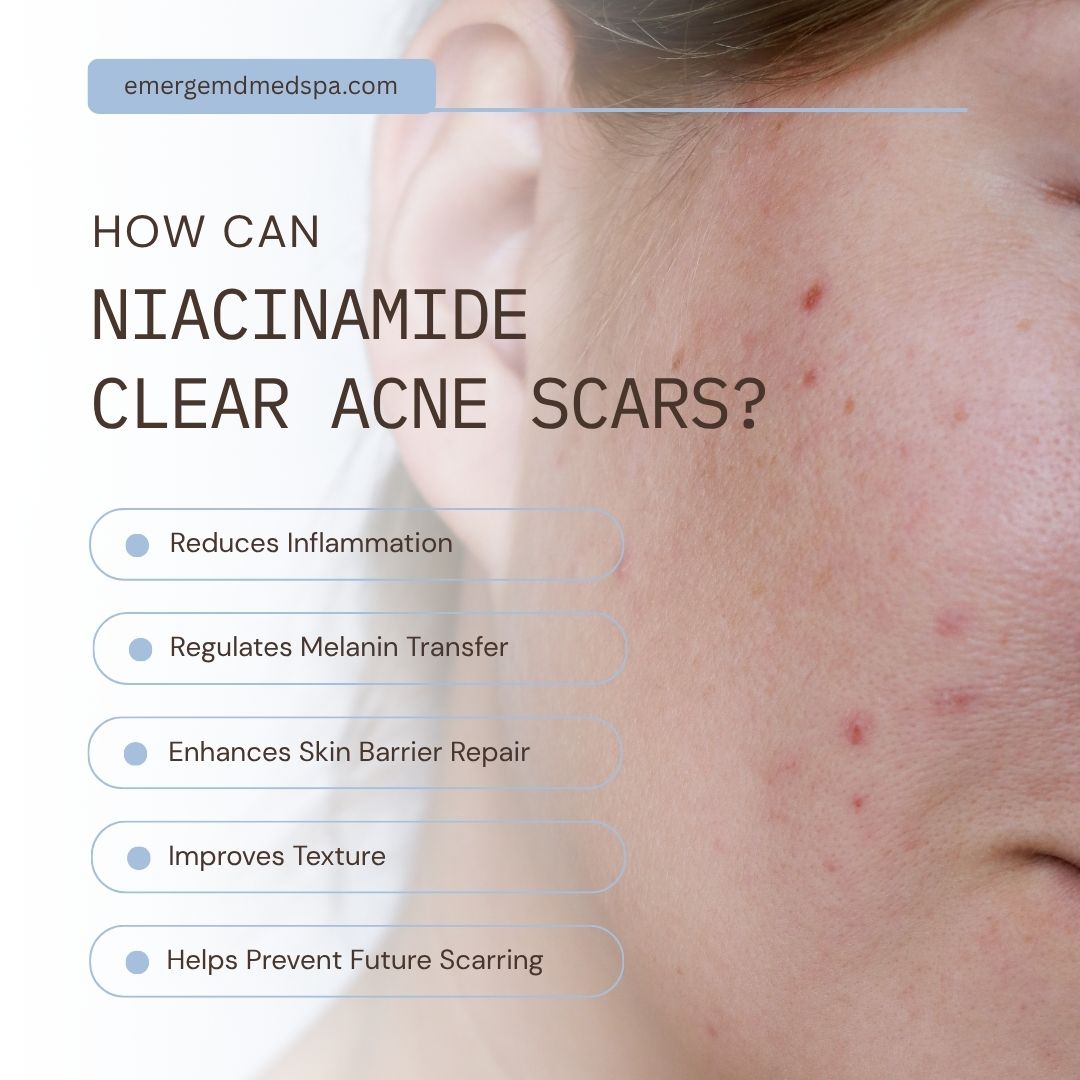
How Can Niacinamide Clear Acne Scars?
Reduces Inflammation
Niacinamide helps reduce inflammation by inhibiting pro-inflammatory cytokines—specialized signaling proteins that amplify the body’s inflammatory response. Not all acne leads to tight, inflamed, or irritated pustules—but a lot do. And getting ahead of that response helps reduce future acne scars.
In addition to cytokines, niacinamide also neutralizes free radicals. Like we mentioned earlier, this isn’t a factor people typically think about day-to-day—but it’s time to start. Free radicals can cause oxidative stress, leading to premature aging, triggering inflammation, and damaging skin cells. Products like niacinamide help prevent this, protecting your skin quality and overall skin health.
Regulates Melanin Transfer
Sometimes, acne scars are accompanied by dark spots—specifically if they’re fresh or occur in darker skin tones. This is known as post-inflammatory hyperpigmentation: a result of melanin transfer triggered by acne, eczema, or trauma. Niacinamide isn’t a cure-all for post-inflammatory hyperpigmentation, but it can regulate melanin transfer.
It does so by inhibiting the transfer of melanosomes from melanocytes to keratinocytes. For fresh acne scars, this interrupts that “delivery” process, reducing the amount of pigment that becomes visible on the skin’s surface. For older acne scars, consistent use (typically 4–8 weeks) of niacinamide breaks down existing hyperpigmentation.
Enhances Skin Barrier Repair
Niacinamide effectively enhances skin barrier repair, which is essential for recovery. The skin barrier functions as your body’s primary shield, protecting your skin against environmental toxins and natural water loss. And here’s the thing: it’s unfortunately incredibly easy to strip your barrier.
Over-exfoliating, harsh ingredients, or environmental stress can all damage the barrier, leading to dryness, irritation, redness, and acne. Niacinamide boosts the production of ceramides and fatty acids, which then strengthen the lipid layer. It also accelerates epidermal turnover, reduces inflammation, and regulates oil production.
In other words? Niacinamide is a powerful, clinically proven ingredient—and its versatility makes it particularly effective in skin barrier protection. If you’re dealing with skin tone irregularities, you can also visit our guide: “How to Reduce Facial Redness: Causes and Treatments.”
Improves Texture
Many factors affect skin texture, including the skin barrier, oil production, and hydration. And ultimately, poor skin texture, commonly a result of acne scarring, can impact everything from how makeup sits on your skin to how you feel when you look in the mirror.
Niacinamide helps strengthen the moisture barrier, regulate sebum production, and accelerate cell turnover—all processes that affect texture. Plus, it helps reduce both current and future acne severity, leading to a more even skin surface over time!
Helps Prevent Future Scarring
As mentioned above, the breakouts you have today can lead to acne scars tomorrow. And as we say at Emerge: prevention is always easier than correction. That goes for acne scars, anti-aging, and skin health. So, when you find an ingredient that helps prevent future scarring? Incorporate it thoughtfully.
Niacinamide is a powerful anti-inflammatory agent that reduces the swelling and redness of current acne. Not only does this improve the appearance of breakouts, but it also minimizes how much damage they cause to surrounding skin. And with its barrier-enhancing, pigment-inhibiting properties, it can speed up healing and reduce the intensity of dark spots.
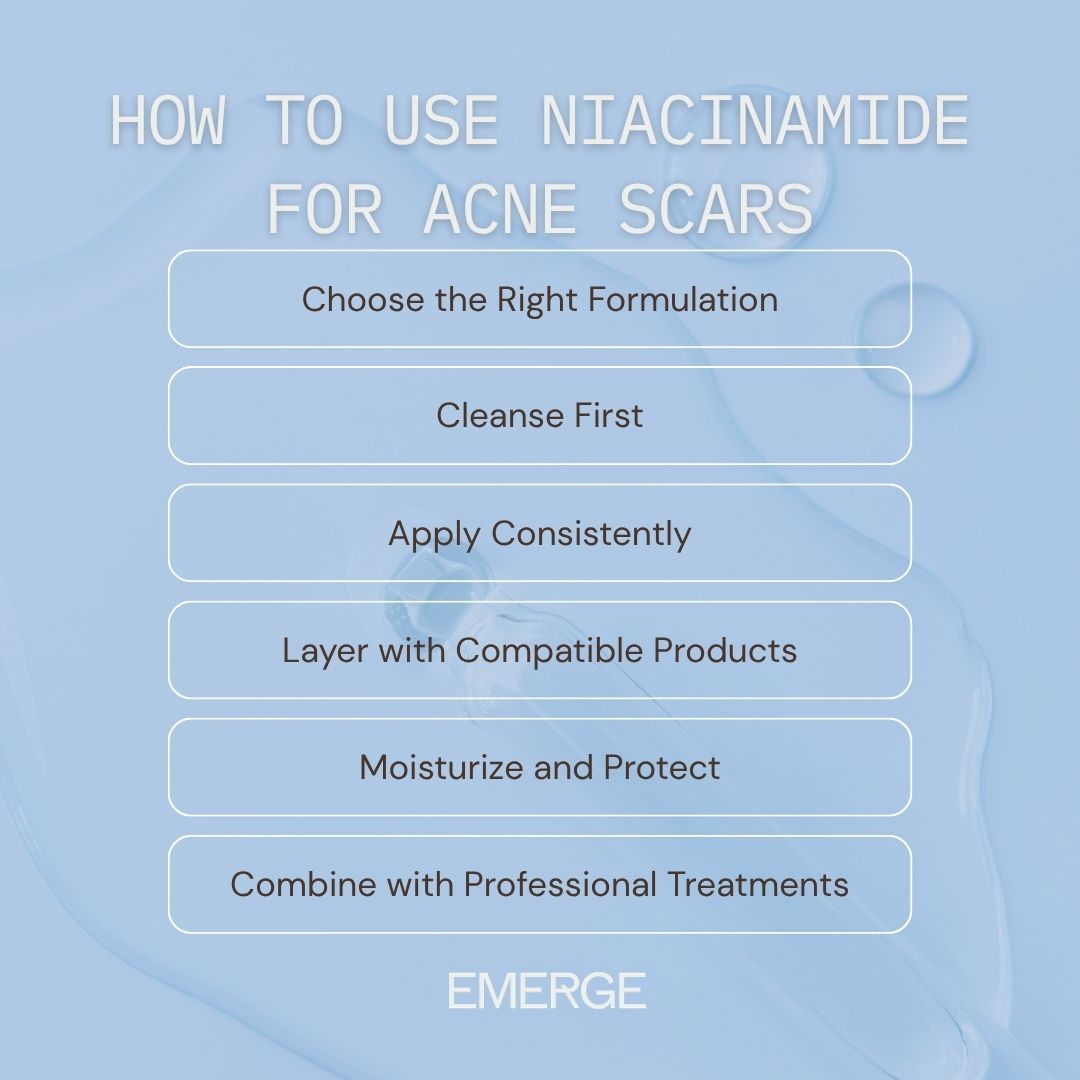
How to Use Niacinamide for Acne Scars
If you haven’t yet, now’s the time to invest in a medical-grade skincare routine. These are products that have proven efficacy, clinical testing, and science-backed ingredients to support their formulas. You can shop Dr. Kling’s curated collection of physician-grade skincare HERE! But we’ll also offer a few specific favorites below.
Let’s talk about the right way to use topical niacinamide for acne scars:
Choose the Right Formulation
The kind of topical niacinamide product you use matters—seriously. Look for serums or creams with 4–10% niacinamide; this is the “sweet spot” for most skin types. We get the thought process behind assuming that higher formulas will produce quicker results, but this isn’t the case for quality skincare.
Anything over 10% can cause irritation, break down the barrier, and result in more acne. And if you’ve never even used niacinamide in your routine before? Start with a lower concentration, patch test it on the inner elbow or behind the ear, and go slow. This is what helps you reduce potential side effects, like irritation or redness.
Want more skincare tips? Visit our guide, “How to Choose Skincare Products,” for expert advice.
Cleanse First
Always apply niacinamide to freshly cleansed, dry skin to maximize absorption. Some skincare products, like hyaluronic acid and glycerin, do work better on damp skin. Niacinamide isn’t one of them. Applying it to a clean, dry surface ensures it penetrates the barrier without potential dilution.
And remember: you don’t need an AM face wash. Most people don’t. Your skin should still be clean from the night before, and washing it in the morning can actually strip it of its natural oils. Look for medical-grade cleansers, like the Alastin Gentle Cleanser, which gently removes environmental pollutants and makeup while calming skin with powerful antioxidants.
Apply Consistently
Consistency is the best treatment—both in skincare and professional regenerative procedures. When you’re consistent in your routine, each “session” builds upon the previous one. That’s what maximizes results.
Because niacinamide is highly tolerable and extremely gentle, it’s generally safe to use it twice a day. For a simple structure, use it in the morning (before SPF!) and at nighttime after you cleanse and tone. And if you’re looking for how long it takes to see improvement, here’s what research says:
- Improved Barrier Function: 1–4 weeks
- Reduced Hyperpigmentation: 4–8 weeks
- Increased elasticity: 8–12 weeks
Good things come to those who give their products and treatments time to work!
Layer with Compatible Products
Layering niacinamide with compatible products can be extremely effective. Depending on the ingredients, you can strengthen the skin barrier, reduce irritation, and boost overall efficacy! However, it’s important to know what to include in your routine—and what to avoid. Here’s a quick list:
What to Use with Niacinamide:
- Hyaluronic Acid: HA acts as a powerful humectant, boosting skin elasticity and reducing the appearance of fine lines. Combined with niacinamide, this duo maximizes hydration and strengthens the skin barrier. We highly recommend Alastin HA (Hyaluronic Acid) Immerse Serum!
- Retinoids: The go-to for anti-aging, retinoids speed up cell turnover, boost collagen production, and reduce inflammation. However, because it can be drying, niacinamide provides hydration and helps calm irritation.
- Vitamin C: This is one of the pillar skincare ingredients, brightening skin, fading dark spots, and protecting skin against UV damage. Combined with niacinamide, they both brighten, protect, and repair skin. Contrary to outdated concerns, you can safely pair vitamin C with niacinamide to enhance overall skin resilience. Protect your investment with Alastin C-Radical Defense Antioxidant Serum!
- Benzoyl Peroxide: An incredibly effective treatment for acne-prone skin, benzoyl peroxide helps kill bacteria on contact. When paired thoughtfully with niacinamide, it can help target breakouts while minimizing potential irritation. Some individuals may experience dryness or sensitivity; consider spacing out applications if needed.
Interested in learning more? Visit our guide, “Retinol vs. Retinoid: Which Is Best for Your Skin?”
What Not to Use with Niacinamide:
- Salicylic Acid: This powerful ingredient exfoliates pores, whereas niacinamide soothes them. While both are individually beneficial, combining them can reduce their efficacy and potentially cause skin irritation.
- Glycolic Acid: Another strong chemical exfoliant, glycolic acid has an acidic pH. Pairing this with niacinamide can neutralize it, making it less effective and the skin more sensitive. Apply it at different times (or in separate routines) to help reduce sensitivity and maintain effectiveness.
- High-Concentration Peels: Professional-grade or high-percentage acids can already push the skin to its limits. Spacing out niacinamide use can help the skin recover more effectively. However, double-check with your physician!
Moisturize and Protect
Even though niacinamide is inherently hydrating, it’s still important to follow up with a medical-grade moisturizer! A lot of the time, those with acne-prone or oily skin may assume that moisturizers just add to oil production. However, this isn’t the case!
Skipping moisturizer can also cause dehydrated skin to produce more oil, which can clog pores and cause breakouts. Look for products like the Alastin Ultra-Nourishing Moisturizer, which calms, nourishes, and hydrates the skin while simultaneously clearing damaged elastin and protecting the barrier against environmental damage.
And, of course, SPF is non-negotiable. Cloudy, winter, snowy, and rainy days all require just as much sunscreen as sunny days do. This is the single most important step in preventing aging and reducing worsening hyperpigmentation. Grab the Alastin Hydratint Pro Mineral Broad Spectrum Sunscreen! It provides UVA/UVB protection, evens and brightens skin tone, and offers long-lasting hydration. (Here’s more on why Dr. Kling recommends tinted SPF!)
Combine with Professional Treatments
Professional treatments are what truly make a difference in reducing the appearance of acne scars. While niacinamide plays an important role in strengthening the skin and supporting overall function, in-office, minimally invasive treatments are what move the needle for texture, depth, and long-term correction.
Consider treatments like:
- CO2 Laser Resurfacing (Read: “The Gold Standard of Renewal: The Fractional CO2 Laser Treatment for Skin Transformation”)
- Microneedling (Read: How Many Microneedling Sessions for Acne Scars?”)
- Collagen-stimulating injectables (Visit: Injectable Services at Emerge Aesthetics)
These procedures work beneath the skin, helping break up scar tissue, improve collagen production, and refine overall skin quality. The result? Smoother, more even skin texture and tone over time.
Remember: multimodal approaches address every layer of the skin—and natural results start with a plan. And when you choose a physician who understands how to formulate strategies and personalized treatment plans, medical aesthetic treatments aren’t just treatments. They’re an investment in self-care.
Learn a little more about treatment options in our post: “Does Botox Help Acne?”
Frequently Asked Questions About Niacinamide for Acne Scars
Can niacinamide cause acne?
Niacinamide is considered non-comedogenic, meaning it doesn’t typically clog pores and cause acne. However, every person is different. Reactions to the ingredient can vary based on formulation and individual skin type.
What to use with niacinamide for acne?
Many different ingredients pair excellently with niacinamide. However, for those targeting acne or acne scars, it pairs particularly well with salicylic acid, retinoids, zinc, and hyaluronic acid. The key is to balance actives and exfoliants without overwhelming the skin.
Does niacinamide and zinc help acne scars?
Niacinamide and zinc are a highly effective combination for reducing acne marks, dark spots, and hyperpigmentation! Together, they help reduce oil production and calm inflammation, two key problem areas for acne-prone skin. However, they do not treat deep depressions in the skin.
Is hyaluronic acid and niacinamide good for acne?
Yes, hyaluronic acid and niacinamide are considered a highly effective combination for acne-prone skin. Together, they help reduce sebum production, minimize the appearance of pores, and kill acne-causing bacteria.
A medical-grade niacinamide can be an effective treatment for helping acne scars—but medical aesthetic treatments move the needle.
Ingredients like niacinamide are scientifically proven to target a number of acne-causing concerns. Think: oil production, inflammation, post-inflammatory hyperpigmentation, and barrier dysfunction. However, they’re just one piece of the puzzle. For deeper, more persistent concerns, advanced treatments can offer more transformative results.
At Emerge Aesthetics, Dr. Kling, a double-board-certified Emergency Medicine physician, doesn’t simply perform treatments. She transforms skin with strategic, multimodal approaches. Because ultimately, dramatic results don’t come from trends—they happen gradually when you follow the plan. Schedule an appointment at Emerge Aesthetics to navigate all of your skin concerns with expert-backed advice.
In the meantime, visit the Emerge blog to learn more about effective treatments and medical-grade skincare! Also, don’t forget to follow the Emerge Aesthetics Instagram, where you’ll find deals, discounts, and daily advice you can’t get anywhere else.