
Acne scars are one of the most common and frustrating skin concerns. Not because they’re impossible to treat, but because people often try to treat them the wrong way.
When people start searching for how many microneedling sessions they need for acne scars, it usually comes after trying to restore the skin at home without seeing real results. Topical products, like medical-grade vitamin C and retinoids, are incredibly effective. They can reduce discoloration and improve overall skin health—but they have a ceiling. They can only do so much. This is why it’s important to treat them as part of a broader, multimodal approach rather than as the entire solution.
Minimally invasive, non-surgical medical aesthetic treatments work within the skin. Microneedling, specifically, uses fine needles to trigger the body’s natural healing abilities, helping stimulate collagen production. As a result, it gradually rebuilds areas of indentation and uneven texture. This isn’t a trendy social media hack—it’s a clinically backed treatment with years of research to support it.
So, if you’re one of the many Googling: How many microneedling sessions for acne scars?, you’ve come to the right place. In today’s post, we’re exploring what microneedling is, how it helps acne scars, how the procedure works, and what you can expect over time.

How Many Microneedling Sessions for Acne Scars? What to Expect
Acne scars aren’t just skin deep. They’re structural—not superficial. Because the damage extends deeper into the dermis, the scar tissue alters the skin’s surface texture, disrupting how light reflects and how shadows scatter. Here’s why this happens:
- With acne scars, collagen reproduction is inconsistent. This results in thicker collagen bundles rather than a smooth, basketweave pattern.
- Because scar tissue contains fewer oil and sweat glands, it’s harder for those areas to maintain hydration. That additional dryness contributes to a duller appearance.
- Scar tissue naturally has fewer elastic fibers, making the skin look thinner and feel tighter.
Ultimately, volume loss doesn’t just affect how your face photographs or looks under bright lighting. It affects the way you feel when you look in the mirror. At Emerge Aesthetics, Dr. Kling understands those unique challenges—and that’s why she’s so passionate about the benefits of microneedling. (If she wasn’t… Would Dr. Kling apply microneedling treatments on herself?)
Microneedling is a widely used treatment for improving skin texture and acne scars across different skin types. But here’s what most people don’t realize: it’s not a one-and-done treatment. Most patients require multiple sessions spaced several weeks apart. Collagen and elastin production takes time—and the healing process is gradual. (Psstt… that’s a good thing!)
The exact number of sessions someone needs can depend on the type of acne scar, their unique biology, and whether they want to combine additional treatments… more on that in a second. Most importantly, though? Find a qualified skincare professional who tailors a treatment plan to your unique needs. Medical aesthetics isn’t universal—it’s deeply personal, and your multimodal approach should reflect that.
What Is Microneedling?
Microneedling is a minimally invasive procedure that uses fine, sterile needles to create controlled microinjuries in the skin. While it may sound intense, it’s extremely strategic—and safe. These microinjuries trigger the body’s natural healing process, which stimulates the production of collagen and elastin.
And that’s the key. Collagen is like scaffolding. Structurally, it’s the building block that keeps your skin strong, resilient, and elastic. Visually? It’s responsible for a firmer, plumper, and smoother complexion. But once that collagen becomes damaged, as it does with acne scarring, topical treatments alone won’t repair it.
Microneedling works from within, remodeling the skin from the inside out.
Think of it like a workout. You don’t gain stronger muscles by applying a muscle-enhancing cream. (Though we’re sure there’s a whole TikTok niche dedicated to something similar.) You build them by creating controlled stress, allowing the body to repair and rebuild. The same concept applies to microneedling.
As the body produces additional collagen, it gradually improves the depth and texture of acne scars. And that isn’t just temporarily beneficial; this procedure creates a sustainable, long-term impact.
Does Microneedling Help Acne Scars?
So… Does microneedling help with acne scars? The short answer: Yes. Long answer: Here’s how:
Most people consider microneedling for concerns such as fine lines and wrinkles, hyperpigmentation, and skin laxity. However, it’s equally as effective for treating acne scars, including:
- Ice Pick Scars: Narrow, deep scars that resemble small, V-shaped pits with steep sides.
- Boxcar Scars: A U-shaped depression accompanied by vertical edges, a flat sunken base, and wider, steeper sides.
- Rolling Scar: Broad, shallow depressions with sloping, waving edges.
These specific scars respond well to microneedling treatments because they’re directly related to collagen loss and structural integrity. And, fortunately, that’s exactly what microneedling can help address!
However, and this is an important one: the best results come from a trained provider using professional-grade equipment. AKA, don’t even think about adding that at-home microneedling device to your cart. (Listen to Dr. Kling talk about why the type of microneedling device matters for efficacy, safety, and skin health!)
Last thing before we talk about howmicroneedling works: longevity. Multimodality is key for long-lasting, natural-looking, sustainable results. The most efficient treatment plans combine microneedling with other procedures and regenerative therapies that support skin quality, structure, and overall function. Think: platelet-rich plasma (PRP), exosomes, CO2 laser resurfacing, and even Botox.
If you’re curious to learn more, we have a few patient-focused guides that explain these benefits perfectly. Read “Microneedling vs. Laser” and “What Is Microneedling with PRP?”
Dr. Kling, our double board-certified medical emergency medicine physician at Emerge, brings surgical expertise to non-surgical aesthetics. She doesn’t just say yes to the treatments for the sake of doing more. She analyzes each individual’s anatomy, biology, skin quality, and ultimate goal to create a comprehensive, personalized treatment plan.
Science, expertise, and multimodality are what move the needle—not guesswork.
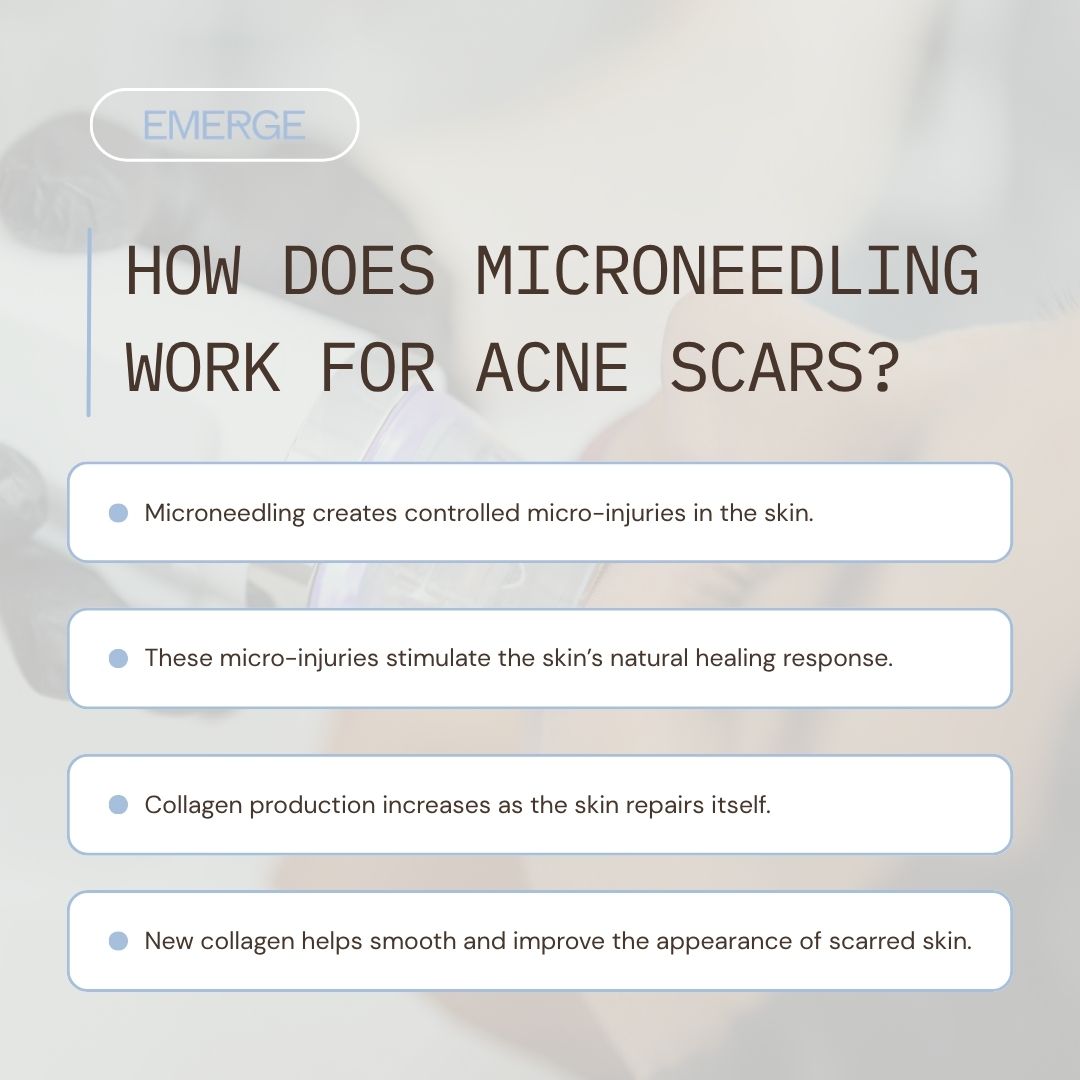
How Does Microneedling Work for Acne Scars?
Microneedling creates controlled micro-injuries in the skin.
A professional microneedling device uses fine, sterile needles to create precise, controlled microinjuries in the skin. If you read “needles” and got a little nervous, don’t be! It’s not nearly as intimidating as it sounds. You can even visit our Instagram to see what you can expect during microneedling treatment!
For acne scarring, the needle will often penetrate slightly deeper into the dermal layers where scar tissue resides. While we won’t ever say a procedure is painless, we utilize plenty of tools to minimize discomfort—like a topical numbing medication! To ease your anxiety, know this: Dr. Kling has never had a patient discontinue microneedling treatments due to discomfort.
These micro-injuries stimulate the skin’s natural healing response.
After your microneedling session, the body immediately enters repair mode. Those microscopic injuries trigger your body’s natural wound healing response, releasing growth factors and stimulating fibroblasts to produce collagen and elastin.
How does this relate to scar tissue, exactly? The fine needles break down old, disorganized collagen fibers, essentially remodeling the scar. Then, those dense collagen bundles that create uneven texture gradually soften and reorganize. This isn’t immediate, though—microneedling results are gradual—which is what comes next.
Collagen production increases as the skin repairs itself.
Whenever your skin is injured, your body produces new collagen and elastin. This is an inside-out process, meaning that collagen synthesis works on the structural level. It’s not a primer that will smooth over gaps or a quick, minorly visible topical fix. It’s a true remodeling of the skin.
At the same time, this is why we mentioned earlier that you shouldn’t follow a one-and-done approach to microneedling treatments. While one session can visibly improve acne scarring, optimal results require multiple sessions for continued collagen production and skin remodeling.
New collagen helps smooth and improve the appearance of scarred skin.
As that new collagen forms and fills in uneven areas, the skin becomes more uniform. Texture and tone improve. Indentations appear less noticeable. Firmness and elasticity even increase. Over time, you get a more balanced appearance, reduced stiffness surrounding older scars, and healthier, smoother skin.
This is also why we often recommend enhancing results with additional treatments. This way, you’re not just stimulating repair—you’re optimizing it.
How Many Microneedling Sessions Are Needed for Acne Scars?
Every person is different, from their biology and anatomy to their skin type and unique goals. However, in general, most people require multiple sessions to achieve noticeable improvements. Consistency is the true secret for total, long-lasting rejuvenation. Here’s a more specific breakdown:
- Mild Acne Scars: 3–4 sessions
- Moderate Acne Scars: 4–6 sessions
- Deep or Severe Acne Scars: 6–8 sessions
Most of the time, your provider will space these sessions out around 4–6 weeks apart. This gives your skin enough time to heal, for collagen production to become more visible, and ensures each treatment builds on the progress of the last.
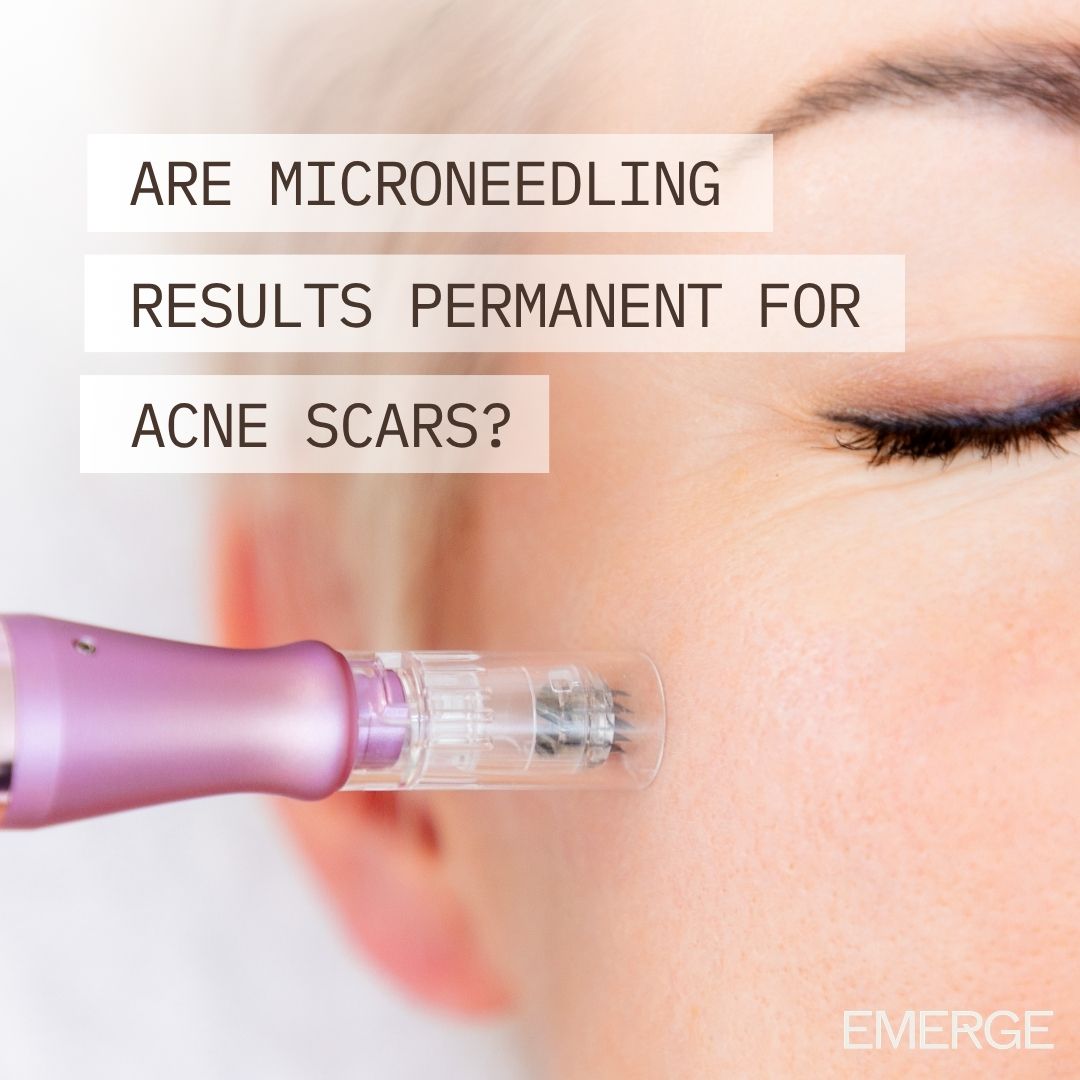
Are Microneedling Results Permanent for Acne Scars?
Microneedling results can be long-lasting because the treatment stimulates new collagen formation. Once you build that collagen, it doesn’t just disappear overnight. However, permanent isn’t necessarily the right word here. And it’s not the goal either.
Microneedling can undeniably result in smoother skin, a reduced appearance of fine lines, wrinkles, and acne scars, improved texture, and enhanced tone. It’s an excellent treatment for supporting long-term skin health. However…
We’re always aging. Always. More specifically, by 25, we lose up to 1–1.5% of collagen a year. That said, maintenance is essential—and that spans across medical aesthetics. There’s not one single magic treatment; the best results come from addressing every layer of aging: skin, structure, and cellular function.
So, always use medical-grade skincare—especially SPF, retinoids, and vitamin C. (We highly recommend Alastin C-Radical Defense Antioxidant Serum and Alastin Hydratint Pro Mineral Broad Spectrum Sunscreen.) Support your body through exercise, nutrition, and proper sleep routines. And, most importantly, stay consistent with a multimodal treatment plan.
The decisions you make now become the skin you live in later.
Microneedling can be a highly effective, minimally invasive treatment for various types of acne scars.
If you take anything away from this post, let it be this: microneedling works—but it works best when it’s done strategically. The device used matters. The level of consistency matters. Your routine outside of your Medspa matters. And, most importantly, the physician who performs your treatments matters.
Aesthetic medicine is still medicine—and Dr. Kling demonstrates that in every treatment plan she touches. The goal isn’t to look different; it’s to look restored, rejuvenated, and revived. You deserve to love how you look in the mirror, and your skin deserves strategy. Schedule your consultation with Emerge Aesthetics today to target your skin concerns for real, lasting results.
Interested in learning more about non-surgical medical aesthetics? Visit the Emerge blog, where we discuss procedures, treatments, and enhancements through a patient-focused approach. And don’t forget to follow us on Instagram—this is where you’ll find all of the most exciting updates, discounts, and deals.