
Botox has been a pillar in medical aesthetics for years, often recognized for smoothing wrinkles and softening expression lines. But lately, a new question has been circulating on the internet: Does Botox help acne? You’ve probably seen the claims and questioned the hype, wondering if Botox can truly shrink pores and completely clear breakouts.
Naturally, it causes confusion. We’re constantly swimming in a sea of brands, overpromised products, and underwhelming results, and it’s hard to differentiate the truth from the trends. So here’s the real answer: Botox can help acne—but not in the way you think. The truth is slightly more nuanced than a simple yes-or-no.
While Botox wasn’t designed to treat acne, certain mechanisms influence oil production in the skin. However, just like with any non-surgical regenerative treatment, the key is understanding how the science works. That’s why today, we’re breaking down whether Botox can help acne and what it realistically does in the skin.
At Emerge Aesthetics, we lead by science, anatomy, biology, and evidence-based results—and that’s the kind of care your skin deserves.
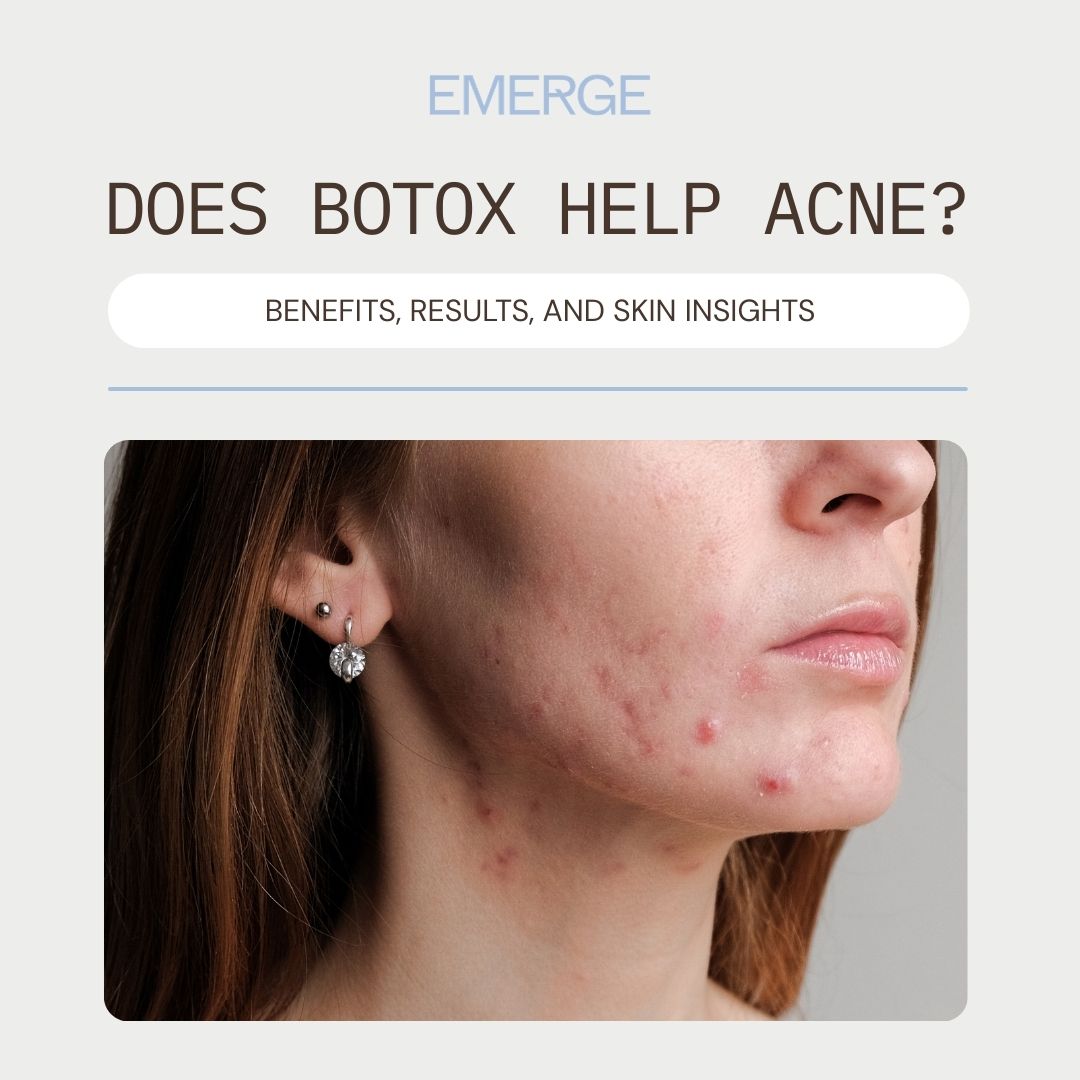
Does Botox Help Acne? Benefits, Results, and Skin Insights
Before we can discuss whether Botox injections can help acne, we first have to discuss what acne is—and what typically causes it.
Everyone produces sebum, a natural oily substance released by the body’s sebaceous glands to protect and moisturize the skin. Composed of things like triglycerides, fatty acids, and squalane, sebum is actually extremely important. It protects the barrier from environmental damage and keeps skin flexible, elastic, and plump.
But here’s the problem: not everyone experiences “normal” sebum production. Excess sebum—a major driver of oily skin—can mix with dead skin cells, plug the hair follicles, and create the perfect environment for bacteria to thrive. This is where you’ll hear terms like clogged pores, blackheads, whiteheads, and inflammatory acne.
With this in mind, no, Botox doesn’t directly treat acne. It doesn’t eliminate acne-causing bacteria, dissolve dead skin cells, or address inflammation pathways that drive breakouts. It’s not supposed to. Botox can, however, indirectly reduce sebum production by blocking the acetylcholine nerve signals that stimulate oil-producing cells.
Key word: indirectly. Botox is an excellent premium injectable treatment for achieving a refreshed, youthful, revived appearance—but it isn’t a primary acne treatment. This is where a blend of medical-grade skincare, additional minimally invasive procedures, and a tailored multimodal treatment plan shines.
At Emerge, we address the skin, the structure, and cellular function. By blending medical science with aesthetic artistry, Dr. Kling brings surgical expertise to non-surgical aesthetics. The result? Natural-looking results grounded in your unique anatomy. Healthy skin isn’t magic—it’s medicine.
What Is Botox?
Botox is a purified form of botulinum toxin, an FDA-approved neurotoxin, that works by blocking nerve signals that stimulate muscle contraction. More specifically, Botox works by temporarily inhibiting the release of acetylcholine, the neurotransmitter that signals facial muscles to contract.
Lots of technical, scientific talk here, so let’s break it down. Every time you make an expression, smile, laugh, show confusion, or look frustrated, those facial muscles pull and tug on the skin. Over time, that constant friction causes folds, lines, and contours—what we refer to as dynamic wrinkles. Think: crow’s feet, nasolabial folds, forehead lines, and lip lines.
After injection, Botox temporarily relaxes the targeted muscles, reducing those repetitive movements that create wrinkles. Enter: smooth, relaxed, and youthful skin—without looking frozen or overdone.
Botox isn’t just used for aesthetic purposes, though. It’s FDA-approved for conditions like hyperhidrosis (excessive sweating), migraines, and even muscle disorders. It’s safe, effective, and has been used medicinally for years. In terms of non-surgical cosmetic procedures? It’s an excellent addition to a more comprehensive multimodal treatment plan.
Interested in learning more? Review our patient-focused guide, “How Long Does Botox Take to Work?”
What Is Botox Used For?
Botox isn’t a one-size-fits-all treatment—it’s incredibly useful in both cosmetic and medical environments. Because of this, Botox wears many hats and is used to:
- Smooth the dynamic wrinkles caused by repetitive facial muscle movement
- Treat excessive sweating (hyperhidrosis)
- Manage chronic migraines
- Treat certain muscle disorders and spasms
- Non-surgical neck lifts
- Prevent fine lines and wrinkles from forming
- Enhance lip shape with a “lip flip”
- Lift the brows
- Contour the nose
- Refine facial expressions while maintaining natural movement
As we mentioned before, Botox is FDA-approved for many different unique circumstances. Acne treatment? Not one of them. However, that doesn’t mean it can’t indirectly reduce oil production—especially for people with persistent oily skin. Let’s dig a little deeper into the science.
How Does Botox Reduce Oil Production?
We’ve said this 100 times already, and we’ll keep repeating it because education matters in regenerative aesthetics. Botox is not FDA-approved for the treatment of acne. Oil production, clogged pores, bacterial activity, and inflammation are the common drivers of acne. And, generally speaking, Botox isn’t designed to treat these conditions. It cannot dissolve dead skin cells or treat inflamed follicles.
Acne is better addressed with a comprehensive treatment plan that includes medical-grade skincare, prescription treatments, laser therapy, or regenerative procedures designed to improve skin quality.
If that’swhat you’re interested in? We highly recommend checking out the benefits of fractional CO2 laser treatments. (Seriously, just ask Dr. Kling how much she loves CO2 lasers. But prepare to schedule your next appointment—it truly is that good.)
That said, Botox may not directly treat acne, but there is scientific evidence suggesting it may influence oil production.
Nerve signals partially regulate sebaceous glands—including acetylcholine (ACh). You know, the neurotransmitter that Botox targets. This means that elevated levels of ACh can stimulate sebaceous gland activity, increasing sebum production and contributing to oily skin. See where we’re going here?
When Botox is injected superficially (also known as Baby Botox or “Microbotox”), it can affect those signals in nearby oil glands. In certain cases, this can reduce sebum production, decrease overall skin oiliness, and lower the likelihood of clogged pores. It’s a cycle.
If the skin produces less oil, there may be fewer chances for that oil to clog pores and cause breakouts. However, the effects vary depending on the client’s skin type, the injection technique, and the overall skin biology. This is why it’s an injectable anti-aging treatment, not an acne solution.
What Is Micro Botox for Acne?
If you’ve been considering Botox treatments, then you’ve probably heard the term “Micro Botox” or “Baby Botox.” For those with persistent oily skin, this is where you’ll want to really pay attention.
Micro Botox (Microtox) is a technique that uses highly diluted botulinum toxin injections administered very superficially into the skin. Because the injections target areas near oil glands, this treatment can improve skin texture, smooth the complexion, and, in some cases, reduce oil production.
The goal isn’t necessarily to relax facial muscles; it’s to subtly enhance skin quality.
Micro Botox treatments are different from traditional Botox treatments in many ways. For example, microtox:
- Uses smaller, diluted doses of botulinum toxin
- Prioritizes injections in the superficial skin layers
- Focuses on skin texture rather than muscle movement
Naturally, micro Botox generally has fewer, milder side effects because it’s diluted and doesn’t target the deeper muscles. This means it’s an easy, effective treatment you can get on your lunch break or after an errand run, without having to hide out indoors.
Nonetheless, Microtox is not a cure-all. If you want to reduce the appearance of pores, target acne scars, or minimize breakouts, Botox and micro Botox aren’t total solutions. CO2 laser treatments help. Microneedling with PRP helps. Non-skincare habits, like physical activity, good sleep, and eating enough protein, help. And working with a compassionate advocate and double-board-certified emergency medicine physician with a wealth of expertise in aesthetic medicine helps.
Your skin, your goals, and your treatment plan deserve expert hands and science-based advice—not guesswork and false promises.
Who Is a Good Candidate for Botox for Acne?
So no, Botox isn’t typically used to treat acne. However, certain people may benefit from the indirect oil-control effects when they receive Botox treatments from an experienced physician. One who knows what they’re doing and uses science and anatomy to support their work. Good candidates for Botox for acne include:
- Adults with persistent oily skin
- Patients already receiving Botox treatments for cosmetic reasons
- People who cannot tolerate specific topical treatments
- Clients hoping for subtle, natural improvements in skin texture and quality, alongside wrinkle reduction
Every patient is different—from their biology to their goals. And it takes a licensed, skillful physician to inform patients of which treatments can actually make a difference for their skin concerns. If you’re interested in reducing oil production and targeting acne, contact Emerge Aesthetics! We’d love to help you set up a consultation with Dr. Kling so you can receive a facial analysis and a customized, curated treatment plan.
Targeting acne shouldn’t be left to chance. Heal your skin with a multimodal treatment plan that addresses skin quality at every level.
We understand how time-consuming, exhausting, and complex dealing with acne can be. Not only does it make you reevaluate your entire skincare routine, but it also affects how you feel when you look in the mirror. While Botox may indirectly reduce oil production, there are many powerful, minimally invasive treatments and products designed to target acne. The answer—and the treatment(s)—are just one call to Emerge away.
With Dr. Kling, you can skip skin gimmicks and focus on strategy. Because with a thoughtful, comprehensive approach, you can achieve everything you didn’t think was possible. Schedule your appointment at Emerge to discuss non-surgical, minimally invasive treatments that can move the needle on your goals.
Until then, make sure to read over the Emerge Aesthetics blog for patient-focused, easy-to-understand guides about skincare and medical aesthetics. We break down complex topics in approachable terms—no more 3-hour TikTok deep dives or 2 am Google searches. And, of course, keep up with our Instagram page for all of the latest updates, deals, and discounts.