
If you’ve ever spent hours scrolling through social media posts and Google searches trying to figure out how to reduce facial redness, you’re not alone. It happens to everyone—we just experience it differently.
Some people experience occasional flushing, typically after exercise, during high-stress moments, or in hot or cold weather. Totally normal and often subsides within a few minutes to an hour. For others? Facial redness can be persistent, random, and without an obvious trigger. It’ll generally show up across the cheeks, nose, and chin, and lingers long enough to affect confidence.
Here’s the thing: lingering facial redness actually isn’t random. It can actually be a silent sign of skin barrier damage, inflammation, or environmental and internal triggers. But that doesn’t mean you have to just live with it!
In this post, we’re breaking down practical, realistic ways to reduce facial redness. We’ll talk about whether it’s normal, what causes it, what helps it, and daily steps you can take to prevent future flare-ups. At Emerge Aesthetics, we approach skin health the same way we approach non-surgical treatments: with science, strategy, and a long-term plan. Good skin days are just a simple scroll away.
How to Reduce Facial Redness: Causes and Treatments
At one point or another, we’ve all experienced facial flushing. And we’re sure you have your go-to quick fixes for it! Ice rollers, green-tinted primers, hydrocortisone cream—everyone treats skin irritation differently. But here’s something people don’t talk about enough: multimodal approaches are essential.
Actually, Dr. Kling discusses the importance of multimodality in health and aesthetics over on our Instagram. If you want to lose weight, you combine dieting and exercise. If you want to improve collagen production and skin texture, you would schedule microneedling with CO2 laser treatments. The same process works for redness and sensitive skin.
Redness often signals that something beneath the surface is “off.” Most of the time, it’s linked to inflammation or a compromised skin barrier. Sometimes, it’s linked to health conditions. However, this is where people unintentionally make the problem worse. Quick fixes or aggressive treatments that promise redness-free results can actually increase sensitivity.
Think: strong actives, harsh physical exfoliants, and overly complicated 20-step routines. Rather than reduce redness, these factors can actually trigger or intensify it. Then you’re stuck in this same confusing cycle of trying to improve your skin health.
The key here? Understanding the trigger and choosing supportive, medical-grade products or tools that support real, long-term relief. This is why physician-guided skincare matters—and why high-quality skincare is the foundation of everything we do here at Emerge.
Is Facial Redness Normal?
The short answer? Sometimes.
Temporary facial redness, often referred to as flushing, is a common skin reaction. In fact, most of us can count on our faces becoming red after exercise, heat or cold exposure, alcohol consumption, emotional stress, or spicy foods. It’s a physiological process when blood vessels expand, increasing blood flow in response to stimulation. Completely normal and generally expected.
But here’s the difference: mild facial redness tends to fade within minutes. Redness that lasts for longer than 30 minutes, persists, or is accompanied by sensitivity and irritation may indicate underlying skin conditions. Some common causes for persistent facial redness include:
- Rosacea
- Sun damage
- Eczema (atopic dermatitis)
- Contact dermatitis
- Allergic reaction to a skincare product
- Chronic skin irritation
All are treatable with medical, science-backed advice. That said, it’s worth discussing with a board-certified dermatologist or physician-led aesthetic provider. For example, Dr. Kling, our board-certified Emergency Medicine physician here at Emerge, provides surgical expertise to non-surgical aesthetics. With a commitment to multimodal treatment plans and multifaceted approaches, she doesn’t just chase quick fixes—she works with strategy and solutions.
Before we discuss what causes facial redness—and how to calm it—make sure to check out our guide: “How to Choose the Right Skincare Products.” This can serve as a helpful starting point for evaluating your current routine.
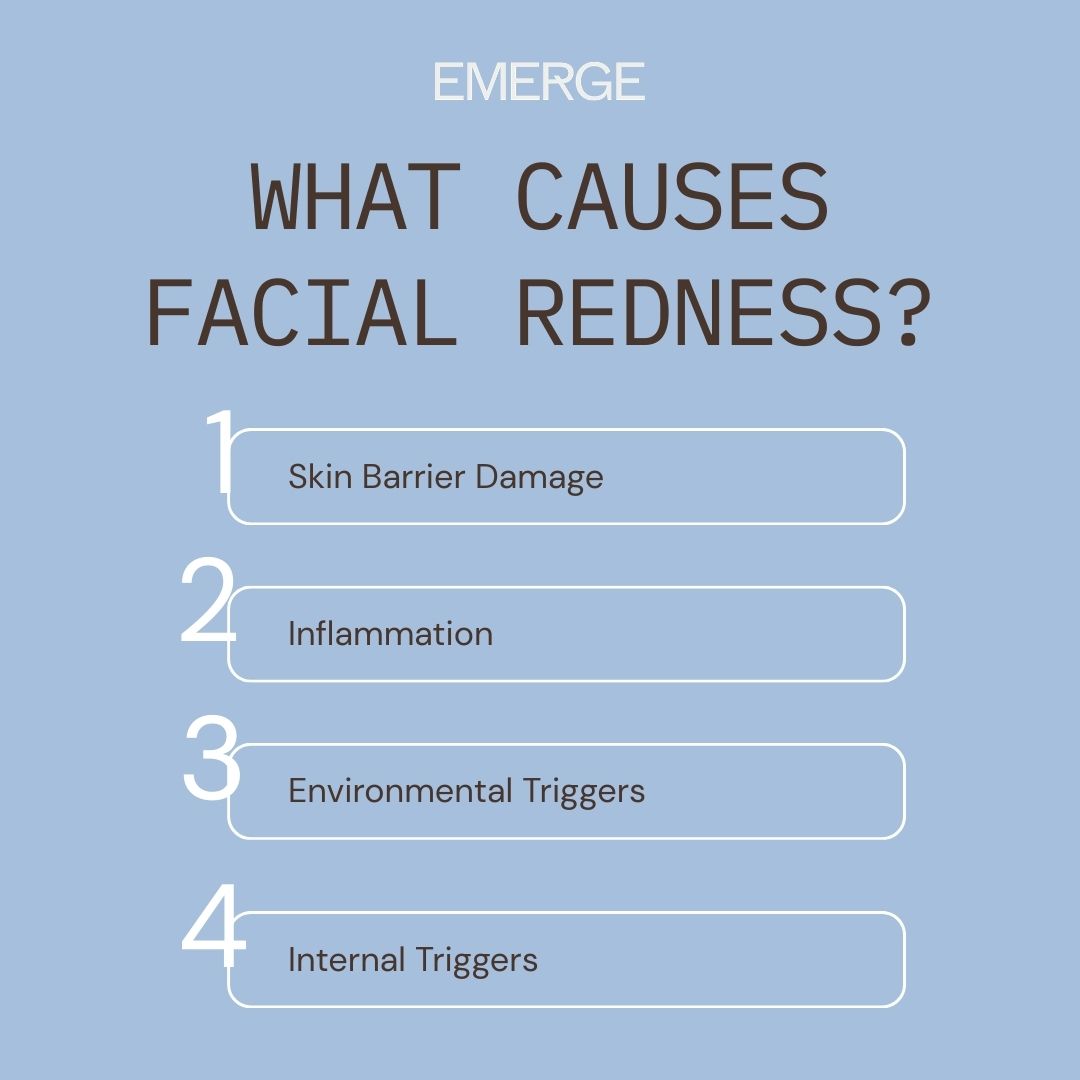
What Causes Facial Redness?
Skin Barrier Damage
Your skin barrier is like your body’s primary defense mechanism. It keeps moisture in while keeping environmental threats out. A healthy barrier is also what gives you a soft, plump, hydrated complexion.
So if you’re over-exfoliating, using harsh cleansers, or piling on active ingredients, you may be stripping your skin, over-shedding cells, and disrupting your barrier. As a result, your skin won’t be able to maintain hydration or protection, allowing environmental stressors to penetrate deeper and trigger inflammation, redness, and sensitivity.
Sometimes, more is just more, and overdoing it doesn’t necessarily result in clear skin. If the examples we gave sound a lot like your routine, it’s time to reevaluate. Reducing exfoliation frequency and focusing on barrier repair can make a significant difference.
Inflammation
Inflammation is another major contributor to facial redness. We talked earlier about how facial redness results from blood vessels dilating in response to stimulation. Commonly, these blood vessels shrink back down, reducing redness and irritation. However, this same process happens when the immune system responds to irritation.
This can happen with several common skin conditions, including:
- Acne
- Rosacea
- Allergic reactions
- Contact or atopic dermatitis
- UV damage
Along with redness, you may notice symptoms like sensitivity, swelling, itchiness, or irritation. Still common, just slightly more frustrating to deal with. In this case, calming inflammation becomes top priority—and we’ll explore a few solutions below.
Environmental Triggers
Your environment plays a significant role in your skin health, which we discuss in our fall skincare routine post! UV radiation, air pollution, climate shifts, blue light, healing or cooling systems, hot showers—these can all play a role in facial redness.
When you’re exposed to these stressors daily, your skin bears the burden. This is especially true if you have a weakened skin barrier or don’t use the proper products to reduce environmental irritation. Not only can it worsen skin conditions that cause redness, but it can also be the main driver of flushing.
Internal Triggers
Not all redness starts on the surface. Sometimes, internal factors can be the driving force. The process is still the same—blood vessels widen to increase blood flow—but the trigger is different. Common internal triggers that can lead to redness on your face include:
- Stress hormones
- Diet sensitivities
- Alcohol consumption
- Certain health conditions
- Specific medications
Let’s circle back to prioritizing a multimodal approach. Because, yes, that can also mean managing internal factors. When you track down what’s triggering your skin to react, you can choose the right medical-grade products more effectively. You can also make any necessary adjustments to support your skin health inside and out.
What Can Help with Facial Redness?
When it comes to reducing facial redness, it’s important to prioritize ingredients backed by science, research, and results. And when it feels like you’re swimming in a sea of brands, influencer recommendations, and trendy skincare promises, it can be hard to know what actually works.
Here are the top ingredients that, when combined with a multimodal approach, are proven to calm inflammation, support the skin barrier, and improve facial redness over time:
Vitamin C
If you know anything about Dr. Kling, you know how seriously she takes her vitamin C. Often considered one of her three pillars of skincare, topical vitamin C is fantastic for reducing facial redness. It’s an effective, potent antioxidant that neutralizes free radicals, strengthens the skin barrier, and treats UV damage.
Vitamin C also inhibits tyrosinase, one of the first enzymes responsible for melanin production. Essentially, tyrosinase is what leads to hyperpigmentation—think sunspots, age spots, and acne-induced dark spots. Adding this ingredient to your routine can help give you calm, even, and irritant-free skin.
How to use: Apply Alastin C-Radical Defense Antioxidant Serum in the morning after cleaning and toning, but before moisturizing and sunscreen. Start with an every-other-day application, allowing your skin to build tolerance.
Nicacinamide
One of the most versatile active skincare ingredients, niacinamide is an extremely effective multifunctional treatment for facial redness. When you’re dealing with stuff like chronic acne, UV damage, or a compromised skin barrier, you often have higher levels of cytokines.
While necessary in small amounts, excessive levels of pro-inflammatory cytokines can lead to inflammation, accelerated aging, and worsening dermatitis. Niacinamide, with its anti-inflammatory properties, is shown to inhibit those cytokines. This helps calm irritation from acne, rosacea, and even environmental damage.
On top of that, niacinamide can help regulate oil production, reduce water loss, and boost ceramide production.
How to use: Use it after cleansing and toning but before moisturizing. Start with one application a day, and increase to morning and nighttime use if your skin can tolerate it. Avoid mixing it with highly acidic products, like pure vitamin C or AHAs and BHAs.
Not sure which product to start with? Look into Skinceuticals P-TIOX! Its benefits extend far beyond reduced redness.
Related: Does Niacinamide Help with Acne Scars?
Centella Asiatica
Centella asiatica, also called “Cica,” is a nutrient-rich botanical extract that soothes, calms, and repairs the skin. With a handful of active compounds, cica reduces inflammation and redness associated with acne flares or side effects from overuse of powerful actives. That’s not all it does, though.
Cica can also promote collagen synthesis, support the barrier’s essential lipids, and protect against environmental stressors. For those with sensitive or reactive skin, it can be a powerful addition to your daily skincare routine, helping reduce redness and improve overall skin health. Start with LumEnvy Glass Skin Hydration Masks, a bio-cellulose facial sheet mask rich in antioxidants that soothe, protect, and support the skin.
How to use: In the morning, apply centella asiatica in a thin layer for irritation relief and barrier protection. At nighttime, apply a heavier layer to support skin renewal. Apply it 1–2 times daily after exfoliation, or whenever the skin feels dry, itchy, or inflamed. Avoid using it with retinoids, AHAs, BHAs, and pure vitamin C.
Azelaic Acid
If you’re dealing with rosacea- and acne-related inflammation, azelaic acid may be a necessary addition to your routine. This active ingredient inhibits the skin’s danger sensors, known as Toll-like receptors (TLRs), that are generally overactive in red, inflamed skin. At the same time, it calms, soothes, and reduces redness and sensitivity.
In addition to calming facial redness, azelaic acid also gently increases cell turnover without stripping the barrier. That means it’s a more forgiving exfoliant, especially compared to harsh scrubs. For those unsure where to start, Skinceuticals Phyto A+ Brightening Treatment is an oil-free, lightweight moisturizer that blends alpha arbutin, azelaic acid, and a Phyto botanical blend to soothe, calm, and visibly reduce redness.
How to use: Apply a thin layer to clean, dry skin once daily before moisturizing. You can use it in morning or nighttime routines, but it pairs especially well with vitamin C in the morning. Avoid using it with benzoyl peroxide, retinoids, or high-strength BHAs and AHAs.
Ceramides
Ceramides are lipids that naturally make up approximately 50% of the skin barrier. They act as the glue between skin cells, forming a watertight seal that maintains moisture and prevents the penetration of environmental irritants. As we age, though, our ceramide levels decline—and our barrier feels it.
Ceramide-rich products, like serums or moisturizers, help restore the barrier. They also reduce water loss caused by triggers like pollution, harsh temperatures, and allergens. Remember: a strong barrier is the key to healthy, resilient skin. With a protected, lipid-rich surface, skin becomes less reactive, red, and inflamed.
How to use: You can use a ceramide cleanser, which you would apply directly after removing makeup or daily buildup. If you’re using serums, apply them after your toner and before your moisturizer. And for moisturizer, use it as the final step in your routine. While ceramides generally pair well with most ingredients, AHAs, BHAs, and retinoids can decrease their potency.
Medical-grade skincare will always outperform trendier alternatives. For a lipid-enriched cream that’s proven to restore the skin barrier and support natural self-repair, try Skinceuticals Triple Lipid Restore.
Oat Extract
Oat extract contains avenanthramides—a group of natural anti-inflammatory, anti-itching, and antioxidant compounds. It also contains beta-glucan, a fiber that strengthens the skin barrier and reduces symptoms of atopic dermatitis. Together, these powerful factors lock in moisture, increase hydration, and maintain the skin’s natural pH.
Because it’s a powerful anti-inflammatory, oat extract effectively reduces redness, itchiness, and irritation from acne and eczema. That’s why whenever people get sunburnt, they’re told to take an oatmeal bath! It’s an excellent soothing ingredient for calming redness and sensitivity.
How to use: Because oat extract is so rich and hydrating, look for it in moisturizers, making it the last step in your skincare routine. Avoid combining it with AHAs, BHAs, benzoyl peroxide, or retinoids. Otherwise, the extract loses potency.
Green Tea
Green tea contains a high concentration of polyphenols, an antioxidant-rich compound that protects skin against cell damage and inflammation. For red, irritated skin, this is like hitting the skincare gold mine. These compounds reduce inflammation, soothe irritation, and protect the barrier against environmental irritants.
Alongside that, green tea also reduces sebum secretion (oil production), which may also contribute to acne and inflammation. And thanks to the natural caffeine in green tea, it can also help shrink blood vessels, decreasing redness and puffiness.
How to use: For facial redness, apply green tea twice daily after cleansing and before moisturizing. For maximum benefit, look for the ingredient in serums, cleansers, or toners. You can also use it with retinoids and hyaluronic acid! Just skip it on the days you’re using AHAs or BHAs.
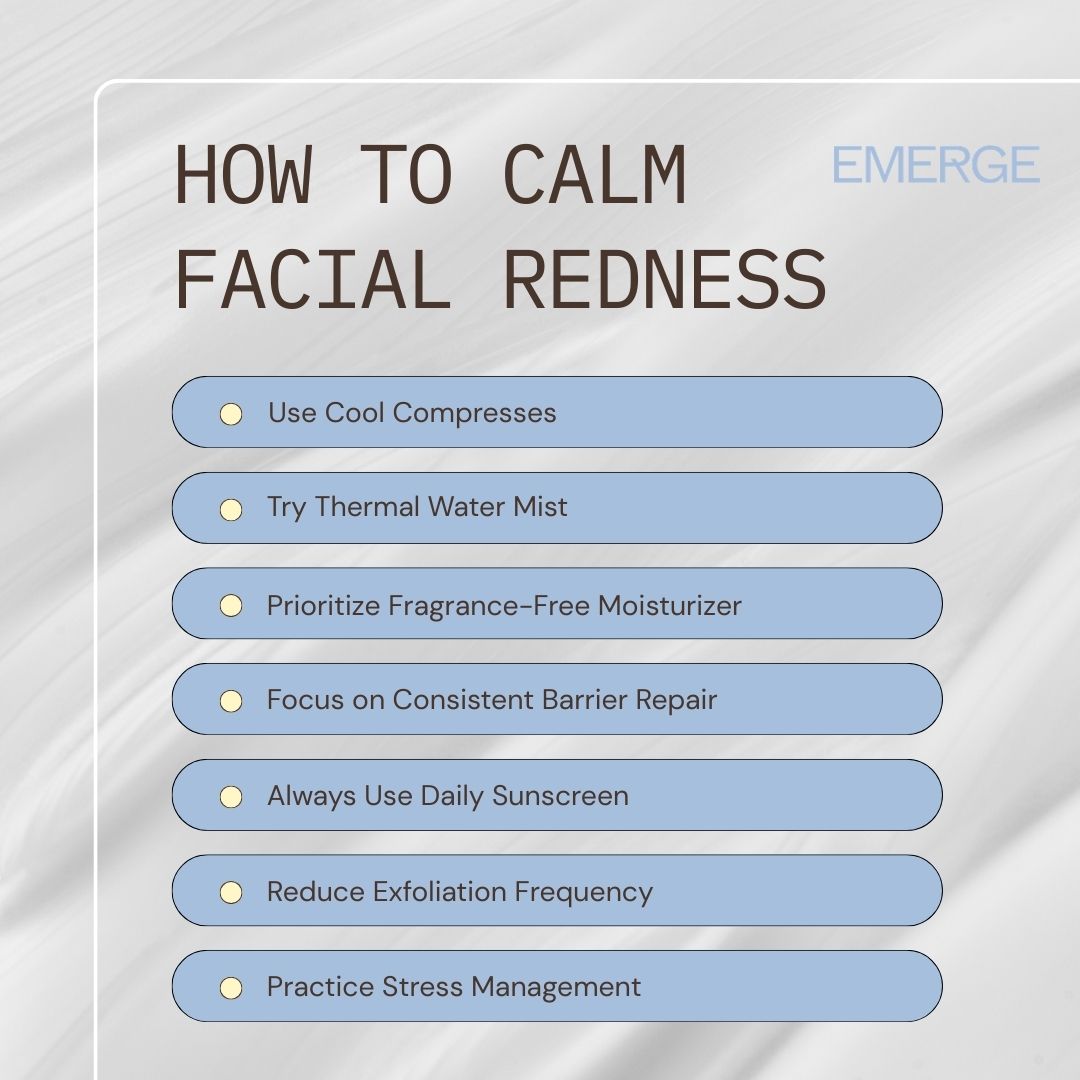
How to Calm Facial Redness
Use Cool Compresses
For quick, temporary relief, ice rollers, chilled gel masks, and damp, cool cloths can all be promising solutions. Colder temperatures cause blood vessels near the skin’s surface to constrict, reducing inflammation and redness. It can also slow nerve activity, reducing itchiness and pain with skin irritation. Just don’t use it for longer than 30 minutes—and never apply ice directly to the skin. (This can lead to ice burns! Ironic, but a real thing.)
Try Thermal Water Mist
Thermal water mist isn’t the same as tap water in a spray bottle—it’s a little more strategic than that. Instead, it’s natural, mineral-rich water from hot springs that’s packed with calcium, magnesium, and silicates. It’s an effective, quick hydration boost that cools surface heat and calms inflammation. With regular use, it can be a beneficial addition to a multimodal approach for restoring the skin barrier and reducing reactivity.
Prioritize Fragrance-Free Moisturizer
Fragrance is one of the most common causes of skin irritation and contact dermatitis—and brands put it in everything. Watermelon-scented toners, fragrant vanilla moisturizers, and sweet-smelling cleansers sound nice, but they’re awful for your skin. Instead, switch to fragrance-free products that reduce the risk of inflammation, redness, and barrier damage.
Focus on Consistent Barrier Repair
Repairing your barrier takes time, patience, and consistency. Just as with any treatment for skin quality, you’ll see the best results when you maintain a routine. And even though we said it earlier, we’ll say it again: more doesn’t mean better. A minimalist routine with medical-grade ingredients will support your skin and your barrier much more effectively.
Always Use Daily Sunscreen
Sun protection is absolutely non-negotiable for reducing facial redness. (Actually, it’s non-negotiable regardless of what skin conditions you’re managing.) UV is one of the main drivers of inflammation, skin barrier damage, rosacea-related flushing, and persistent redness. And even though you may not further damage now, you definitely will later. Prevention is always easier than correction.
Use a broad-spectrum SPF and reapply at least every 2 hours—more if you’re sweating or swimming. If you want a general sunscreen, we highly recommend Skinceuticals Daily Brightening UV Defense Sunscreen with SPF 30. It’s a lightweight, moisturizing, residue-free formula that protects skin from UV rays and helps reduce existing discoloration.
Or, if you want something a little more comprehensive, reach for Alastin Hydratint Pro Mineral Broad Spectrum Sunscreen. It provides UVA/UVB sun protection with SPF 36, evens and brightens skin, and is water resistant for 40 minutes. You can learn more about why Dr. Kling recommends a tinted SPF over on our Instagram.
Reduce Exfoliation Frequency
You can still remove dead skin cells without harsh, disruptive scrubs or ingredients. You can also still achieve a healthy, radiant complexion without incorporating exfoliation into your routine every night. Instead, use a gentle, soothing product, like Skinceuticals Glycolic Renewal Cleanser, a couple of times a week. If your skin starts to feel stripped, tight, irritated, or dry? You know it’s time for a break.
Practice Stress Management
Stress hormones directly influence how our skin looks and feels. It’s easier said than done, but when you manage your stress levels, you can also effectively manage skin health. Exercise, sleep, and relaxation techniques can help regulate the body’s inflammatory response, reducing internal triggers that prompt facial redness.
Reduce facial redness with medical-grade skincare, a multimodal approach, and physician-led guidance.
Even though facial redness is incredibly common, that doesn’t mean it should be ignored. More often than not, it’s your skin’s way of telling you that something is off—whether internally or externally. Understanding the cause is the first step to repair; using the right ingredients, products, and techniques is what provides lasting relief. You deserve to love how you look in the mirror, in pictures, and in your everyday life.
At Emerge Aesthetics, our philosophy is simple: skin health is medicine—not marketing. The best results don’t come from quick fixes or trendy products. They come from strategy. As Dr. Kling often reminds patients, real rejuvenation is the result of a multimodal approach—which is exactly what she creates for each client that comes in. Schedule your appointment with Emerge Aesthetics to create a tailored treatment plan that aligns with your goals, anatomy, and biology.
If you want to learn more about non-surgical rejuvenative aesthetic procedures, visit our Treatments page! We also offer comprehensive, patient-focused breakdowns of treatments, skincare concerns, and product guides over on the Emerge blog. Also, don’t forget to follow us on Instagram! We’re constantly posting deals, discounts, and updates you don’t want to miss.