
When people are trying to improve uneven skin texture, they’re often willing to try everything. Social media gimmicks, influencer-sponsored products, viral solutions that prioritize hype over high-quality results—the list goes on. Unfortunately, a lot of these techniques overpromise and underdeliver, leaving you with a damaged skin barrier, irritation, and, yes, uneven skin texture.
The truth is, uneven skin texture is one of the most common skin concerns across all age groups—it doesn’t discriminate. And it shows up differently for everyone. Some experience rough patches and enlarged pores, while others experience acne scars and dullness. But here’s the good news: you can improve uneven skin texture over time… but not with shortcuts.
The answer to uneven skin texture isn’t one product or routine. It’s a multimodal approach that blends medical aesthetic treatments, skincare products, and lifestyle adjustments that address skin quality from every angle. And it’s not nearly as complicated as it may seem.
In this post, we’re breaking down exactly how to even out skin texture and support healthier, smoother-looking skin. No magic tricks or unrealistic routines—just expert-backed guidance that offers real results for real skin, long-term.
How to Even Out Skin Texture: Causes, Treatments, and Tips
Smoother skin isn’t just about appearance; it’s a reflection of a person’s overall skin health. Things like chronic acne, sensitivity, and premature aging, which can result in uneven skin texture, rarely occur without a cause. So the first step? Figuring out the culprit behind the symptoms.
Ultimately, an uneven texture can make skin look dull, tired, or even aged. And we get it, it can feel like you’re trying everything with little to no results. But here’s what people often forget: a high-quality skincare routine IS important. (It’s the foundation of everything we do here at Emerge Aesthetics!) But topical products can only take you so far.
Long-term improvement requires a combination of at-home care and professional treatments that target deeper layers of the skin. Because the goal isn’t JUST smoother skin—it’s a healthier, more functional barrier.
Let’s talk about what uneven skin texture is, what causes it, whether it can be fixed, and science-backed techniques that can actually make a difference.
What Is Uneven Skin Texture?
Uneven skin texture refers to a non-smooth skin surface caused by roughness, bumps, dry patches, congestion, or enlarged pores. You’ll generally see people, brands, and products define it with words like textured, rough, dry, bumpy, or dull.
While an uneven texture can cause a lack of radiance, it’s important to separate it from skin tone. These are two different problem areas in the skin-health world. Skin tone refers to the color of the skin, influenced by factors like dark spots and discoloration. Skin texture, on the other hand, refers to how the skin feels.
Are there deep pits from acne scars? Raised bumps that disrupt light reflection and create shadows? THAT’S what people with uneven skin texture notice—and want to fix. It’s not just the surface that’s causing unevenness; it’s what’s happening beneath.
At Emerge, our goal isn’t to overload you with products, complicate your routine, or even “do treatments.” It’s to provide compassionate, personalized care with an intentional, results-driven approach. (Also, what we like to call the “Emerge Ethos!”) Our double-board-certified Emergency Medicine physician, Dr. Kling, focuses on regeneration and refinement—not rushed results.
That said, we prioritize strategy, science, and skin quality because that’s what makes a real difference. Here’s everything that can be causing your uneven texture and everything that can improve it:
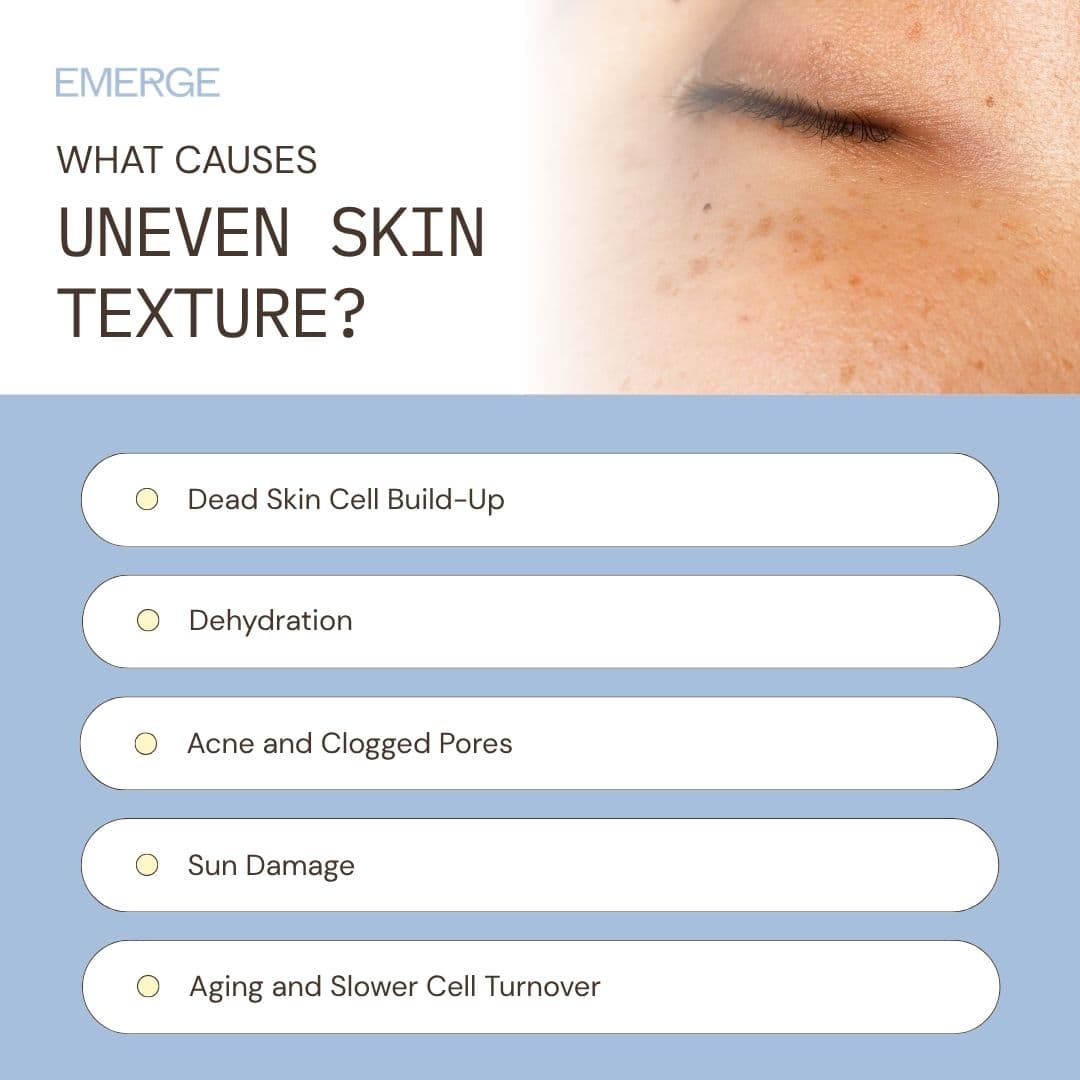
What Causes Uneven Skin Texture?
Dead Skin Cell Build-Up
Your skin undergoes constant skin cell renewal, a 28-40 day cycle in which the body produces new skin cells in the deeper epidermal layers. This is essential to the skin barrier, preventing build-up, enabling skin repair, and promoting a more youthful complexion.
But for some people, their skin doesn’t follow that average cycle. Factors like age, sun damage, hormonal shifts, and lifestyle habits can slow cell turnover, leading to a buildup of dead skin cells. This leads to a rough, uneven layer that can make even healthy skin look dull and textured.
Dehydration
Dry skin lacks the moisture needed to maintain a smooth surface. In other words, hydration is a significant contributor to how your skin looks and feels. The stratum corneum (outer layer of skin) is made up of corneocytes—skin cells that help maintain structure and protect against environmental damage. When the skin is dehydrated (which can still happen even if it appears oily), those skin cells shrink, making the surface appear rough, dull, and uneven.
EVERY part of your body needs water. That said, when you’re not hydrated, the body prioritizes that water for essential functions like circulation, organ function, and cellular repair. Your skin falls to the back burner, becoming more vulnerable to dryness and uneven texture.
From there, fine lines and wrinkles become more pronounced, the skin can lose plumpness, and the moisture barrier can become compromised. In other words, if you’re not fueling your body with H2O, your texture shows it.
Read our post “How to Treat Dry Skin on Your Face” for more tips.
Acne and Clogged Pores
Breakouts and clogged pores are major contributors to uneven skin texture. Regardless of the type, acne is a result of trapped oil, bacteria, and dead skin cells. This leads to bumps, (chronic) inflammation, and a potentially damaged barrier and structure.
Persistent pore blockage can stretch hair follicles, making them appear wider and coarser. Severe, inflamed acne—like papules, pustules, or cysts—takes this a step further. They often break down collagen, leading to a damaged barrier and lasting scars that can disrupt texture.
Sun Damage
You may love the look of a fresh, sun-kissed tan, but your skin definitely doesn’t. UV radiation can begin to damage skin in as little as 5–10 minutes—especially for those with lighter tones. And the thing most people overlook? The damage adds up over time.
That sunburn you got 3 summers ago didn’t just fade and disappear. It’s part of cumulative UV damage that continues to affect your skin’s structure and texture. And we don’t mean through sun spots, freckles, or excess melanin (though that matters, too). UV exposure thickens the outer layer of skin, slows natural renewal, and contributes to premature aging.
In other words, it breaks down collagen and elastin, destroys the moisture barrier, and completely disrupts texture.
Aging and Slower Cell Turnover
As you age, the rate of cell turnover decreases. It’s natural, normal, and expected. But that’s why Dr. Kling emphasizes the importance of preventative treatments! Prevention is always easier than correction.
In young adulthood, the skin regeneration process happens around every 28 days. The older we get, the more it gradually slows. By our 30s to 40s, that renewal process occurs approximately every 45–60 days, leading to slower exfoliation, dead skin cell buildup, and uneven texture.
Can Uneven Skin Texture Be Fixed?
You can absolutely improve uneven skin texture—with the right approach. And the “right approach” is a combination of consistency, care, and a blend of treatments.
As we mentioned earlier, skincare products have their limitations. They’re essential for improving skin quality and maintaining a healthy barrier, but most topical products only affect the surface. The problem with that? Uneven skin texture typically originates deeper within the skin.
For concerns such as acne scarring, collagen loss, or persistent roughness, professional treatments are often necessary to achieve real structural change. This is where strategy—and proper professional guidance—matters. When you schedule a consultation with Dr. Kling, she brings surgical expertise to non-surgical aesthetics. She analyzes your skin, anatomy, and structural integrity to create a treatment plan that supports long-term skin health and visible improvement.
This isn’t marketing—it’s medicine. Here’s everything you need to know about how to even skin texture:
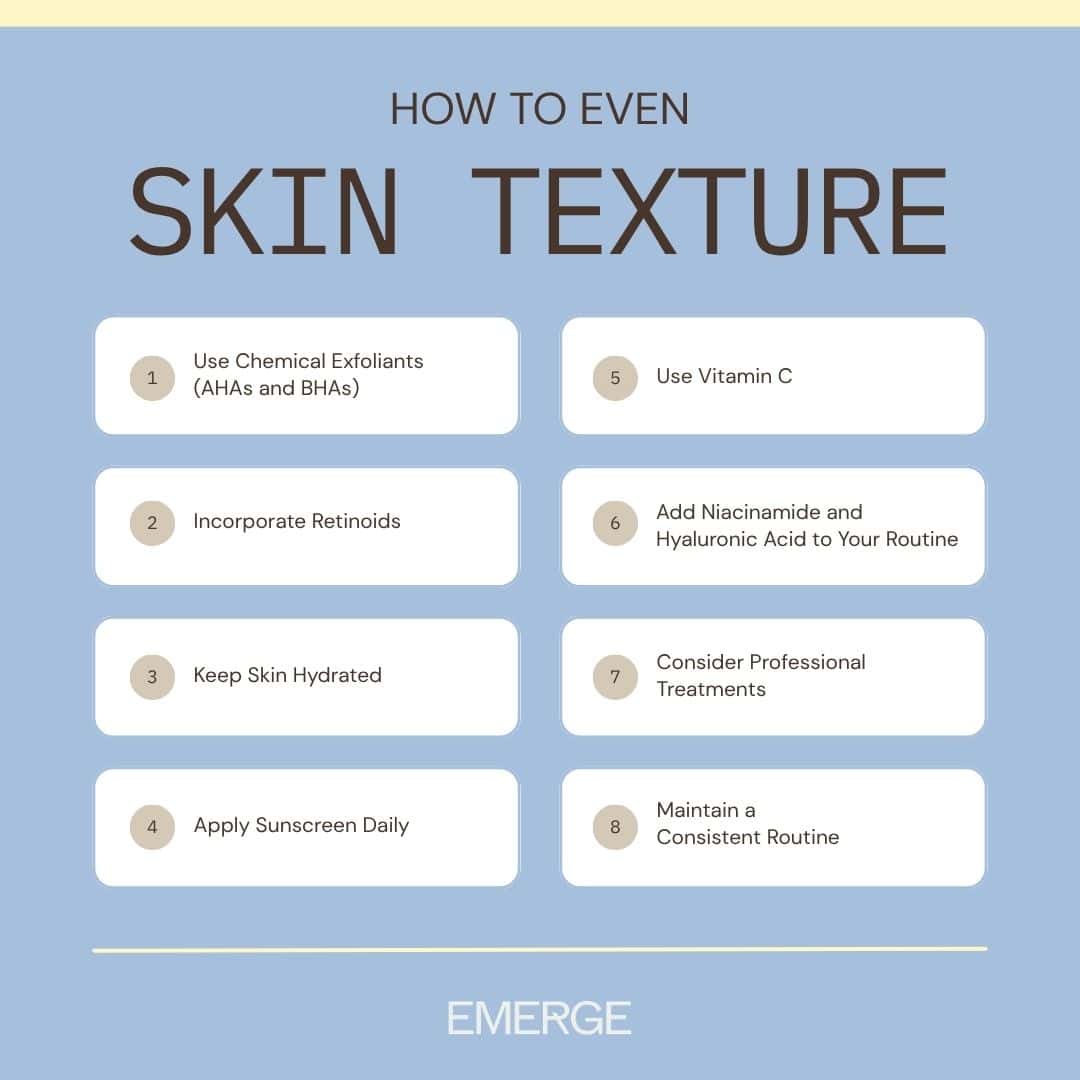
How to Even Skin Texture
Use Chemical Exfoliants (AHAs and BHAs)
Chemical exfoliants can be key to improving skin texture and smoothing your complexion over time. But don’t just grab the first chemical exfoliant you see—look for formulas that prioritize Alpha Hydroxy Acids (AHAs) and Beta Hydroxy Acids (BHAs).
Here’s a quick breakdown of what each ingredient can do:
- Alpha Hydroxy Acids (AHAs) are water-soluble acids that work on the surface of the skin to dissolve dead skin cells and promote a smoother, more even texture. Key AHAs include lactic acid, glycolic acid, citric acid, malic acid, and mandelic acid.
- Beta Hydroxy Acids (BHAs) are oil-soluble acids that penetrate deeper into the pores to treat oil and acne. Key BHAs include salicylic acid, citric acid, willow bark extract, and sodium salicylate.
To get the best results, pair chemical exfoliants with professional treatments to improve texture and stimulate long-term collagen production. And be mindful of over-exfoliating, which can damage the skin barrier and cause irritation. Opt for a steady routine of 2–3 times per week.
Incorporate Retinoids
Three foundational products that make up a solid skincare routine. Or, as Dr. Kling likes to call them—the 3 pillars of skincare: retinoids, SPF, and vitamin C. (Don’t worry, we’re covering them all.) Retinoids, also known as vitamin A derivatives, are scientifically proven to help improve skin texture. More specifically, retinoids can:
- Thicken the epidermis through cell proliferation
- Increase the production of natural hydrating molecules
- Stimulates fibroblasts to synthesize collagen production
- Inhibit already existing collagen breakdown
- Block inflammatory pathways that can lead to breakouts
Retinoids are medical-grade formulations designed to create controlled, measurable changes. And, yes, they’ll outperform any standard, over-the-counter “anti-aging” treatment on the shelves. We break down why this ingredient is so important in our post, “Retinol Vs. Retinoid: Which Is Best for Your Skin?”
Keep Skin Hydrated
Hydration is an inside-out process, meaning you need to drink water and apply physical moisturizer. Many people with oily, combination, and acne-prone skin assume that additional moisture will just make things worse—but this isn’t the case. Sebum isn’t the same as hydration.
With oily skin, sebaceous glands can become even more overactive if they’re dehydrated. This leads to… you guessed it! More oil. We know, it’s a confusing process. Regardless of your skin type, it’s important to prioritize medical-grade products, like Alastin Ultra Nourishing Moisturizer.
Hydrated skin plumps cells, smoothing out fine lines and wrinkles, reducing buildup, and protecting against environmental damage.
Apply Sunscreen Daily
Daily sunscreen application is non-negotiable, especially for those trying to even their skin texture. And this is another product where science-backed formulas matter. Medical-grade SPF, like Alastin Hydratint Pro Mineral Broad Spectrum Sunscreen, is clinically tested for efficacy. This means you can have full confidence that you’re protecting your skin against UV damage.
Remember what we said about how sun damage impacts your complexion. SPF helps prevent UV-induced collagen breakdown, worsened acne scars and age spots, and the development of fine lines. You may love the way a tan brings out your freckles now, but you won’t love the rough texture and sagging skin later on. Apply your SPF every single day.
Use Vitamin C
The last of the 3 must-have skincare products: vitamin C. If you haven’t added this powerful ingredient to your routine yet, consider this your sign to do so. Vitamin C stabilizes collagen’s structure, increases anti-inflammatory cytokines in gene expression, and accelerates cell turnover.
Together, these benefits help firm and smooth skin, inhibit melanin production, and reduce the appearance of textured scars. And you know what we’re going to say: formula matters. Stick to a medical-grade formula, like Alastin C-Radical Defense Antioxidant Serum, which contains 15 antioxidants proven to help neutralize free radicals and protect against both UV damage and stressors like blue light.
Your skin deserves science, not surface-level solutions.
Add Niacinamide and Hyaluronic Acid to Your Routine
Niacinamide (vitamin B3) and hyaluronic acid (HA) are both bonus products that can help improve skin texture over time. And even better, these two products are an excellent combination for both hydration and skin barrier protection. Let’s break it down:
- Hyaluronic Acid is a naturally occurring humectant that plumps, firms, and boosts moisture levels to improve elasticity. It’s generally safe for all skin types, helping hydrate without clogging pores.
- Niacinamide is a form of vitamin B3 that helps regulate oil production, refine the appearance of pores, and strengthen the skin barrier. It’s well tolerated by most skin types and helps calm inflammation while promoting long-term skin health.
There are plenty of medical-grade formulas, like Alastin HA (Hyaluronic Acid) Immerse Serum, that boost skin hydration, minimize the appearance of fine lines, and smooth uneven skin. But if you want something that targets the deeper layers for structural change? HA fillers provide instant volume while simultaneously encouraging long-term structural improvement in skin quality.
Consider Professional Treatments
While skincare is the foundation of every treatment, it can’t fully correct deeper texture concerns on its own. Minimally invasive, non-surgical treatments, however, can. We’ll break down a few of the best regenerative aesthetic treatments that can offer noticeable improvements in uneven skin texture:
- Microneedling is a minimally invasive treatment that uses fine needles to stimulate the body’s natural healing process, increasing collagen production. This results in smoother, tighter, brighter, and thicker skin. To view all of the benefits, review our patient-focused guide, “What Is Microneedling with PRP?”
- AVAVA™ Laser Treatments use non-ablative fractional technology to create targeted thermal zones beneath the skin’s surface. This stimulates collagen and elastin production, smoothing fine lines, acne scars, and pore size! Learn more about the benefits of AVAVA™ on our Instagram.
- PDO threads are dissolvable, medical-grade sutures that tighten, lift, and rejuvenate skin without traditional surgery. While they’re excellent for sagging skin, they also improve skin texture through an increase in collagen production over time. Learn all about this non-surgical treatment in our post, “What Is PDO Thread Lift?”
- Fractionated CO2 Lasers emit high-energy light that vaporizes the outermost layers of the skin, stimulating collagen and elastin production to improve skin texture. Its long-term results only ablate the targeted area, protecting surrounding tissue and promoting the production of new, healthy skin cells. Learn more in “The Fractional COW Laser Treatment for Skin Transformation.”
At Emerge, treatments are rarely performed in isolation. Skincare and minimally invasive treatments work together to address texture at every level—surface, structural, and cellular.
Maintain a Consistent Routine
For long-lasting, noticeable improvements in skin texture, consistency is key. To be more specific, consistency is the best anti-aging treatment—both in skincare and non-surgical treatments. Results don’t come from doing everything at once; they come from doing the right things repeatedly over time.
A well-structured routine allows the skin to gradually repair, rebuild, and improve in both texture and overall quality.
Improving skin texture requires a strategic, consistent, and multimodal approach that supports skin quality.
Evening out skin texture isn’t about chasing trends—it’s about following a plan. It’s also about understanding your skin type, supporting your skin barrier, and using the right combination of treatments to create meaningful, lasting change. High-quality skincare is the foundation, but transformation happens when it’s paired with the right treatments… and the right physician!
Dr. Kling, the double-board-certified Emergency Medicine physician at Emerge Aesthetics, isn’t just a physician. She’s an expert in her field, a compassionate advocate, and your partner in health, beauty, and self-care. By blending your unique anatomy with your ideal goals, Dr. Kling doesn’t “perform treatments”—she skillfully enhances, rejuvenates, and refines. Schedule your consultation with Emerge Aesthetics to improve your skin texture today!
Still unsure about which treatments may be right for you? Visit the Emerge blog, where we discuss regenerative aesthetics through an easy-to-understand, patient-focused approach. And don’t forget to follow the Emerge Instagram, where you’ll find all of our latest deals, discounts, and updates!