
Ever pull at your skin and notice it takes a second longer to bounce back than it used to? That little pause is skin elasticity, and slows down the older you get. (We know, not the news you wanted to hear.) As you age, skin gradually loses its firmness and bounce. But age alone isn’t what’s causing that elasticity to slow down.
Sun exposure, smoking, dehydration, weight fluctuations, poor nutrition, genetics, sleep deprivation: these are all things that can contribute to fine lines and wrinkles, sagging skin, and, you guessed it, a lack of collagen and elasticity. In most cases, this isn’t anything that modern medical aesthetics and a quality, medical-grade skincare can’t help. But understanding what affects skin elasticity can help you make informed choices about protecting, caring for, and improving the appearance of your skin.
There’s no one universal fix that can undo years of skin aging overnight. That’s why Dr. Kling, Emerge Aesthetics’ double board-certified Emergency Medicine physician, takes a multimodal approach, addressing every layer of aging. We’re sharing how to improve skin elasticity through that same lens below.
How to Improve Skin Elasticity Starts With a Real Plan
Everybody’s skin is different. One person may have less elasticity because of genetics, while another spent a little too much time out in the sun. Addressing and improving skin elasticity isn’t about finding a one-size-fits-all answer. The best approach depends on your individual skin concerns, your age, and your overall health, and the right combination looks different from one person to the next.
Supporting skin firmness usually means doing a few things at once. Start by protecting your skin from the things that can speed up collagen loss, then give it the everyday support it needs with a solid skincare routine. And when skincare can only take you so far, professional treatments can target collagen production below the surface.
You also don’t have to figure out which treatments are worth your time on your own. There’s always a new product or routine making the rounds online, and not every one of them makes sense for every person. A consultation gives you a chance to talk through what you’re noticing, what you want to change, and which options actually make sense for your skin.
At Emerge, Dr. Kling brings surgical-level expertise to non-surgical aesthetics. And she said it best: education is part of treatment
Before we dive right into treatments, let’s look at what may actually be happening under the surface.
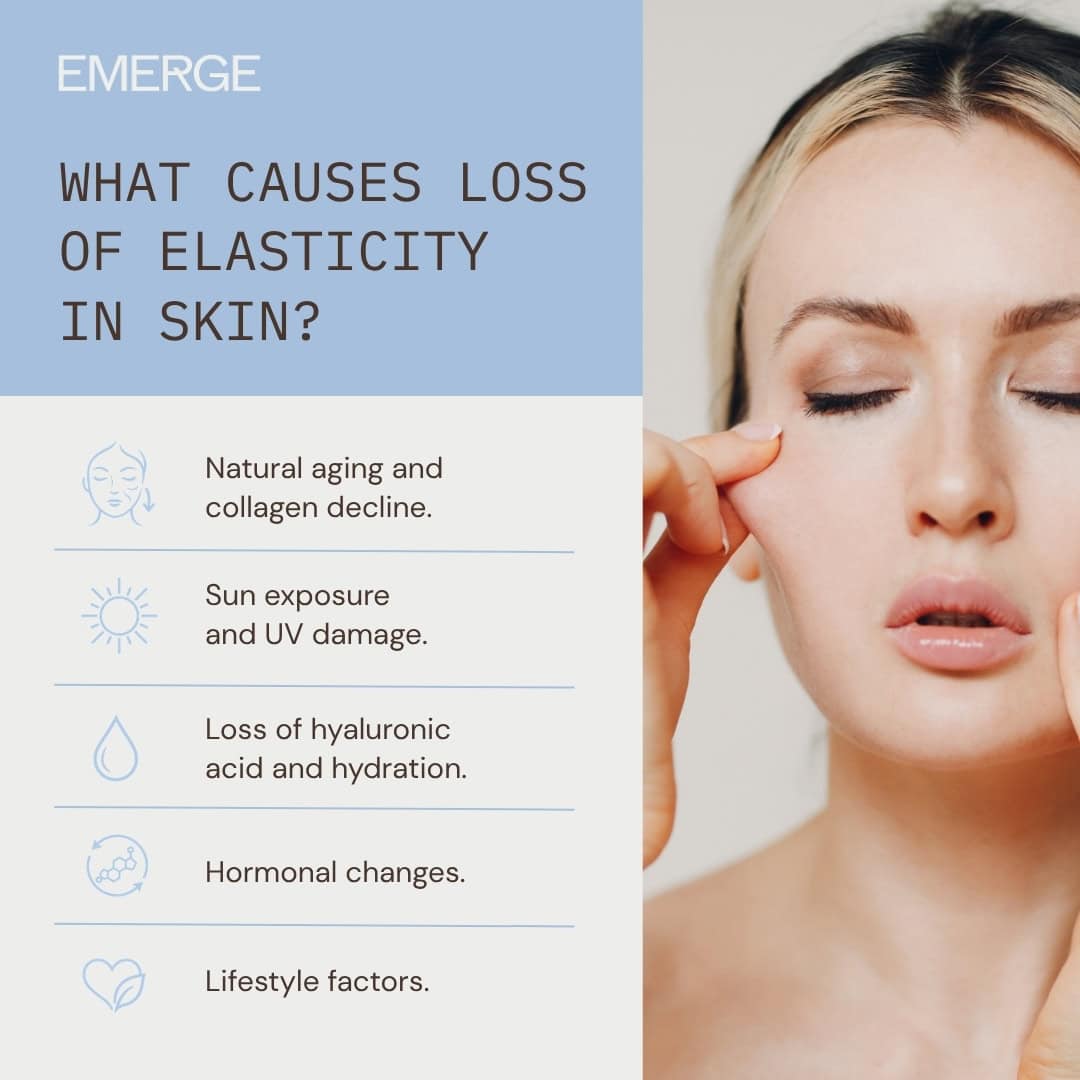
What Causes Loss of Elasticity in Skin?
Skin elasticity counts on two structural proteins that work together in the dermis: elastin and collagen fibers. Collagen acts like scaffolding for structure, while elastin helps skin snap back into place. When those break down faster than your body replaces them, that’s when you can start to see the change. These are the common factors that contribute to declining skin firmness and elasticity.
- Natural aging and collagen decline. Starting in our mid-20s, collagen production decreases by about 1% per year. By the time we reach our 40s and 50s, this decline becomes more noticeable, contributing to visible signs of aging like wrinkles and sagging skin.
- Sun exposure and UV damage. Ultraviolet light breaks down collagen and elastin in the dermis, and cumulative sun damage is one of the leading causes of premature aging. Years of time spent outside without any SPF can show up later as looser texture and deeper lines.
- Loss of hyaluronic acid and hydration. Your skin naturally produces hyaluronic acid, a molecule that holds water and keeps skin plump. The amount of hyaluronic acid decreases with age, though, which is one of direct causes of decreased skin elasticity. Less moisture in the tissue means less bounce.
- Hormonal changes. Shifting hormones, especially the drop in estrogen around and after menopause, accelerate collagen loss and thinning. This is around the time when you’ll learn things like “hormone replacement therapy.” However, that’s a conversation for your prescribing physician.
- Lifestyle factors. Smoking, high-sugar diets, poor sleep, and chronic stress all speed up how quickly collagen and elastin break down.
The takeaway? Most elasticity loss is a mix of factors. You can’t stop the clock, but you can change how you treat your skin now and how you prevent visible signs of aging.
What Helps Improve Skin Elasticity?
There are several habits and products that can support skin firmness and improve the overall appearance of aging skin. They’re not overnight fixes, but the best results usually don’t come from an overnight fix. As Dr. Kling likes to say, consistency is the best anti-aging treatment. Think of skin health as an investment that compounds.
Broad-Spectrum SPF
Protecting your skin from the sun is the most effective anti-aging, hands down. Daily broad-spectrum SPF prevents the UV breakdown of collagen and elastin that drives a majority of premature aging. It won’t rebuild what is already lost. But it does protect your skin now to help every other step in your skin care routine stick.
We’ve said it before, but if you’re getting professional treatments, investing in medical-grade skincare, focusing on nutrition and hydration, and not applying SPF multiple times a day? You’re fighting a losing battle.
A Vitamin C and Antioxidant Serum
Dr. Kling has what she likes to call her three pillars of skincare: retinoids, SPF, and vitamin C. You’ve probably heard about the first two, but vitamin C doesn’t get nearly the attention it should.
A quality antioxidant serum helps defend against the daily free-radical damage from sun exposure and pollution while also supporting the skin’s own repair. Not all vitamin C is created equal, though. If you’re looking for a product worth the investment, look at something like Alastin C-Radical Defense Antioxidant Serum.
Retinoids and Peptides
Prescription-strength retinoids and well-formulated peptides help stimulate collagen production over months of consistent use. This isn’t a quick fix; collagen and elastin take time to rebuild. This is another product where, if you can get one, should be prescription-strength or medical-grade.
Both outperform generic products because they use higher concentrations, are clinically tested, and target deeper layers of the skin rather than just sitting on the surface. If you’re totally new to these actives, check out our full guide on the benefits of peptides and on retinol vs. retinoid.
Hydration and Hyaluronic Acid
Keeping skin hydrated isn’t about making it feel soft and look glowy, it genuinely helps keep it firm and bouncy. Hyaluronic acid is one of the best ingredients here.
Hyaluronic acid can bind over a thousand times its weight in water. When you apply it topically, it can help plump the surface and soften the look of fine lines and wrinkles. Sometimes, that extra hydration makes a noticeable difference on its own. When skin is well hydrated, it tends to look smoother and a little more supple.
Collagen Supplements and Nutrition
You walk into a store, scroll on social media, or watch TV, and there’s an ad about collagen supplements. Drinks, gummies, powders, syrups, cold foams in coffee, people online are constantly talking about what collagen supplements have done for their skin.
There is some research behind collagen supplementation, but it’s not something to build your entire routine around. Think of it as one addition to the other things you’re already doing for your skin.
Pro Tip: The order of operations matters. If you want the full breakdown of at-home collagen support, our guide on how to restore collagen in the face goes deeper.
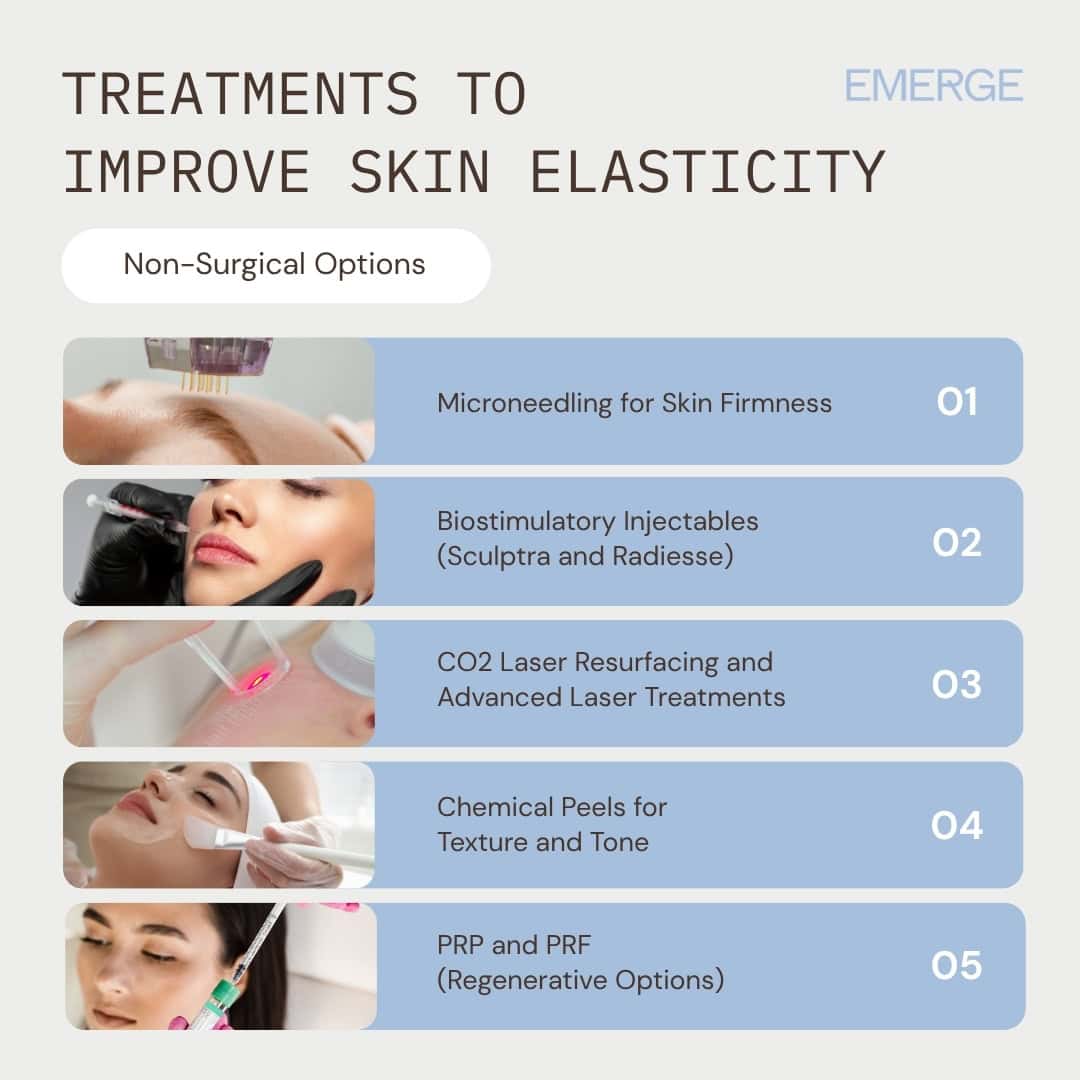
Treatments to Improve Skin Elasticity: Non-Surgical Options
Topical products and at-home care can only take you so far. That’s where professional treatments come in and can address sagging skin, reduced firmness, and visible signs of aging at a level products simply can’t reach.
We said it earlier, but there’s no one-size-fits-all approach in medical aesthetics. (And if your provider is telling you there is… reconsider.) The right treatment varies from person to person, and this is exactly why a consultation matters. On top of that, the best results come from a gradual, layered approach. One treatment can improve skin texture while another stimulates deeper collagen or restores structure.
Here’s what can move the needle when it comes to improving skin elasticity:
Microneedling for Skin Firmness
Microneedling uses tiny, controlled channels in the skin to trigger the body’s natural wound-healing response. In turn, this helps stimulate collagen production in the dermis. Over time, microneedling can help promote collagen production, improve texture and tone, enhance product absorption, and improve skin firmness.
Biostimulatory Injectables (Sculptra and Radiesse)
When you hear the word biostimulatory injectables, you probably think of one word: volume. But this isn’t their only job. Biostimulatory options like Sculptra and Radiesse encourage your skin to produce its own new collagen over the following weeks and months. Sculptra restores volume and improves skin texture, while Radiesse can help tighten skin and improve texture.
CO2 Laser Resurfacing and Advanced Laser Treatments
Laser resurfacing is one of the most powerful tools for skin quality. The Fractionated CO2 laser (SmartXide Pro) resurfaces the skin and stimulates collagen deeper in the dermis. Over time, this can improve firmness, tone, and fine lines and wrinkles over time. Laser intensity and downtime vary based on your skin and your goal.
AVAVA laser, on the other hand, is a non-ablative laser system that uses a cone-shaped smart laser system to reduce damage to the surrounding tissue while also stimulating collagen production and rejuvenating skin.
Emerge is currently the only verified med spa in Bergen County offering AVAVA, and one of just two practices in the greater New Jersey area with the technology. In other words, book your treatments at Emerge Aesthetics; AVAVA may just be the tool your skin needs for visible change.
For a related look at how resurfacing helps with specific concerns, see our post on how to get rid of forehead wrinkles.
Chemical Peels for Texture and Tone
Chemical peels use controlled exfoliation, often with alpha hydroxy acids, to encourage cell turnover and a smoother, brighter surface. Peels alone won’t stimulate deeper collagen production or lift deeply sagging skin on their own, but they can help refine texture and improve tone. Think of them as one tool in a more comprehensive strategy.
PRP and PRF (Regenerative Options)
Platelet-rich plasma (PRP) and platelet-rich fibrin (PRF) use growth factors drawn from your own blood to support skin repair and collagen stimulation. As a regenerative approach, they fit naturally into Dr. Kling’s philosophy of working with your body’s own biology rather than against it. They are often combined with microneedling for a layered effect.
Building Your Plan for Improved Skin Elasticity in Bergen County
If you’re dealing with skin that doesn’t bounce back like it did years before, you don’t have to just deal with it. There are tons of medical-grade skincare products, non-surgical and minimally invasive treatments that, when combined, can make a serious difference in how your skin looks and feels. The goal isn’t to look different. It’s to look restored.
At Emerge Aesthetics, Dr. Rochelle Kling personally performs every procedure and builds each plan around what your skin actually needs. As a double board-certified Emergency Medicine physician, she starts with education, so you understand your options before deciding on a treatment. We proudly serve patients across Bergen County and surrounding areas, including Glen Rock, Ridgewood, Wyckoff, Franklin Lakes, Saddle River, Upper Saddle River, Ho-Ho-Kus, Paramus, and nearby New York City.
If improving skin elasticity is one of your goals, book a consultation with Dr. Kling to talk through what you’re noticing and which treatments may make sense for your skin.
You can also shop Dr. Kling’s physician-selected favorites in the Emerge Skincare Shop, where purchasing Alastin skincare earns Aspire points redeemable toward in-office treatments through the Emerge RX Club. For the latest deals, discounts, and updates, follow along on Instagram, and browse more skin-health guides on the Emerge blog.
Medical disclaimer: This blog is for educational purposes only and is not medical advice. Individual results vary, and a consultation determines candidacy for any treatment. Please consult a qualified physician before starting any new skincare product, supplement, or treatment, especially if you are pregnant, taking medications, or managing a medical condition.
Rochelle Kling MD