
If you’ve ever caught your reflection in natural light and noticed a few mismatches in tone, you’re definitely not the only one. Hyperpigmentation, or dark spots, happens when your skin produces more melanin in certain areas. It can show up after sun exposure, hormonal changes, breakouts, and more, and it’s one of the MOST common skin concerns people have.
But what if you want to actually get rid of discoloration? You’ve tried the trendy skincare products and the viral hacks, and nothing’s helping. (Or, in some cases, hyperpigmentation is just getting worse.) That’s where it gets a little more complicated, because the right fix depends on what caused discoloration in the first place.
Most people want two things: to fade the dark spots they already have and stop new ones from showing up. Both matter. The smartest approach usually addresses them together.
At Emerge Aesthetics, our double board-certified physician brings surgical expertise to non-surgical aesthetics. And one of the things that matters most to her? Education. So let’s talk about what dark spots actually are, why they happen, and what you can do to get rid of them:
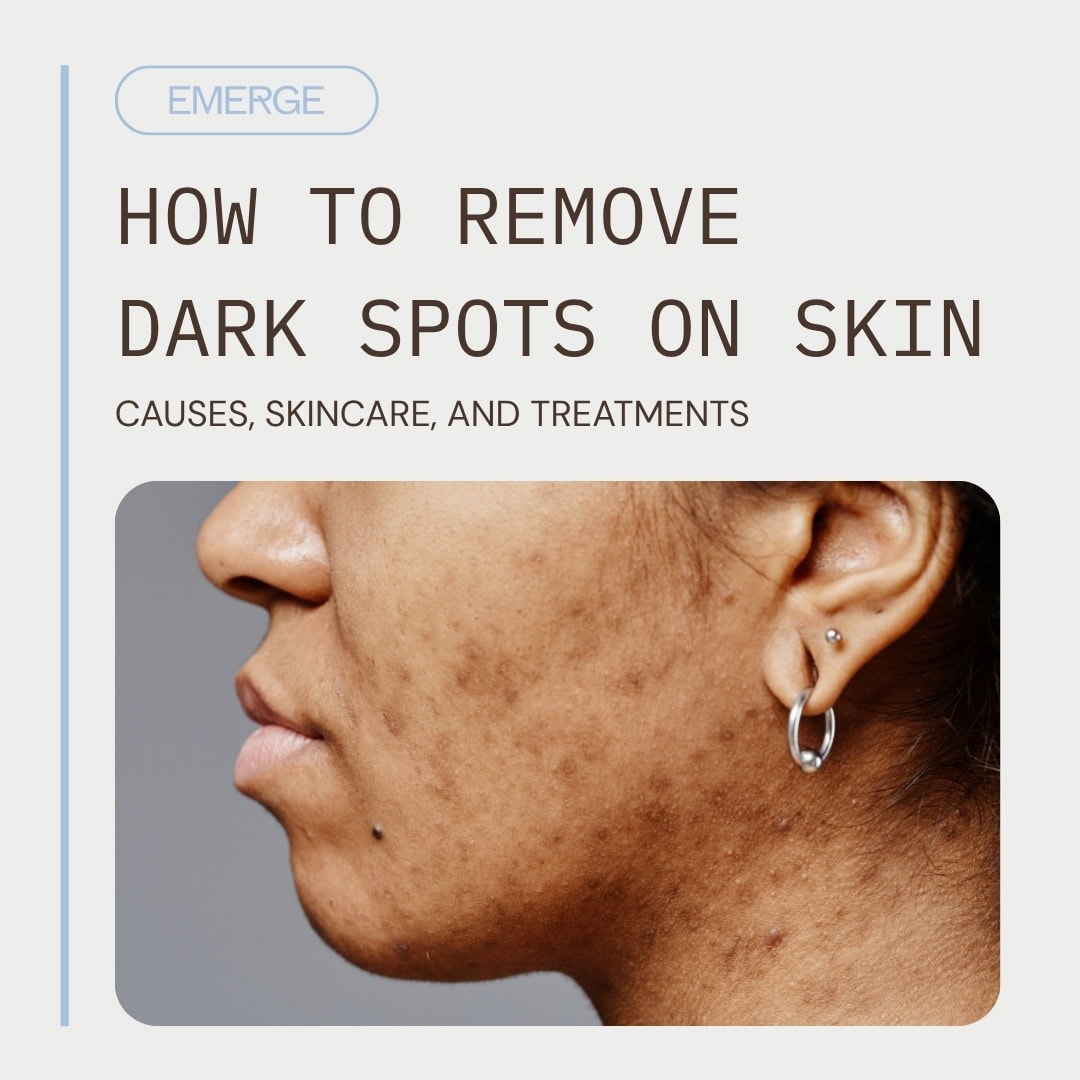
How to Remove Dark Spots on Skin: Where to Start
When it comes to getting rid of dark spots, there isn’t one universal magic product. And what works for one person may not work the same for you. If you really want to even out your skin tone, there are a few things that seriously matter: sun protection, targeted skincare, and professional treatments. Yes, all at the same time.
Think of UV rays as your skin’s biggest enemy. UVA rays penetrate the skin and break down collagen. UVB rays can affect the top layer of skin and lead to DNA mutations. Cells release melanin to absorb radiation. No matter how well you keep up with your retinoids or peptides, if you’re applying SPF, you’re fighting a losing battle.
SPF isn’t all that matters though. Medical-grade skincare acts as the foundation for skin quality, while professional treatments help stimulate collagen and prevent visible signs of aging. This is why when you come to Emerge, you’ll always hear Dr. Kling talk about multimodal approaches: addressing a skin concern from all layers.
If you really want to fade dark spots, figure out the cause of the pigmentation, how deeply it sits in your skin, and your individual skin type. That’s what can help you build out a treatment plan that can finally make a difference in dark spots.
Can Dark Spots on Skin Be Removed?
Sometimes. It’s a little nuanced. For most people, the more realistic goal is to significantly fade dark spots rather than completely erase them. And a lot of that comes down to what kind of pigmentation you’re dealing with in the first place.
Some spots respond pretty quickly, including post-inflammatory hyperpigmentation and sun spots. Others can be a lot more stubborn. Melasma, for example, tends to show up as brown-gray patches, generally on areas of the face that get the most sun. It can also be chronic.
Chronic doesn’t mean hopeless. It means figuring out how to address it rather than bandage the problem.
That’s why figuring out the cause comes first. A sun spot on the back of your hand isn’t the same thing as a post-acne mark on your cheek, and neither is the same as hormonal melasma across your forehead. Treating every problem the same way is how people waste money and even make things worse.
Treatment for Dark Spots on Skin
The right treatment for dark spots on skin depends on the type of discoloration, how deep the pigment is, and your skin type. While microneedling may help one person, another may respond best to AVAVA. That doesn’t mean one treatment is better than the other. It means you need a physician who knows what to address and how to address it. Here’s how the main approaches compare:
Topical and At-Home Treatment
Skin quality starts with the right skincare products. And for mild surface discoloration, it may be all your skin needs!
A consistent routine of antioxidants, retinoids, gentle acids, vitamin C, and broad-spectrum sun protection can meaningfully brighten uneven tone over time. The trade-off? Patience. Topicals are designed to work gradually, and they only really work if you actually use them daily.
Also, skip the trendy options you find on social media or from your favorite influencer’s “Must Have” list. Medical-grade skincare beats will win every time. These are products that have been clinically tested and contain higher concentrations of actives. In other words, they’re designed to actually benefit your skin. Shop Dr. Kling’s medical-grade skincare product recommendations and skip the guesswork.
Pro Tip: Join the Emerge RX Club! You can get customized formulations, a progressive approach, professional guidance, and points from Alastin purchases that you can put toward future treatments.
Chemical Peel
A chemical peel uses a controlled acid solution to exfoliate the surface and encourage fresh skin to replace it. Peels range from light to deeper formulations, and you can choose a strength based on your skin type and concern.
A chemical peel can brighten dull, pigmented skin and improve overall texture. Because you can choose a peel based on your specific goals, they’re a flexible middle ground between home care and energy-based devices.
Fractional CO2 Laser
Fractional CO2 laser treatment resurfaces the skin using a concentrated infrared light. Water molecules in the skin absorb the laser, which vaporizes micro-columns of damaged tissue. This controlled thermal injury activates fibroblasts, stimulating collagen production over the course of months.
Not only does it remove dead skin cells, lead to smoother skin, and even out skin tone, it also prevents fine lines and visible signs of aging. But fractional CO2 laser therapy may not be the best approach for everyone, especially those with darker skin tones. If you’re weighing energy-based options against collagen-stimulating ones, our guide on microneedling vs. laser breaks down how they differ.
The AVAVA Laser
The AVAVA laser is Emerge Aesthetics’ gold standard. It’s our go-to recommendation for a range of concerns, including uneven tone. This non-ablative laser focuses ring-shaped microbeams into the dermis to trigger collagen and elastin production, while its ComfortCool™ technology soothes the skin surface during treatment. Its Focal Point Technology™ (FPT) delivers energy only where it’s needed. With less downtime and less tissue disruption, it can be a good alternative to traditional laser therapies.
AVAVA is considered safe and effective for Fitzpatrick skin types I through IV, which is one of our favorite perks. That means if you have darker skin and have debated lasers in the past, this gives you a totally new avenue.
Emerge Aesthetics is the only verified med spa in Bergen County offering AVAVA, and one of just two practices in the greater New Jersey area with the technology.
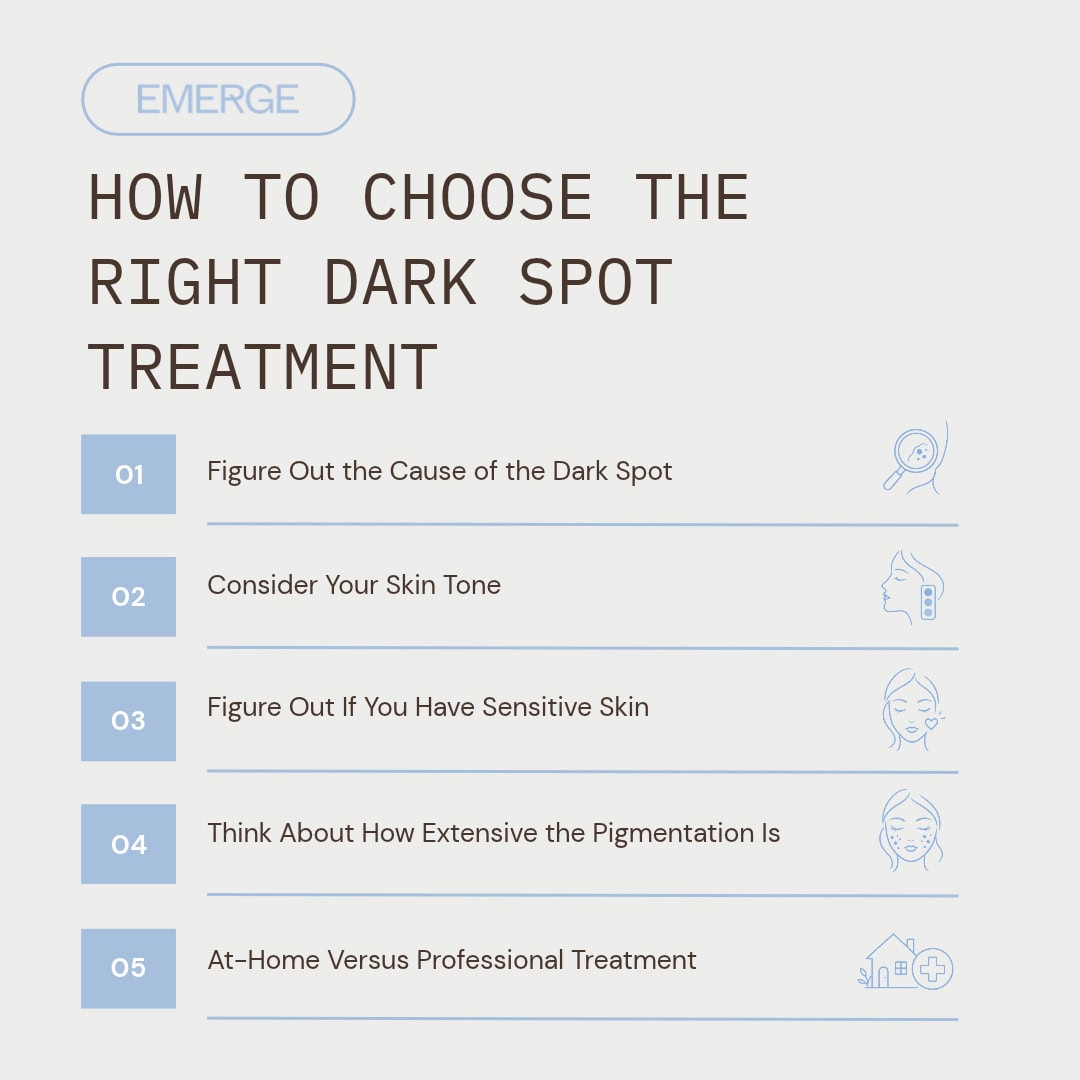
How to Choose The Right Dark Spot Treatment
With all of these options, how do you actually pick the one that’s right for you? Figuring out how to choose the right dark spot treatment comes down to a handful of honest questions about your skin and your goals:
Figure Out the Cause of the Dark Spot
Not all dark spots are created equal. Post-inflammatory dark spots, certain skin conditions, sun damage and photoaging, they may look the same but they’re totally different. And what does that mean? That one treatment won’t always work for skin concerns across the board. Identify the cause, and you can figure out the right treatment.
Consider Your Skin Tone
Your skin tone can completely change which treatments are the most safe and effective for your skin. For example, people with darker skin tend to notice more hyperpigmentation because they have more active melanocytes. That’s exactly why the right device and the right settings matter so much. The right treatment doesn’t just target your concerns; it protects your skin.
Figure Out If You Have Sensitive Skin
Sensitive skin changes things completely. Aggressive exfoliation or the wrong peel strength can totally wreck your skin, leading to more inflammation and even more pigment. If you have reactive skin, focus on starting low and slow. Use sensitive skin-friendly products, incorporate them gently, and prioritize formulas that calm rather than provoke.
Think About How Extensive the Pigmentation Is
A single spot on the cheek is a different project than widespread discoloration across the forehead, nose, and upper lip. Like we mentioned earlier, mild pigment in random places may respond well to retinoids, SPF 30, vitamin C, and peptides. Layered or deeper pigmentation may need a combined approach that prioritizes skincare and professional treatments.
At-Home Versus Professional Treatment
Be honest about where you are. Comfortable starting with a routine and daily sun protection? That’s a great foundation. Dealing with stubborn spots on your skin and ready for in-office help? That is where professional treatment, guided by a physician, earns its place in your routine. Prevention is always easier than correction, and consistency is the best treatment you have.
Build Your Dark Spot Plan With Dr. Kling in Bergen County
If you really want to fade dark spots and prevent age spots, three things matter: Daily sun protection, medical-grade skincare, and the right professional treatment matched to your cause and skin type. Most importantly, remember that’s no universal cure. Everyone’s skin is different, which is exactly why we emphasize the importance of consultations.
Emerge Aesthetics is proud to serve Bergen County and surrounding areas, including Glen Rock, Ridgewood, Wyckoff, Franklin Lakes, Saddle River, Upper Saddle River, Ho-Ho-Kus, Paramus, and nearby New York City. If an even, healthy-looking complexion is on your list, book a consultation with Dr. Kling and let’s talk through what actually fits your skin.
For the latest deals, discounts, and updates, follow along on Instagram, and keep an eye on the Emerge blog for more on skin health and non-surgical rejuvenation.
Rochelle Kling MD