
Strawberry skin is harmless, but that doesn’t make those tiny dark dots any less frustrating when they keep showing up on your legs. And if you’ve already tried exfoliating, switching razors, or applying more body lotion without any luck, the problem may not even be something you’re doing. You may be treating the wrong cause entirely.
At Emerge Aesthetics, we see patients with strawberry skin and many of the concerns behind it. Ingrown hairs, keratosis pilaris, dry skin, uneven texture, you name it. One of the first things we look at is what’s actually creating the dots and bumps. We wouldn’t approach clogged follicles the same way we’d approach KP or shaving irritation; they’re different concerns.
We also emphasize the importance of being realistic. Strawberry skin can often be significantly improved and kept under control, but it doesn’t always disappear completely. What works tends to be much less exciting than a miracle product: identifying the cause, choosing the right treatment for it, and staying consistent.
Let’s talk about how to get rid of strawberry skin through the lens of Dr. Kling, our double-board-certified Emergency Medicine physician who brings surgical expertise to non-surgical aesthetics:
How to Get Rid of Strawberry Skin: What Actually Works?
Just like with anything in non-surgical aesthetics, treating strawberry skin isn’t about finding one universal approach. While one client may have it due to irritated follicles oxidizing over time, another may simply just have keratin pilaris. In short, the treatment depends on the cause.
Below, we’ll break down what strawberry skin looks like, what may be causing yours, and the at-home and professional options that can help make a genuine difference in the appearance of strawberry skin:
What Is Strawberry Skin?
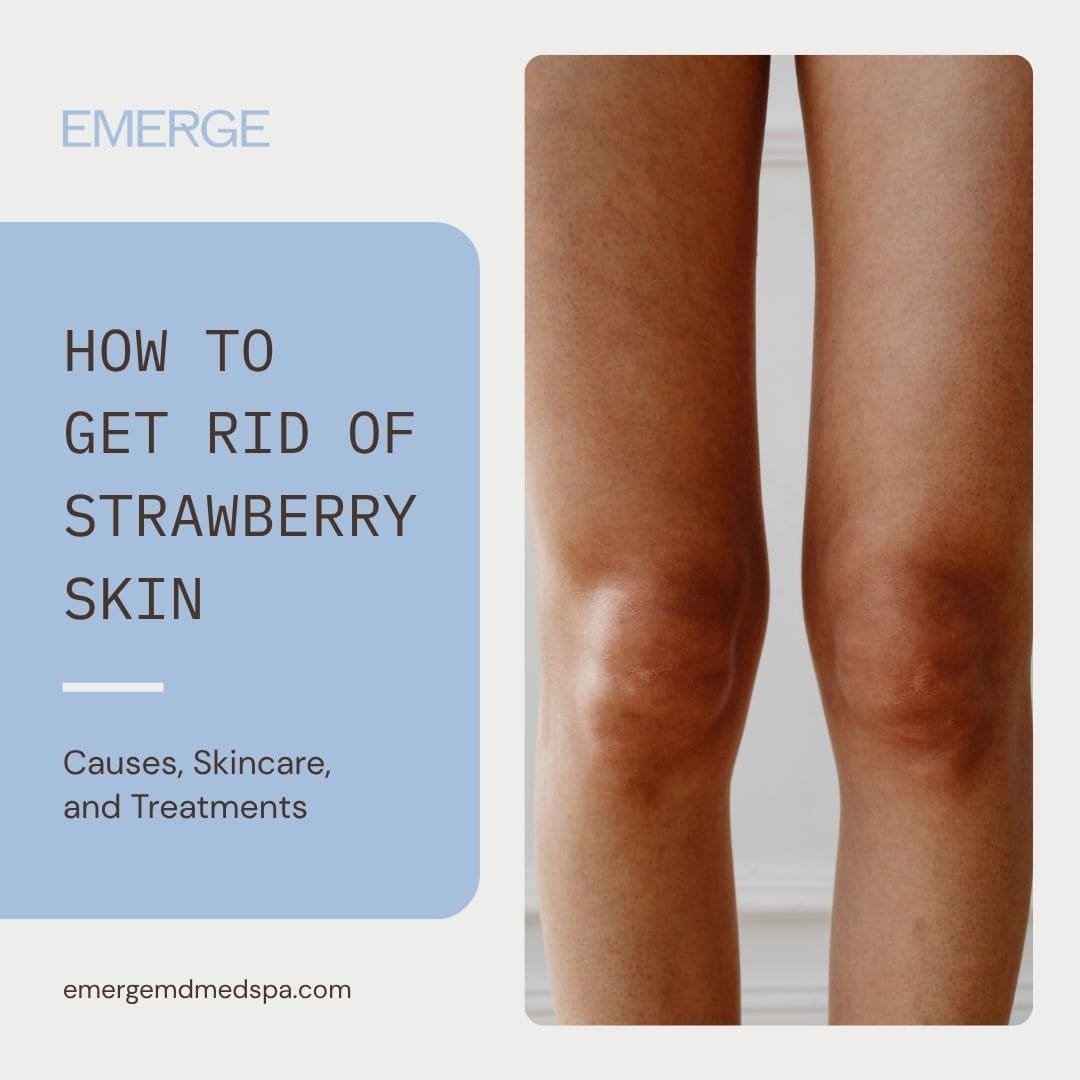
Strawberry skin is a harmless condition where pores, rough bumps, or tiny dark dots appear along the skin. (They tend to look like strawberry seeds, hence the name!) There isn’t just one reason this happens though. Like we mentioned above, sometimes it’s the result of oil and dead skin cells clogging the hair follicles and making the openings look darker. Other times, those dots are keratosis pilaris (KP), the texture that develops when keratin, a protein found naturally in the skin, builds up around the hair follicles.
We know what you may be thinking: “If it looks all the same, does figuring out the cause really matter?” And the answer is yes, absolutely! “Strawberry skin” describes the way something looks, not necessarily what’s causing it. Bring Dr. Kling your concern, she’ll figure out the treatments, tools, and techniques to help address it.
What Does Strawberry Skin Look Like?
Strawberry skin usually looks like small rough bumps, visible pores, or dark spots scattered across the skin. You might notice that the area feels a little rough to the touch. But it won’t necessarily look the same from person to person.
On the legs, you may notice darker dots around the hair follicles, especially after shaving. Keratosis pilaris tends to look more like clusters of tiny, raised bumps and commonly shows up on the thighs or upper arms.
Your skin type and what’s causing the strawberry skin can also affect its color and texture, which is another reason we look beyond appearance alone when deciding how to treat it.
What Causes Strawberry Skin?
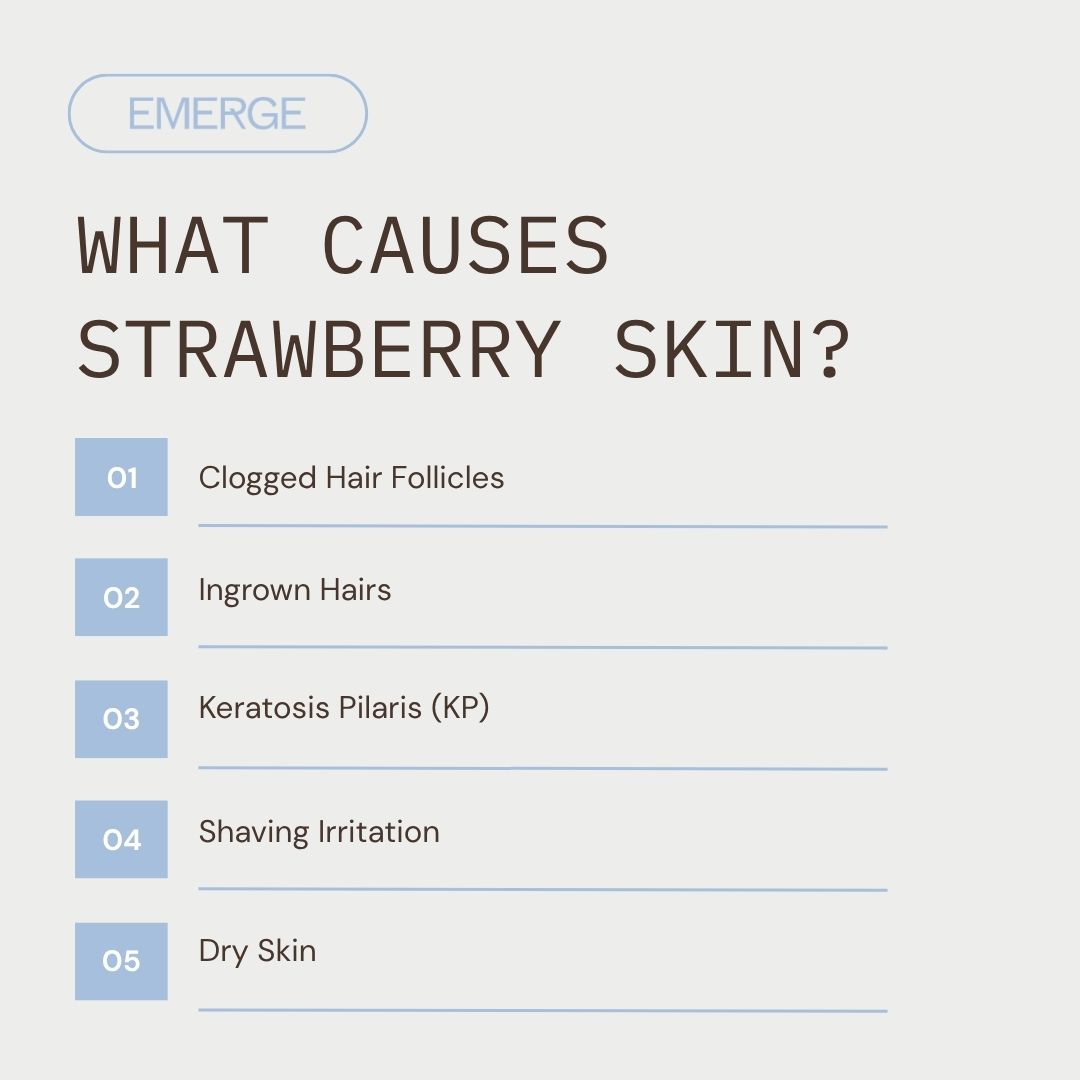
Several different things create the same seedy look, which is exactly why there’s not one single treatment that addresses everyone with strawberry skin’s concerns. When you understand the cause, you can find the appropriate treatment.
Clogged Hair Follicles
Oil, dead skin cells, and other debris can collect around the opening of a hair follicle, making the pore look larger or darker than the surrounding skin. If you notice dots that become more obvious after hair removal, clogged follicles may be part of what you’re seeing.
Ingrown Hairs
Instead of growing up and out of the follicle, an ingrown hair grows back into the skin. You may see a small bump, redness, or a darker spot where the hair’s trapped. Ingrowns can happen to anyone who removes body hair (yes, anyone), although they’re especially common with coarse or curly hair. If you regularly shave your legs and the dots seem to show up alongside irritated bumps, take a closer look at your hair removal routine.
Keratosis Pilaris (KP)
Keratosis pilaris (KP), a (very) common and (very) harmless skin condition, has a different cause. Keratin, a natural protein in the skin, builds up and plugs the hair follicles. The result is that familiar “chicken skin” texture made up of lots of small rough bumps. KP commonly appears on the upper arms and thighs and can become more noticeable when your skin’s dry. Good news: it’s harmless. However, because there is a genetic component, you may be managing it rather than permanently getting rid of it.
Shaving Irritation
If your strawberry skin looks worse right after you shave? Your razor may be to blame here. Dry shaving, repeatedly going over the same area, or using a dull blade can irritate the skin around the follicles. And because shaving cuts the hair at the surface rather than removing it from the follicle, you may still be able to see darker hair beneath the skin.
Dry Skin
As we’re sure you already know, dry skin can make texture ten times more obvious. When dead skin cells accumulate around the follicles, existing bumps and dark spots tend to stand out more. This is also why you might notice strawberry skin more during the winter! Even if dryness isn’t the only thing causing the dots, keeping your skin moisturized can make a noticeable difference in how apparent it looks and feels.
How to Treat and Prevent Strawberry Skin
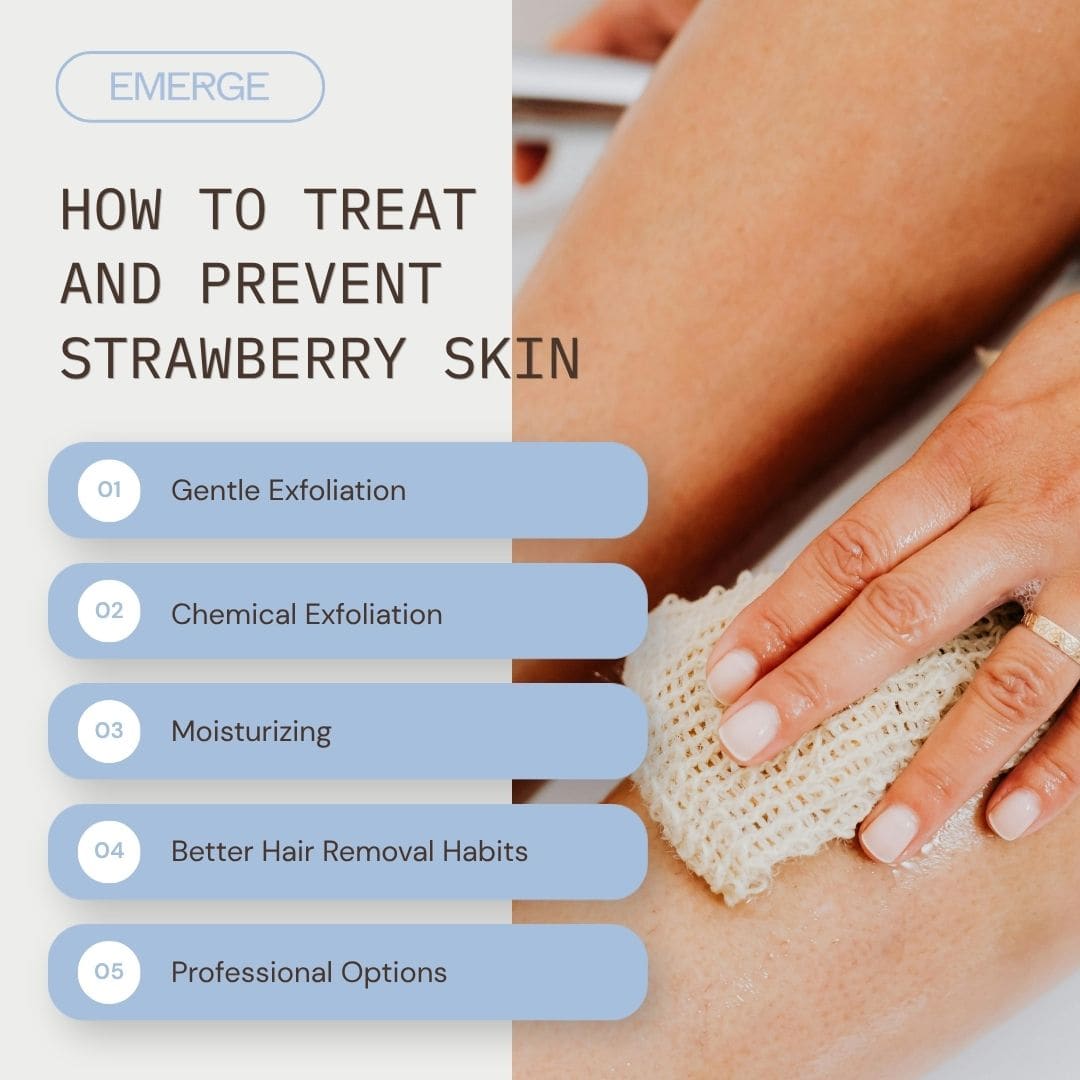
Once you have a better idea of what’s causing your strawberry skin, you can be more intentional about treating it. You may need a combination of the options below, especially if you’re dealing with something like dry skin and frequent ingrown hairs.
Gentle Exfoliation
Before you dive in with anything a little more powerful, start gently. A soft washcloth can help remove some of the dead skin sitting on the surface without turning exfoliation into scrubbing. And don’t think that more pressure is better! If you’re exfoliating and your skin becomes red, sore, or irritated afterward, consider it your skin shouting for help. Aggressive exfoliation can leave you with even more inflammation… and potentially make those spots more noticeable.
Chemical Exfoliation
When you think of glycolic acids, we’re sure you think of the serum you drop onto your face a few times a week. But here’s a fun fact: you can also use chemical exfoliation on other parts of your body, especially when dead skin and clogged follicles are part of the problem.
Glycolic acid is an alpha-hydroxy-acid (AHA) that helps loosen and remove dead cells from the skin’s surface. If you’re new to acids, don’t just jump straight in. How often you exfoliate depends on the product, potency, concentration, and what your skin is able to tolerate. Introduce it gradually and pay attention to how your skin responds over time.
Moisturizing
Moisturizing regularly helps support the skin barrier and soften the dry, rough texture that can make strawberry skin stand out. Applying lotion after a shower, while your skin is still slightly damp, is an easy way to make it part of your routine rather than another step on your to do list.
If keratosis pilaris or dryness is contributing to strawberry legs, consistency matters much more than just tossing on a moisturizer once or twice when you notice the dots getting bad again.
Better Hair Removal Habits
Now that you know shaving irritation and ingrown hairs are two of the biggest drivers behind strawberry legs, you’re probably second-guessing your hair removal methods. You don’t have to give up shaving completely, you just have to change how you shave.
Use a clean, sharp razor and enough shaving cream or gel to give the blade some slip. Shaving in the direction of the hair growth may also help if you’re prone to irritation or ingrown hairs. Also: resist the urge to keep running the razor over the same spot to get an impossibly close shave. Your legs may feel baby soft, but your follicles will be raging later.
Pro Tip: If you’re already incorporating exfoliation into your routine, don’t pile every potentially irritating step into the same shower. Give your skin a little breathing room between self-care steps, especially if you already know you have sensitive skin.
Professional Options
You’ve cleaned up your shaving routine, moisturized religiously, added chemical exfoliation, and the dots are STILL there. At that point, we want to know what’s keeping them around rather than telling you to buy another body scrub. (If you’ve been around for a while, you already know how we feel about bandaging a skin concern with a trendy product.)
Laser hair removal and resurfacing treatments may be the best options depending on whether hair follicles, pigmentation, or texture are driving the concern. That’s something we can sort out during a consultation.
Professional Treatments for Strawberry Skin: Non-Surgical Options
Remember earlier when we kept saying how important it is to identify a cause? This is where it matters. We don’t choose in-office treatments simply because someone “has strawberry skin.” We look at what’s causing the appearance in the first place.
If shaving and recurring ingrown hairs are a big part of the problem, laser hair removal can make total sense. Rather than repeatedly cutting the hair down to skin level with a razor, laser hair removal targets the follicle to reduce future hair growth. Less hair can also mean fewer opportunities for shaving irritation and ingrowns, therefore helping prevent strawberry legs.
Texture and discoloration are a different conversation. When those are the bigger concerns (and culprits!), we may discuss resurfacing. At Emerge, we offer fractional CO2 laser skin treatments designed to resurface the skin and stimulate collagen remodeling, which can improve certain tone and texture concerns over time. If you’re interested in learning more, definitely read our guide on the laser skin resurfacing healing process to better understand what to expect.
This is why Dr. Kling takes a multimodal approach to skin. One patient may benefit most from addressing unwanted hair first. Someone else may need to focus on texture, pigmentation, or their home skincare routine. And sometimes, we tackle more than one piece of the problem over time.
And don’t think your at-home skincare routine isn’t just as important! Skin quality is the foundation of everything we do here at Emerge Aesthetics. Dr. Kling can help you choose medical-grade skincare based on what your skin actually needs rather than adding another acid, scrub, or lotion and hoping for the best. Explore potential recommendations by checking out the Emerge Skincare Shop! Alastin purchases earn Aspire points through the Emerge RX Club that you can redeem toward in-office treatments.
When to See a Professional
You don’t need to make an appointment because you spotted a few dots on your leg. But if you’ve been trying to treat strawberry legs at home and aren’t getting anywhere, or the area is inflamed, painful, or repeatedly developing ingrown hairs, it’s worth having someone look at what’s actually going on.
That’s smart skincare, not overreacting. Keratosis pilaris, shaving irritation, ingrown hairs, and other texture concerns can all look similar when you’re standing in your bathroom mirror trying to diagnose your own legs.
Once we know the cause, we can talk about whether your current routine needs a little adjustment or whether an in-office treatment would be more useful. If texture is the part that’s bothering you the most, our guide on how to even out skin texture is a natural next step in that conversation.
At Emerge Aesthetics, Dr. Kling personally performs every treatment. That gives her the opportunity to see your skin herself, talk through what you’ve already tried, and decide what makes sense to add next.
Get Strawberry Skin Under Control With Emerge Aesthetics
If you’ve been trying to get rid of strawberry legs to no avail, you’re far from alone. But once you know what’s causing it, it’s significantly easier to manage it. From keratosis pilaris that causes textural concerns to improper shaving habits that clog your hair follicles, there’s a plan of action that can help you take control of your skin again.
Emerge Aesthetics serves Bergen County and surrounding areas, including Glen Rock, Ridgewood, Wyckoff, Franklin Lakes, Saddle River, Upper Saddle River, Ho-Ho-Kus, Paramus, and nearby New York City. If those little dots on your legs have outlasted every product you’ve tried, book a consultation with Dr. Kling to pinpoint the cause and build a plan around it. Of course, follow along on Instagram for all of the latest deals, discounts, and updates, and keep reading the Emerge Aesthetics blog for more on skin texture and treatment planning.
This blog is for educational purposes and is not a substitute for medical advice. Results vary from person to person, and a consultation determines whether a treatment is right for you. If you take medications or have a medical condition affecting your skin, talk with your physician before starting any new treatment or product.
Rochelle Kling MD