
When we say “under-the-skin” spot, you can probably see (and feel!) what we mean immediately. That deep, tender bump sitting under the surface, refusing to come to a head no matter how many times you check the mirror. And the most frustrating park? The more you poke, squeeze, or pick at it, the angrier that spot gets.
Unfortunately, squeezing a deep bump often pushes the contents deeper, which can increase irritation and the risk of dark marks or scarring. And while you may find trendy hacks online, few actually make a difference.
So let’s skip the guesswork. Today, we’re sharing a practical guide to help you understand what may be causing that bump, what you can try for pimples at home, and when a professional acne treatment makes more sense.
How to Get Rid of an Under-The-Skin Spot: Causes and Treatments
Here’s the truth about these bumps: they’re stubborn because of where they live. A blind pimple sits deep, without an obvious opening on the surface, so the usual “pop it and move on” logic simply doesn’t apply.
That’s exactly why choosing the right approach matters so much.
The goal is to calm the affected area, not aggravate it. Overwashing, harsh scrubbing, and aggressive squeezing tend to backfire, leaving redness and lingering marks behind. A gentler, more strategic approach helps the bump resolve while protecting the skin around it. Think of it the way we think about most things at Emerge Aesthetics: prevention is always easier than correction, and consistency is the best treatment.
Skin quality is the foundation of everything, so before we talk quick fixes, know this: how you care for your skin day to day matters more than any single emergency remedy.
What Is a Spot Under the Skin?
An under-the-skin spot, often called a blind pimple, is a bump that forms deep within the skin without breaking through the surface. Unlike a whitehead or a blackhead, there’s no visible “head” to it. You feel a firm, sometimes painful red bump, but you don’t see the actual “opening.”
Now here’s what everyone asks: “What’s happening underneath?”
Oil, dead skin cells, and bacteria get trapped deep in a pore, triggering inflammation below the surface of the skin. Because the contents can’t easily escape, the area swells and becomes tender. That deep, pressurized feeling is the hallmark of this type of pimple.
These bumps are common among people with acne-prone skin, and they can show up anywhere oil glands are active: the chin, jawline, forehead, cheeks, or even the back. Some are relatively mild. Others sit deeper and firmer, closer to cystic acne, which is one of the more inflamed types of pimples and the type most associated with scarring.
Ever wondered if niacinamide can help with acne scars or Botox can reduce acne? Head to the Emerge blog, where we break it all down from an anatomy-first lens.
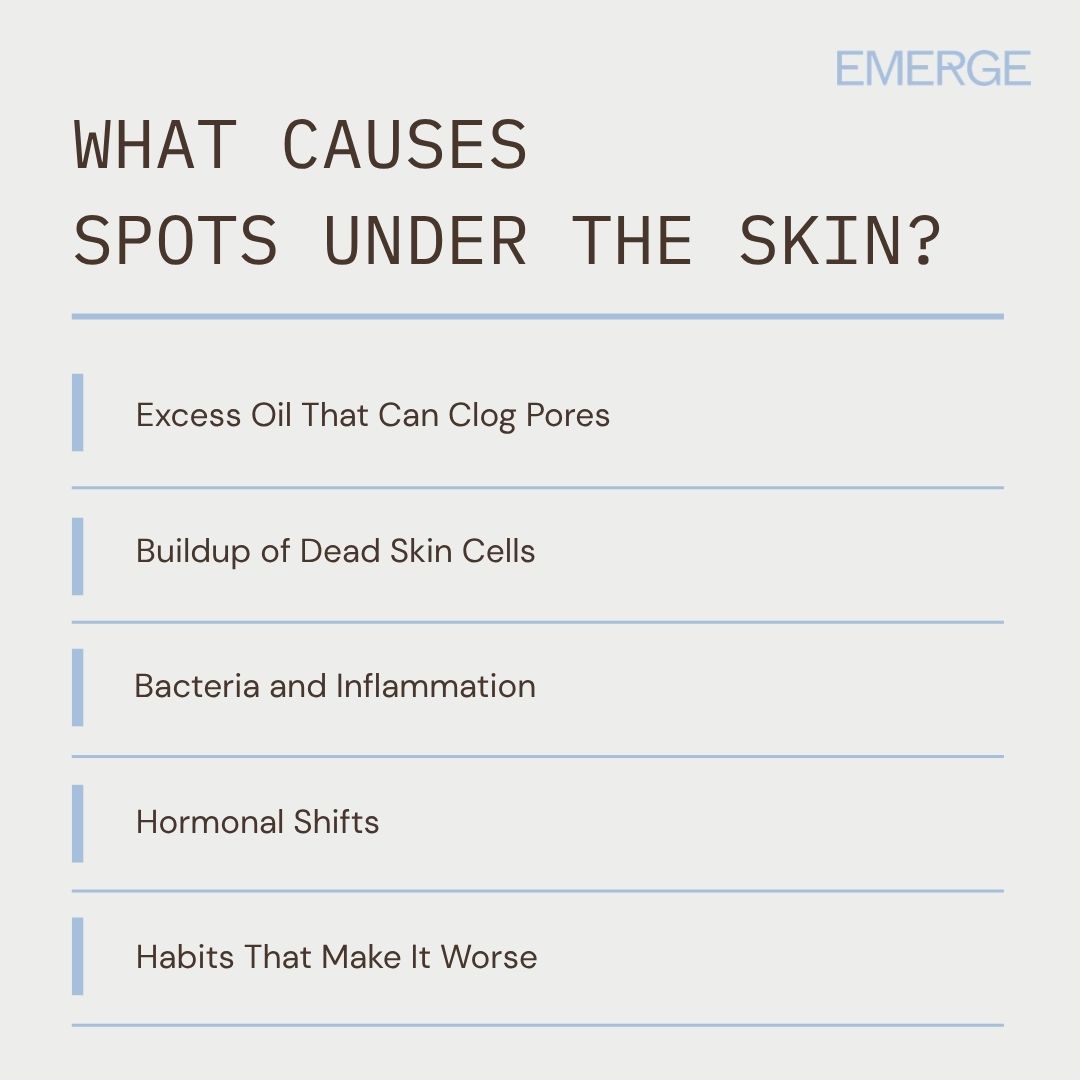
What Causes Spots Under the Skin?
Several factors work together to create a bump beneath the surface. Understanding them helps you choose smarter habits, and it explains why these spots aren’t simply a hygiene problem.
Excess Oil That Can Clog Pores
Your skin produces sebum to stay balanced. When production runs high, that extra oil can clog pores, mixing with dead skin cells and creating the perfect environment for a deep bump to form. This is why oilier zones like the chin and jawline are common spots for deeper blemishes.
Buildup of Dead Skin Cells
Skin naturally sheds. It’s completely normal. However, when dead skin cells linger and stack up at the pore opening, they trap oil underneath. Sealed in, the pore has nowhere to drain, and inflammation builds beneath the surface rather than on top of it.
Bacteria and Inflammation
Trapped oil is fuel for acne-causing bacteria. As bacteria multiply inside a blocked pore, the immune system responds, and that response is what produces the swelling, tenderness, and redness of a blind pimple.
Hormonal Shifts
Hormones influence how much oil the skin makes. Fluctuations around your cycle, stress, or other changes can ramp up sebum production, which is why deep bumps often appear at predictable times of the month for many people.
Habits That Make It Worse
Picking, squeezing, and overwashing all irritate an already inflamed area. So can pore-clogging makeup or skipping a consistent skincare routine. None of these “cause” acne alone, but they can push a mild bump toward a bigger, angrier one.
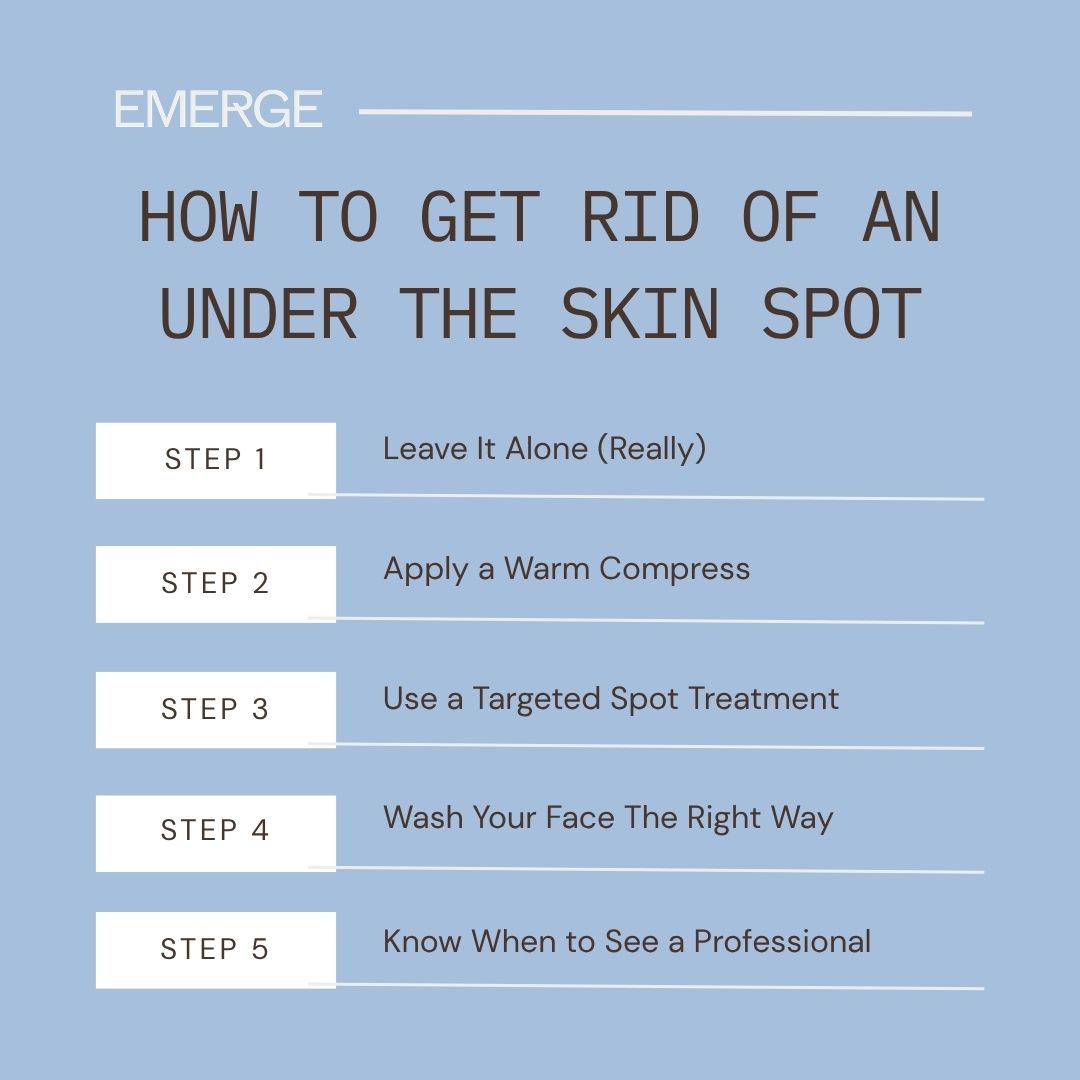
How to Get Rid of an Under The Skin Spot
These steps focus on how to treat blind pimples gently and effectively, and how to know when your under-the-skin spot may need a professional eye.
Step One: Leave It Alone (Really)
We’ll be the ones to tell you: your strongest instinct is the wrong one here. Don’t squeeze, push, or aggravate a bump that doesn’t have a head. There’s nothing to extract yet, and putting pressure on it only drives the contents deeper. And when those contents go deeper, it increases the risk of scarring and dark marks. In other others: hands-off is the first (and most important) step.
Step Two: Apply a Warm Compress
A warm compress is your best friend early on. Hold a clean, warm cloth against the affected area for several minutes, a few times a day. The gentle heat encourages circulation and can help the bump come closer to the surface so it can heal on its own. This is one of the safest and easiest ways to treat blind pimples at home.
Step Three: Use a Targeted Spot Treatment
Reach for proven ingredients. Benzoyl peroxide or salicylic acid are two of the most reliable over-the-counter options. Benzoyl peroxide helps reduce acne-causing bacteria, while salicylic acid exfoliates inside the pore to clear the buildup. Together, benzoyl peroxide and salicylic acid address different pieces of the puzzle.
Prefer a gentler route? A dab of tea tree oil, properly diluted, is a botanical option that reduces inflammation for some people. Patch test first, since it can be irritating on its own.
Step Four: Wash Your Face the Right Way
Cleansing matters, but more isn’t always better. Wash your face twice a day with a gentle cleanser, and resist the urge to scrub. Harsh exfoliation on an inflamed bump only adds irritation. A calm, consistent skincare routine does far more for acne-prone skin than any aggressive one-off effort.
Building better texture over time helps too. If breakouts have left your skin looking uneven, our guide on how to even out skin texture walks through smart, layered options.
Step Five: Know When to See a Professional
Some bumps just won’t budge, and some are simply too deep to manage solo. If a spot is large, extremely painful, recurring in the same place, or trending toward cystic acne, it may be time for professional help. This is where physician-led care changes the game.
We’re not talking cortisone injections or chemical peels, though those can help. Instead, we’re talking treatments like the AVAVA laser, microneedling, fractional CO2 laser, and medical-grade skincare.
Skin quality is the foundation of everything we do at Emerge Aesthetics, which is exactly why you’ll hear us say that care goes deeper than a single fix. AVAVA laser, safe for all skin types and tones, can help boost collagen and improve texture. Microneedling can break up scar tissue and enhance product absorption. Fractionated CO2 lasers can shrink underactive sebaceous glands and improve tone.
And medical-grade skincare is what helps carry that care into your everyday routine. The right products can help keep pores clear, support healthy skin turnover, calm inflammation, and address the factors that contribute to stubborn under-the-skin spots in the first place.
Dr. Rochelle Kling is a double board-certified Emergency Medicine physician who brings surgical-level precision and a deep understanding of anatomy, wound healing, and tissue regeneration to non-surgical aesthetics. By combining at-home and in-office care, you’re not just treating current breakouts; you’re preventing blind pimples from ever showing up in the first place.
Skip the guesswork and schedule your appointment at Emerge Aesthetics today.
How to Prevent Blind Pimples and Support Acne Prone Skin
A spot under the skin is stubborn, but here’s the good news: it is manageable. Keep your hands off it, use a warm compress, reach for benzoyl peroxide or salicylic acid or a little diluted tea tree oil, wash your face gently, and know when a bump calls for professional care. And once things calm down, prevention through a consistent skincare routine is what keeps acne prone skin steady over the long run.
When you are ready for more than a home fix, Emerge Aesthetics is here. We proudly serve patients across Bergen County and the surrounding areas, including Glen Rock, Ridgewood, Wyckoff, Franklin Lakes, Saddle River, Upper Saddle River, Ho-Ho-Kus, Paramus, and nearby New York City. You can book a consultation with Dr. Kling to build a plan tailored to your skin, follow along on Instagram for education and inspiration, and keep learning on our blog.
This blog is for educational purposes and is not a substitute for medical advice. Individual results vary, and a consultation determines candidacy. If you take medications or have a medical condition, please talk with a physician before starting a new acne treatment.
Rochelle Kling MD