
Tight, flaky, uncomfortable skin that no amount of moisturizer seems to fix? If you’ve been searching for how to treat dry skin on your face, you’re in good company.
Dry skin is one of the most common (and frustrating) concerns in skincare. It stings when you wash it, flakes under makeup, and feels tight by mid-afternoon. Most of the time, people lean on trendy routines, viral products, and “I swear it works” influencer promises. But here’s what they also forget: the first step to treating dry skin is figuring out what’s causing the dryness.
At Emerge Aesthetics, our double board-certified Emergency Medicine physician, Dr. Kling, brings surgical expertise to non-surgical aesthetics, and that includes typical, everyday skin concerns. Her philosophy revolves around one important reminder: skin quality is the foundation; treatments, products, and procedures are the tools.
Below, we’re sharing how to treat dry skin on your face through that same physician-led lens. We’ll talk about what can cause dry skin, what it often looks like, and what you can do to heal it from the inside out. Most importantly, we’ll explore what can be managed at home and what deserves a professional eye.
How to Treat Dry Skin on Your Face: Common Causes and Solutions
Dry skin isn’t one problem with one fix. It has different triggers, and the right approach depends entirely on what’s driving it. Cold winter air, an over-enthusiastic cleansing habit, or an underlying medical condition all lead to the same tight, uncomfortable feeling, but they call for very different responses.
Think of it like troubleshooting. You wouldn’t repair a leak without finding the source first. Skin works the same way. So before you overhaul your whole shelf, let’s talk about what dryness actually looks like, what causes it, and potential treatments that can actually address the concern.
What Does Dry Skin Look Like on Your Face?
Not sure if what you’re seeing counts as “dry” skin? Here are the common symptoms of dry skin patients tend to notice on the face:
- Dry, flaky, or rough patches, often around the cheeks, nose, and mouth
- A tight, uncomfortable feeling, especially right after you cleanse
- Redness or irritation, sometimes with mild stinging
- Dull or ashy-looking skin that does not reflect light the way healthy skin does
- Fine flakes that catch under makeup or make skincare pill on the surface
- Rough texture you can feel when you run a finger across the cheek
A little dry, flaky skin here and there is usually just ordinary dryness. It happens! But when flaky skin is persistent, cracking, painful, or spreading, that’s your cue to have a professional take a closer look. (Don’t worry, we’ll get to that shortly.)
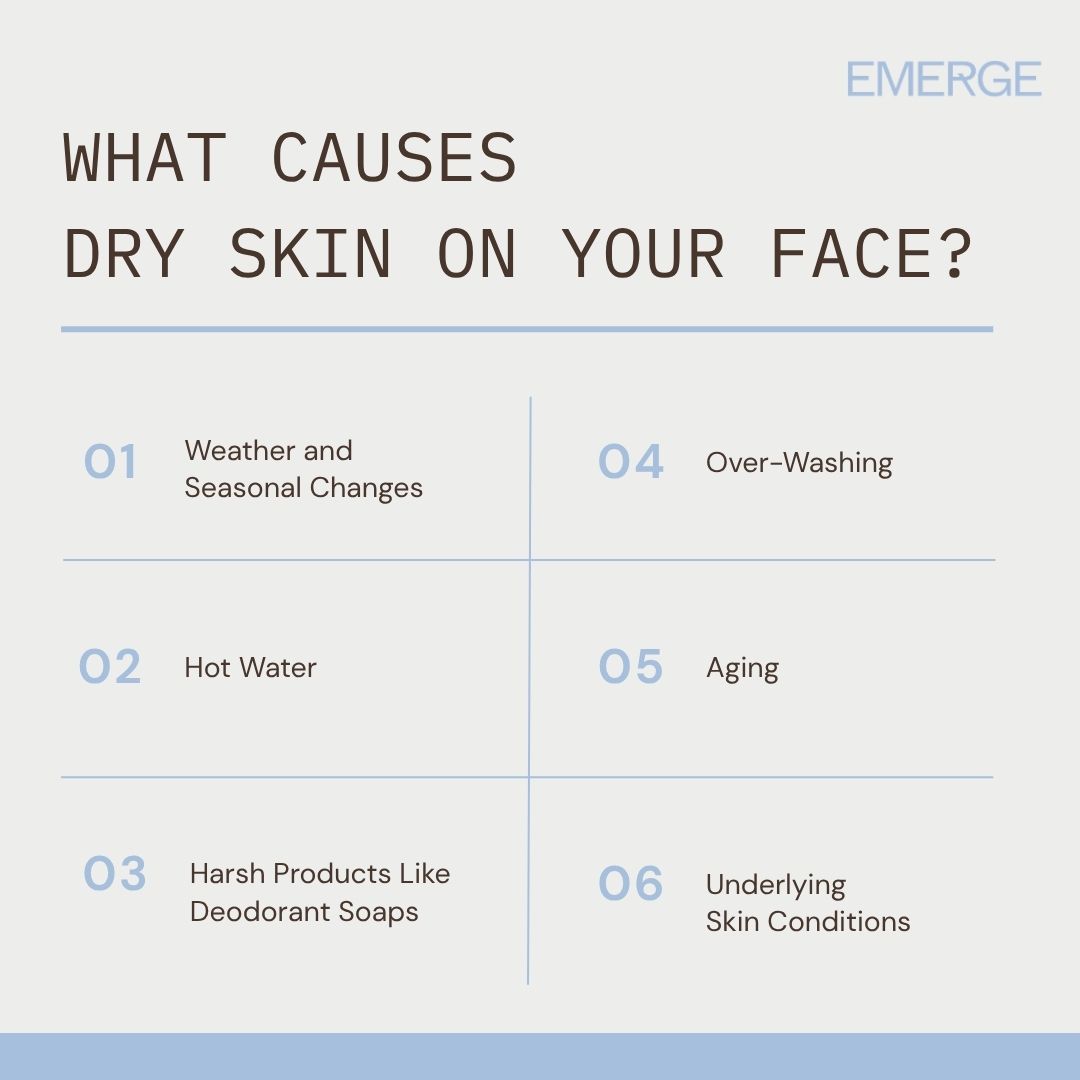
What Causes Dry Skin on Your Face?
Facial dryness usually traces back to something disrupting your skin’s natural barrier, the layer that holds water in and keeps irritants out. When that barrier is compromised, moisture escapes and dryness sets in.
Dry skin on the face may not be one-size-fits-all, but fortunately, there are a handful of common triggers that can make finding a fix easier. Here’s what to look for:
Weather and Seasonal Changes
Cold, dry air is one of the biggest offenders. Winter wind, low humidity, and indoor heating all pull moisture out of the skin faster than it can be replaced. This is why so many people notice their skin getting worse the moment temperatures drop. If your dryness flares in the colder months, our guide to fall skincare walks through how to adjust your routine as the seasons shift.
Hot Water
That steamy face rinse may feel wonderful for you, but skin can be silently suffering. Hot water strips away the natural oils that keep your skin supple and increase skin pH. It can also cause tightly packed lipids in your barrier to lose their structure, leading to transepidermal water loss (TEWL). The hotter the water, the more of that protective oil layer disappears. Ultimately, this can leave your skin drier than before you started.
Harsh Products Like Deodorant Soaps
Deodorant soaps and heavily foaming cleansers are formulated to cut through oil. Great for underarms, terrible for facial skin. The same goes for scented face washes, alcohol-heavy toners, and harsh exfoliating scrubs. These products can wipe out the very oils your face needs, leaving the barrier weakened and the surface parched.
Over-Washing
Washing too often, or scrubbing too hard, strips your skin’s natural oils just as effectively as a harsh product does. More cleansing is not better cleansing. In fact, Dr. Kling often reminds patients that a morning face wash is unnecessary for most people. Sometimes doing less is what protects your skin best.
Aging
As we get older, skin naturally produces less oil and holds onto less water. The barrier thins, and dryness becomes more common. This is also when skin can start to look duller and less smooth, making fine lines and other signs of aging more noticeable. And naturally, hollow and flaky skin absorbs light rather than bouncing it back. This is often why people with dry skin tend to feel like their skin looks older, duller, and less vibrant.
Underlying Skin Conditions
Sometimes dryness is a symptom of something more, like eczema, psoriasis, or another skin condition. If your skin stays extremely dry, cracked, or inflamed no matter what you do, an underlying medical condition may be involved, and that deserves a professional evaluation rather than another drugstore or influencer-driven product.
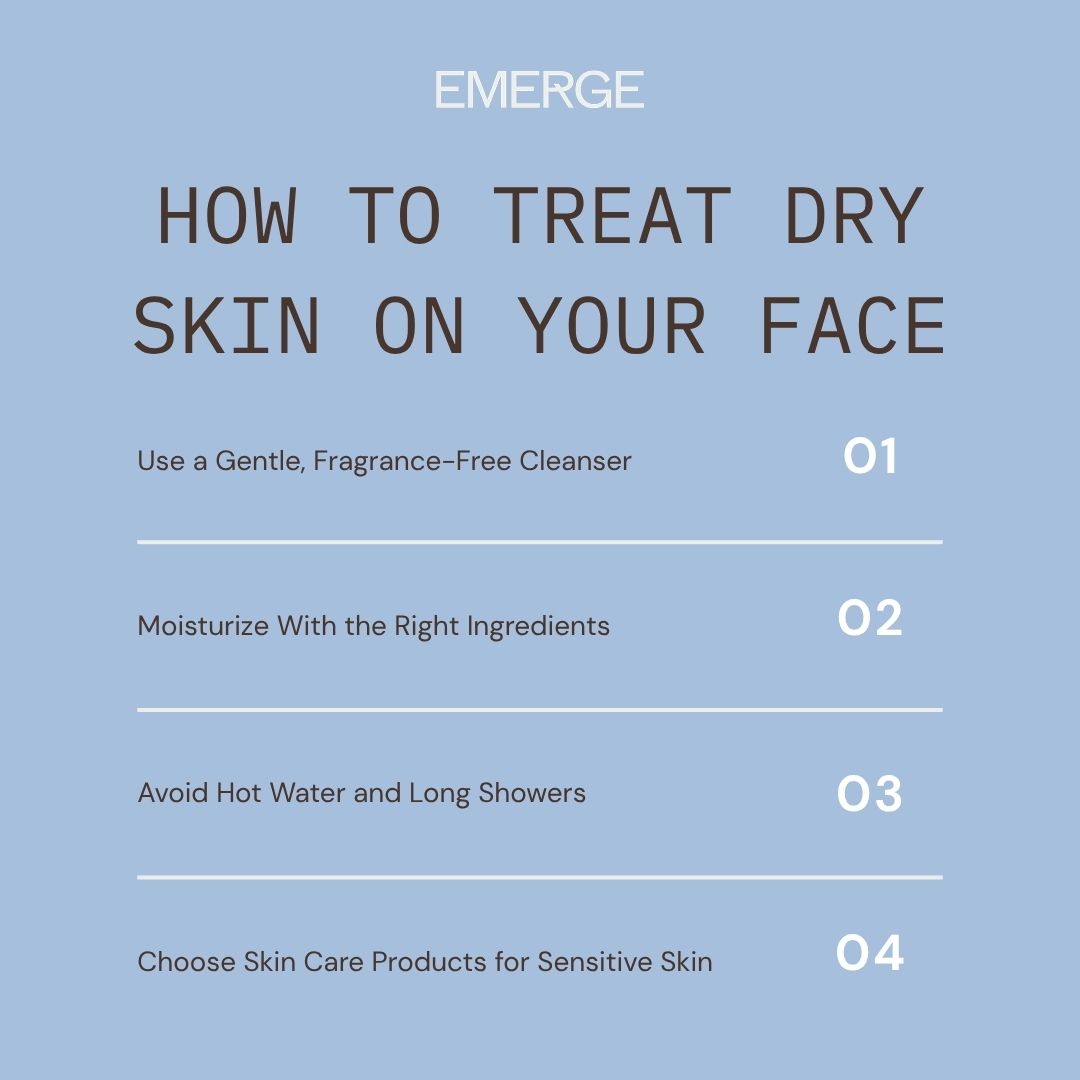
How to Treat Dry Skin on Your Face
Once you understand your trigger, relieving dry skin comes down to a few consistent, gentle habits. None of these are dramatic, but that’s the point. Consistency is the best treatment, and small daily choices protect your skin far better than any one miracle product.
Use a Gentle, Fragrance-Free Cleanser
Swap the foaming, stripping stuff for a gentle, fragrance-free cleanser designed for sensitive skin. Fragrance is a common irritant, and a mild formula cleans without demolishing your barrier. Your face should feel comfortable after washing, never tight or squeaky.
Moisturize With the Right Ingredients
This is where ingredient knowledge pays off. You don’t need anything promising overnight relief, instant hydration, or “visibly improved skin in hours.” You need the stuff that has been research, tested, and can hold its weight in a routine, including:
- Hyaluronic acid to attract moisture. Hyaluronic acid is a humectant, and it can draw moisture and hold almost 1000 times its own weight in water, making it extraordinarily powerful. It pulls water toward the surface of the skin and helps keep it there.
- Petroleum jelly to seal it in. Petroleum jelly forms an occlusive barrier on the skin, helping to prevent transepidermal water loss. In simple terms, it locks the hydration in so it doesn’t evaporate.
- Triple Paste Diaper Rash Cream: Dr. Kling’s secret weapon. It contains non-nano zinc oxide, protective beeswax, and oat extract. Not only can it help restore hydration, but it can also help heal the skin barrier.
Want a pro tip? Layer them. Apply your hyaluronic acid onto slightly damp skin to attract moisture, follow with a moisturizer, then seal with petroleum jelly or diaper rash cream on any extremely dry or cracked spots. Think: Water first, seal second.
Avoid Hot Water and Long Showers
Turn the temperature down. A lukewarm shower or bath protects your skin’s natural oils far better than a scalding one, and keeping it short helps too. Long, hot showers feel great, but they also leave your face paying for it later.
Choose Skin Care Products for Sensitive Skin
When your barrier is compromised, reach for skin care products formulated for sensitive skin: minimal ingredients, no fragrance, no harsh actives. These products contain relatively few ingredients and are less likely to cause stinging than many fragranced or active skin products.
Gentle wins here, every time.
If you’re not sure which products are right for your skin, that ‘s exactly the kind of thing we help patients sort out. Not all skincare is created equal, and medical-grade formulas are worth the investment. Dr. Kling would genuinely rather see a patient put money into high-quality skincare than into Botox, because the foundation matters most.
You can explore physician-selected options in our medical-grade skincare shop, and our Emerge RX Club makes consistency easier, with Alastin purchases earning Aspire points redeemable toward in-office treatments.
When to See a Dermatologist for Dry Skin
Most facial dryness responds well to the routine above. But if your skin stays severely dry, painful, cracked, or simply doesn’t improve after a few weeks of a good, gentle routine, it may be a medical condition worth having board certified dermatologists or a qualified physician evaluate. That’s not overkill; that’s taking care of a problem.
Persistent, extremely dry skin can signal eczema, psoriasis, or another underlying issue that a home routine won’t necessarily resolve on its own. Plus, getting a professional look means you treat the real cause instead of chasing symptoms. And if you take any medications or have a diagnosed skin or medical condition, check with your physician before making changes, since dryness can sometimes be tied to those.
This is also where a physician-led approach makes a real difference.
At Emerge Aesthetics, we look at dryness as part of your overall skin health, not an isolated annoyance. Skin quality is the foundation of everything we do, and healthy, hydrated skin is what allows light to reflect off the face for that bright, restored appearance.
The best results come from a gradual, multimodal strategy: the right medical-grade skincare to rebuild your barrier, paired over time with treatments that support hydration and collagen where your skin needs it. One approach protects and hydrates the surface while another stimulates deeper renewal. That’s how we build lasting change, not overnight fixes.
Building Healthy, Hydrated Skin That Lasts
Dry facial skin is common, uncomfortable, and almost always traceable to a cause. Weather, hot water, deodorant soaps, over-washing, aging, or an underlying skin condition can all strip your natural oils and weaken your barrier. The fix starts with gentle, fragrance-free cleansing, intentional moisturizing, cooler and shorter showers, and products made for sensitive skin. And when dryness is severe or stubborn, a professional evaluation is the smart next move. Prevention is always easier than correction, and consistency is what keeps skin healthy for the long haul.
Emerge Aesthetics is proud to serve patients across Bergen County and surrounding areas, including Glen Rock, Ridgewood, Wyckoff, Franklin Lakes, Saddle River, Upper Saddle River, Ho-Ho-Kus, Paramus, and New York City. If your skin needs more than a routine tune-up, we would love to help. You can book a consultation with Dr. Kling to build a personalized plan, browse our medical-grade skincare shop to get started at home, follow along on Instagram for daily skin education, and keep reading the Emerge Aesthetics blog for more physician-backed guidance. Results vary from patient to patient, and a consultation is the best way to determine what is right for your skin.
This blog is for educational purposes only and is not a substitute for professional medical advice. Please consult a qualified physician about your individual skin concerns, medications, or medical conditions.
Rochelle Kling MD