
Microneedling with PRP is one of the most effective minimally invasive skin rejuvenation treatments in medical aesthetics. Often referred to as the “vampire facial,” this non-surgical procedure uses a concentration of a client’s own plasma to accelerate healing, tissue regeneration, and collagen production. That’s not magic—it’s simple medicine.
And while it’s become increasingly popular, it’s not due to trends or social media buzz. The credit goes to the results. From treating acne scarring and aging skin to evening skin texture and addressing hyperpigmentation, this treatment is quick, FDA-approved, and long-lasting. There’s a reason PRP is nicknamed “liquid gold.”
However, clients still commonly ask us: “Is PRP a different procedure? Or is it just an add-on?” So, let’s break it down! In this guide, we’re exploring what microneedling with PRP is. We’ll talk about how it works, what PRP does, how to prepare, and what to expect going into the procedure.
If you’ve been putting off investing in your skin quality, consider this your gentle nudge to give microneedling a chance.
What Is Microneedling with PRP? Benefits, Results, and Recovery
Platelet-rich plasma (PRP) is derived from a patient’s own blood and contains a concentrated level of platelets rich in growth factors. Trust us, it’s not as intimidating as it may sound. Here’s how PRP works:
During treatment, the physician will draw a small blood sample and spin it in a centrifuge to separate it into three layers. Doing this isolates the plasma, concentrating the critical signaling proteins necessary for tissue repair and regeneration. Want a real-life example? Check out this video of a client receiving microneedling with PRP on our Instagram! It’s a perfect demonstration of how the treatment looks from start to finish.
Now, the next question: how does PRP play a role in microneedling treatments?
Microneedling itself uses fine, medical-grade needles to create controlled microinjuries in the skin. Those microinjuries trigger the body’s natural healing process, stimulating fibroblasts to produce collagen and elastin in treatment areas. As a result, this helps tighten skin, improve texture, reduce signs of aging, and minimize acne scars and fine lines.
When applying PRP directly after treatment, those growth factors can penetrate the skin more deeply. And it doesn’t just speed up healing, think of PRP as a “turbocharge” for results. It improves collagen quality, supports deeper skin remodeling, and makes results more noticeable and longer-lasting.
That collaboration, the controlled micro-injuries plus concentrated growth factors, is what sets microneedling with PRP apart from standalone microneedling. Microneedling starts the job, PRP levels it up.
How Does Microneedling with PRP Work?
Growth Factors and Collagen Stimulation
As we mentioned earlier, PRP contains growth factors. Growth factors are naturally occurring proteins that act as signals, promoting tissue repair, cell proliferation, and collagen production. More specifically, PRP contains a few key growth factors, including:
- PDGF: Stimulates cell proliferation, promotes blood vessel formation, and encourages skin repair
- TGF: Activates fibroblasts to boost collagen and elastin production and encourage wound healing
- VEGF: Improves blood circulation, delivers oxygen and nutrients necessary for collagen production, and delivers a healthy glow
Think of it this way: growth factors are the alarm clock for fibroblasts. When they “wake fibroblasts up”, that’s their signal to begin producing collagen and elastin to repair and strengthen skin.
Micro-Injury and Healing Response
Microneedling creates controlled micro-injuries in the skin, triggering healing pathways that support collagen production. On its own, it’s an incredibly powerful, regenerative treatment. However, PRP acts as a boost button, enhancing the skin’s repair response and collagen-building process.
PRP will penetrate through the layers of the skin (thanks to those micro-injuries!), reaching deeper dermal layers. This isn’t like a topical treatment that offers temporary results—it remodels skin at the structural level.
Remember: topical treatments are the foundation of skin quality—but they’ll only take you so far. Non-surgical, minimally invasive procedures are designed to support what skincare can’t reach.
Customized Needle Depth
The reason microneedling is such a versatile procedure is that physicians can customize needle depth based on skin concerns. Shallow depth, for example, is ideal for fine lines and uneven skin texture. Deeper settings, on the other hand, address acne scarring, structural integrity, and stretch marks.
This level of customization ensures procedures are safe, effective, and tailored to unique goals.
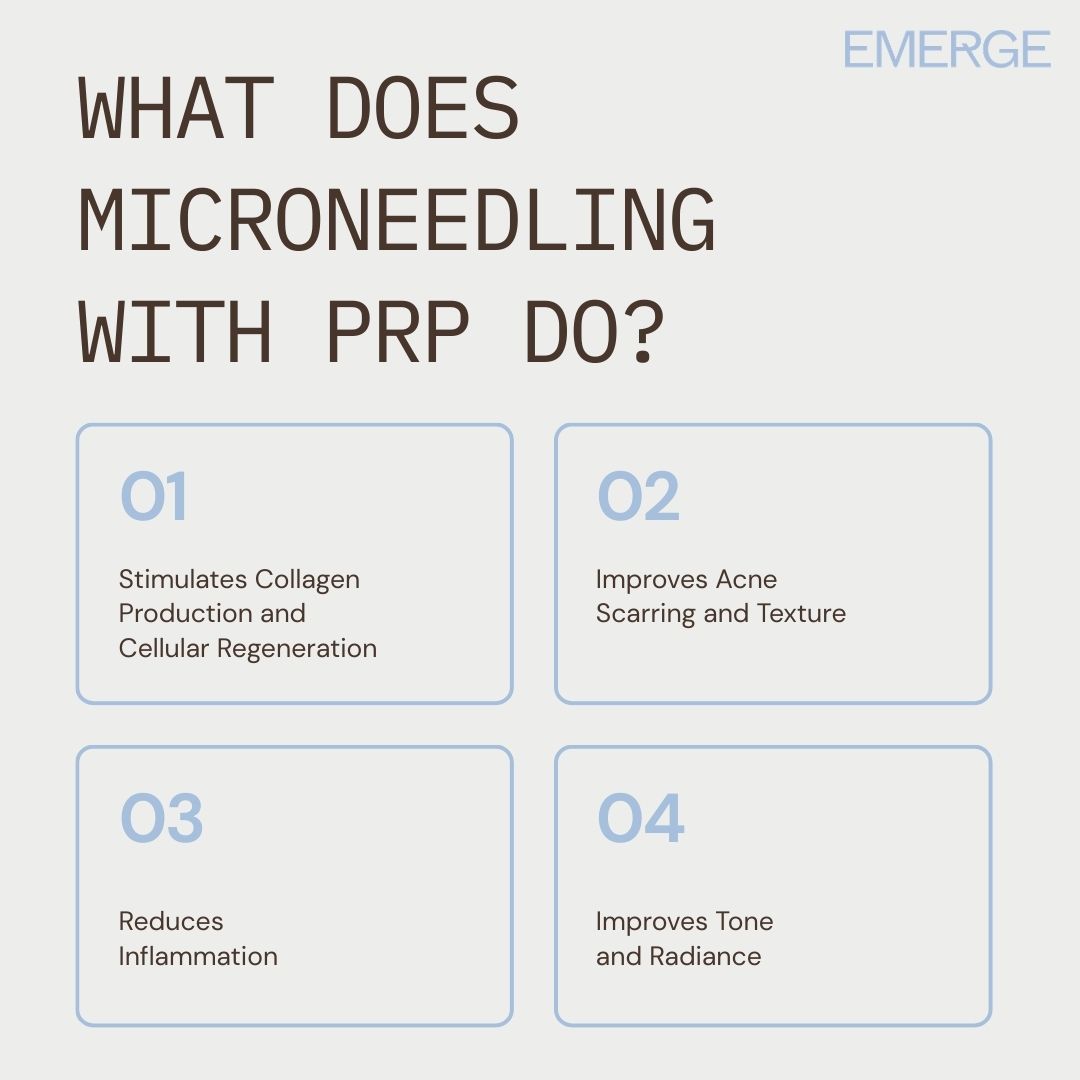
What Does Microneedling with PRP Do?
Ready to see what microneedling with PRP can actually do? Here’s a patient-focused breakdown through a medical aesthetic lens:
Stimulates Collagen Production and Cellular Regeneration
Combining microneedling with PRP creates the ideal environment for faster healing, firmer skin, and improved structural integrity. As the fine needles create micro-injuries, the wound-healing process signals fibroblasts to begin producing collagen and elastin.
PRP growth factors can’t penetrate the skin’s barrier if they’re simply topically applied. Thanks to those micro-injuries, however, PRP can directly reach the deeper dermal layers, delivering a concentrated dose of growth factors exactly where the skin is actively repairing itself.
Improves Acne Scarring and Texture
Visible improvement in acne scarring and uneven skin texture isn’t guesswork; it’s a medical-grade response. In fact, a split-face study found that PRP with microneedling was significantly more effective than microneedling alone. Because PRP enhances collagen remodeling, it fills in, smooths, and reduces the depth of acne scars and uneven texture.
Reduces Inflammation
Naturally, while non-surgical procedures result in less downtime than surgical procedures, they aren’t without their side effects. Redness, inflammation, and peeling are totally common—and completely expected. However, PRP’s concentrated growth factors accelerate the natural healing response.
So, yes, you’ll still experience redness and inflammation. However, growth factors are natural anti-inflammatory agents. And because they’re applied directly to the deeper skin layers, they enhance tissue repair and shorten recovery time.
Improves Tone and Radiance
As we age, there are many subtle signs of aging we don’t typically notice. Temples become hollow, the chin shrinks, earlobes sag (yes… we meant to say the earlobes), lips begin to flatten, and jawlines blur. This is why at Emerge, we emphasize that we don’t chase lines—we chase facial balancing.
That said, as collagen and elastin production increase, so does tone and radiance. Hollow areas that stopped catching the light begin to plump, “snap back,” and reflect light more evenly. As a result, your skin looks smooth, even, radiant, and firm.
How Much Is Microneedling with PRP?
The cost of microneedling with PRP varies depending on the physician, clinic, and treatment area. However, transparency is key in medical aesthetics, so here’s a quick, honest explanation:
Generally, microneedling with PRP is slightly more expensive than standalone microneedling, with average costs ranging from $600 to $1,500 per session. The time required for medical procedures, blood drawing, and centrifugation all factor into the overall cost. The medical time involved, including drawing blood and centrifugation, adds to the overall cost.
However, during your consultation, your physician will provide a comprehensive breakdown of individual costs, allowing you to determine whether treatment is within your budget.
Is Microneedling with PRP Worth It?
Dr. Kling brings surgical-level expertise to non-surgical aesthetics—and honest, transparent advice is a crucial part of that. (You can see her talk about the importance of choosing the right physician on our Instagram!) With this in mind, PRP-enhanced microneedling is significantly more effective than microneedling alone.
In general wound healing, PRP amplifies the body’s natural healing response, resulting in significant potential for conditions like androgenetic alopecia. (Yes, microneedling and PRP can treat hair restoration, too!) Another study found that microneedling with PRP led to multiple visible improvements, including reduced pore size and texture, reduced hyperpigmentation, and increased collagen density.
This treatment doesn’t just leverage structural repair—it enhances how the skin heals and rebuilds itself over time. The combination of microinjuries and growth factors leads to a stronger collagen scaffolding, improved elasticity, and more resilient skin—all encouraged by your own platelets.
Interested in learning about how microneedling compares to other treatments? Check out our guide, “Microneedling vs. Laser: A Complete Guide to Skin Rejuvenation.”
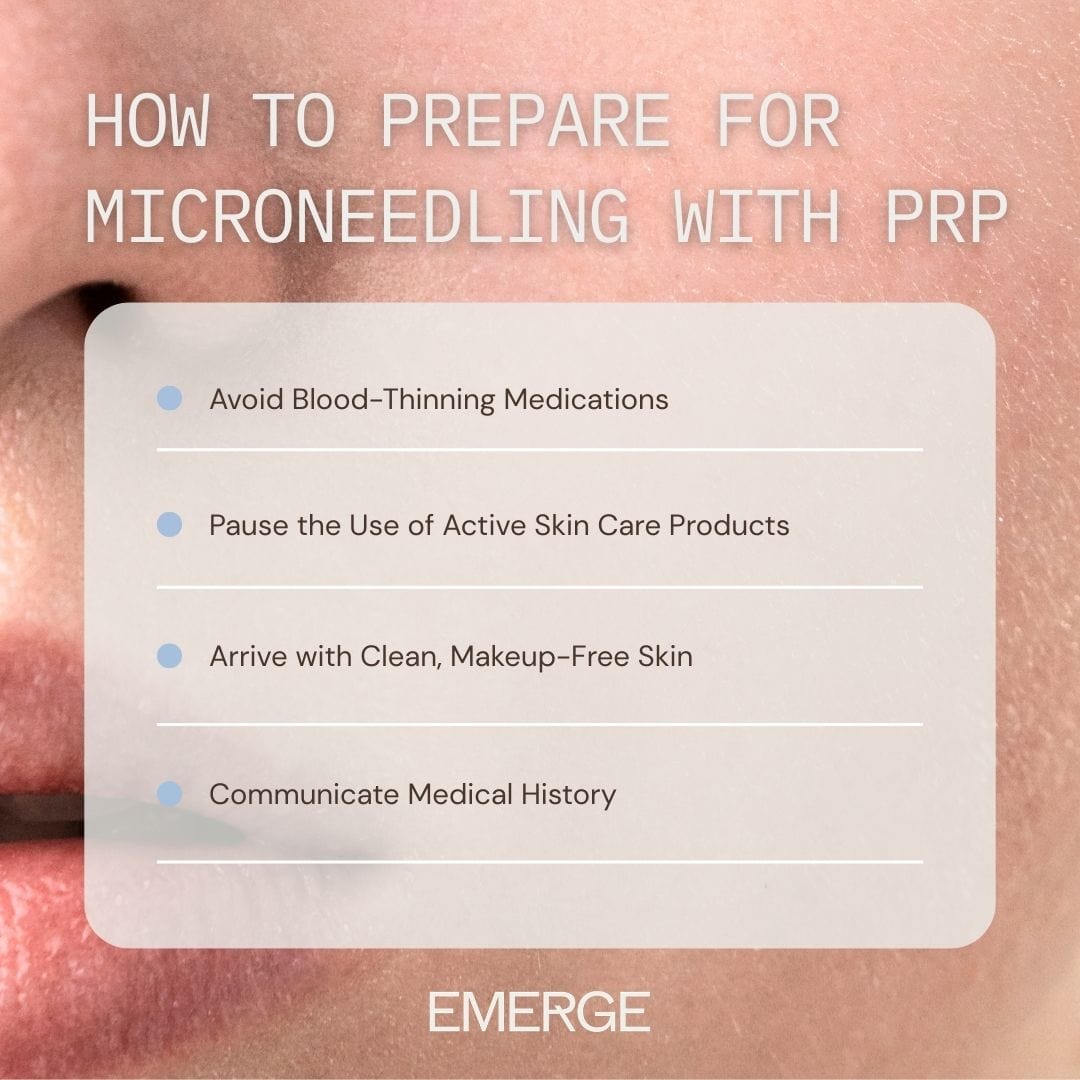
How to Prepare for Microneedling with PRP
Dr. Kling discussed a super quick breakdown of what to do before your microneedling treatment over on our Instagram. After you watch that, check out a more comprehensive explanation for pre-treatment care:
Avoid Blood-Thinning Medications
For at least a week before your microneedling procedure, avoid taking any blood-thinning medication. This includes pain medicines, such as aspirin and ibuprofen, as well as supplements like fish oil and vitamin E.
PRP relies on platelets to stimulate healing, and blood thinners can reduce platelet viability. This means the treatment may be less effective or less concentrated.
Pause the Use of Active Skin Care Products
Many people think that you should pause the use of actives post-microneedling treatment—which you should! However, you should also avoid using skincare products containing actives for at least 3–7 days before treatment.
Actives are powerful ingredients that ultimately cause the skin to become more reactive. And the last thing you want going into a microneedling treatment is sensitive, reactive skin. Pausing active skincare allows your skin to remain stable and uninflamed.
Arrive with Clean, Makeup-Free Skin
Ideally, you want to arrive at your appointment with clean, makeup-free skin. This helps create a sterile environment, ensuring oils and unintended ingredients don’t block the treatment’s efficacy. Because, remember, microneedling is creating small micro-injuries to the skin—you don’t want contaminants in them.
Coming to your microneedling appointment after work, an event, or a day full of wearing makeup? No problem! Before beginning, Dr. Kling will gently remove your makeup from any desired treatment areas.
Communicate Medical History
During your consultation, plan to discuss medical history and current medications. Not only does this allow your physician to discuss available treatment options, but it also allows them to guide you on any post-treatment expectations.
For example, microneedling can sometimes trigger cold sore flare-ups. This is entirely normal. However, telling your physician about a history of cold sores allows them to take preventative measures.
Ready to schedule your appointment? Here’s a video of what to expect during microneedling treatment, from the time you arrive to the last step!
What to Expect After Microneedling with PRP
One of the most common questions Dr. Kling gets post-treatment is: “What does the healing timeline look like?” We have a microneedling healing timeline over on our Instagram, but here’s a more comprehensive overview of what to expect:
1–2 Days:
The first couple of days, you may notice that your skin feels tight, warm, and slightly swollen. It’s most commonly compared to a mild sunburn! Avoid washing your face or applying strong actives, such as retinoids, peptides, vitamin C, or exfoliating acids.
3–5 Days:
By days 3–5, you’ll begin to notice redness, swelling, and tightness decreasing and peeling or flaking taking over. This is completely normal; it’s a sign that the treatment is working as it’s supposed to! To help with this, apply gentle, fragrance-free, medical-grade moisturizers.
One of our favorites is Alastin Ultra-Nourishing Moisturizer. It’s calm, supports the production of new, healthy elastin and collagen, and works with post-procedure skin—not against it.
5–7 Days:
Days 5–7 are considered the “recovery phase.” Your skin will start to feel normal again as new collagen production begins. You won’t see full results just yet, but you may notice improvement in skin texture and tone.
2 Weeks:
By 2 weeks, most patients begin to notice visible improvements. Skin is smoother, fine lines and acne scarring begin to minimize, and the skin tone looks more even and radiant. While you should be using SPF every day (we mean it!), now’s the time to take it seriously. Your skin may still be sensitive, and sun exposure can negatively affect results.
Opt for something like Alastin Hydratint Pro Mineral Broad Spectrum Sunscreen. This medical-grade sunscreen protects against UVA/UVB rays, evens and brightens skin, and provides long-lasting hydration.
4–6 Weeks:
Since you decided to get PRP with your microneedling treatment (yay!), you’ll generally experience significant rejuvenation by 4–6 weeks. The skin looks firm, lifted, and glowy. Plus, acne scars, fine lines, and pores look visibly minimized.
Now’s the time to call Emerge and schedule your next appointment with Dr. Kling!
3–6 Months:
Peak results of microneedling with PRP typically happen around 3–6 months. Your skin will look refreshed, healthy, glowy, and hydrated. Fine lines and wrinkles are softened. Acne scars and dark spots are visibly reduced. You’ll look like a brighter, happier, more rejuvenated you.
To learn more, review our detailed Microneedling Aftercare guide!
How Long Does Microneedling with PRP Last?
Microneedling with PRP results typically lasts 6–12 months. More specifically, most patients begin noticing minor improvements within 2–4 weeks, with peak results becoming visible at 3–6 months. However, microneedling with PRP is not a permanent treatment. Just like with any skin rejuvenation procedure, consistency is key!
Dr. Kling recommends booking microneedling with PRP treatments quarterly, as this supports cumulative collagen production, keeping the skin healthy, firm, and resilient in the long term. It’s also important to remember that results vary from person to person. Differences in age, skin quality, biology, and baseline condition all impact results, longevity, and technique.
We’d love to hear about your experience! How long do your results typically last? Leave a comment and let us know over on our Instagram! You may even help other clients make decisions about their own treatment desires and goals.
Frequently Asked Questions About Microneedling with PRP
What is the downtime for microneedling with PRP?
Compared to other procedures, the downtime for microneedling is extremely minimal. You’ll generally experience a few days of side effects, but it’s nothing that requires you to hide out at home for a week. Most people return to work within 24–48 hours.
When do you see results from microneedling with PRP?
Visible results from microneedling with PRP begin to appear within 2–4 weeks, with continued improvement over 3–6 months as collagen and elastin production increase. Many people notice an initial glow in the first week, followed by noticeable improvements in the weeks that follow.
Can you have acne and do microneedling with PRP?
It’s generally recommended to avoid microneedling with PRP treatments until inflammatory acne has subsided. The needle may spread bacteria, leading to additional breakouts and worsening inflammation. However, your physician will evaluate your existing acne and tailor your treatment plan to your current condition.
When do I wash my face after microneedling with PRP?
When washing your face, wait at least 8–24 hours post-microneedling with PRP. It’s important to let the plasma sit on the skin to maximize healing. When you do decide to wash your face, use gentle, medical-grade skincare. Alastin Ultra-Calm Cleansing Cream is a fantastic option. It’s mild, creamy, gently cleanses, reduces potential irritation, and is perfect for sensitive, vulnerable, and post-cosmetic treatment skin.
How often should you get microneedling with PRP?
While microneedling with PRP is an incredibly effective treatment, the best results come from consistency. We recommend scheduling treatments every 6–12 months for long-lasting, healthy, noticeable improvements in skin quality. To learn more about the frequency of treatments, check out our daily, monthly, and quarterly skincare timeline!
Can microneedling with PRP be combined with other procedures?
We LOVE this question, and the answer is: absolutely. The best approach to skin rejuvenation is a multimodal plan. The most common treatments to combine with microneedling are biofiller, Botox, and lip filler. Ultimately, it’s a matter of personal preference—and your physician will discuss your individual goals and treatment plans during your appointment.
Does microneedling with PRP hurt?
At Emerge, we’ll never say that a treatment is painless. However, we do take proactive steps to make microneedling with PRP as seamless as possible. At our office, we’ll numb the treatment areas with topical lidocaine—and always check in with how patients are feeling during the process. If you’re on the fence, know this: Dr. Kling has never had a patient discontinue microneedling treatments due to discomfort.
What’s the difference between microneedling with PRP and microneedling with exosomes?
Platelet-rich plasma (PRP) is autologous, meaning it’s derived from your own blood, then drawn and centrifuged. It supports healing and collagen production. Exosomes are lab-cultured cell-to-cell messengers. They send signals and messages to other cells to stimulate healing and inflammation.
Both PRP and exosomes stimulate collagen production, and both enhance the outcomes of microneedling treatments. Neither is universally “better.” Your physician will assess your needs and goals during your consultation and recommend the option that best suits your unique treatment plan.
Head over to our Instagram to hear Dr. Kling explain the difference between PRP and exosomes!
Microneedling with PRP is a regenerative, results-driven treatment that boosts healing, collagen, and glow.
Small decisions you make now become the skin you live in later. And we know that sounds intimidating! However, with a structured plan, it truly doesn’t have to be. Prevention is always easier than correction, and microneedling with PRP is one step in the multimodal approach that can give you youthful, radiant, and structurally sound skin. The goal is never to change how you look—it’s to enhance it.
Skin rejuvenation isn’t just about the treatments you get—it’s about who performs them. Dr. Kling is a board-certified Emergency Medicine physician with a wealth of expertise in aesthetic medicine and non-surgical cosmetic procedures. She’s not just a physician; she’s a compassionate advocate who understands the significance of self-care.
Schedule your appointment at Emerge to learn which treatments may be right for you!
Ready to learn even more? Head to the Emerge Aesthetics blog, where we explain complex aesthetic treatments in easy-to-understand ways. We discuss all things medical-grade skincare, lifestyle adjustments, and tailored, rejuvenating treatments. And, of course, don’t forget to follow the Emerge Aesthetics Instagram! We’re constantly offering advice, discounts, and deals you won’t want to miss out on.