
Women all over the world have looked up tips, tricks, and secret hacks for reducing cellulite on their buttocks. From dry brushing to “cellulite jeans,” there are many tools out there—some genuinely work, others overpromise and underdeliver. But here’s the truth: cellulite is normal, it’s natural, and it happens regardless of body type, lifestyle factors, or weight.
However, that doesn’t mean it isn’t one of the first aesthetic concerns that catches your eye, impacting everything from confidence to how comfortable you feel in your own skin.
Luckily, there ARE real ways to reduce the appearance of cellulite. The most effective approach? Combining advanced medical aesthetics, like AVAVA laser treatments, daily movement and diet, and medical-grade skincare products. Because at the end of the day, it isn’t trendy hacks that will give you natural, long-lasting results—it’s a thoughtful, multimodal approach.
And you don’t have to figure out that approach alone! In this guide, we’re discussing how to reduce cellulite on the buttocks. We’ll talk about what it is, what it looks like, what causes it, and different cellulite treatment options that truly make a difference.
How to Reduce Cellulite on Buttocks: A Treatment Guide
There’s no single solution that will get rid of cellulite on the buttocks. Because cellulite forms beneath the skin—where fat cells interact with connective tissue—it requires a more comprehensive approach. That’s why if someone tells you it’s JUST about “losing weight” and “eating better,” not only are they wrong, but they’re oversimplifying a concern that’s shaped by far more than lifestyle alone.
The most effective skin tightening strategies combine exercise, healthy habits, and targeted treatments that work below the surface. That’s when you’ll see a significant improvement in skin texture, overall appearance, and your confidence. Take it from Dr. Kling: feeling hot makes life more enjoyable.
Interested in getting a head start on learning about one of the most impactful treatments for skin tightening? Check out Dr. Kling’s “This or That: Laser Treatment Edition” video!
What Is Cellulite on Buttocks?
Cellulite is a condition in which fat deposits under the skin push against connective tissues, causing a lumpy, dimpled appearance. When we mentioned earlier that it was common, consider this: approximately 80–98% of postpubertal women have cellulite. And most experience it in areas like the buttocks, thighs, and hips—areas with higher fat storage.
Cellulite forms as a result of the interaction between fat cells and connective tissues—not just weight, age, or lifestyle alone. While these factors can definitely impact cellulite, they aren’t the sole causes. To get even deeper, women are more likely to have cellulite due to variations in fat distribution, connective tissue structure, and hormones.
Even women who prioritize fitness, healthy diets, and consistent movement can experience cellulite. This isn’t a reflection of habits, effort, or discipline—it’s largely influenced by structural or biological factors. But that doesn’t mean we can’t do something about it.
What Does Cellulite on Buttocks Look Like?
Cellulite on the buttocks often looks dimpled and textured. You’ll probably hear brands, products, and even different cosmetic surgeons use phrases like “cottage cheese,” “orange peel,” or “mattress-like.” (Yeah, not the most flattering descriptions.) More importantly, cellulite on the buttocks often appears as:
- Dimpled texture
- Uneven or rippled skin
- Areas of slight bulging or indentation
- Small depressions
- Lumpiness, especially when the skin is compressed
Cellulite can also appear differently depending on factors such as lighting, body position, muscle contraction, and even hydration. Ultimately, the severity can differ depending on skin thickness, elasticity, and underlying tissue structure. Here’s a better breakdown of cellulite stages based on Nürnberger-Müller Classification:
| Grade | Description |
| Grade 0: | There is no visible cellulite on the body, even when pinching or contracting the skin. |
| Grade I: | The skin appears generally smooth, especially when lying down or standing. You can see a slight dimpling only when pinching or contracting the skin. |
| Grade II: | When lying down, the skin appears smooth and doesn’t reflect cellulite. However, you may notice a more dimpled appearance when standing, sitting, or contracting. |
| Grade III: | The skin has a dimpled, textured appearance regardless of body position or muscle contraction. Many describe their skin as having deep “peaks and valleys.” |
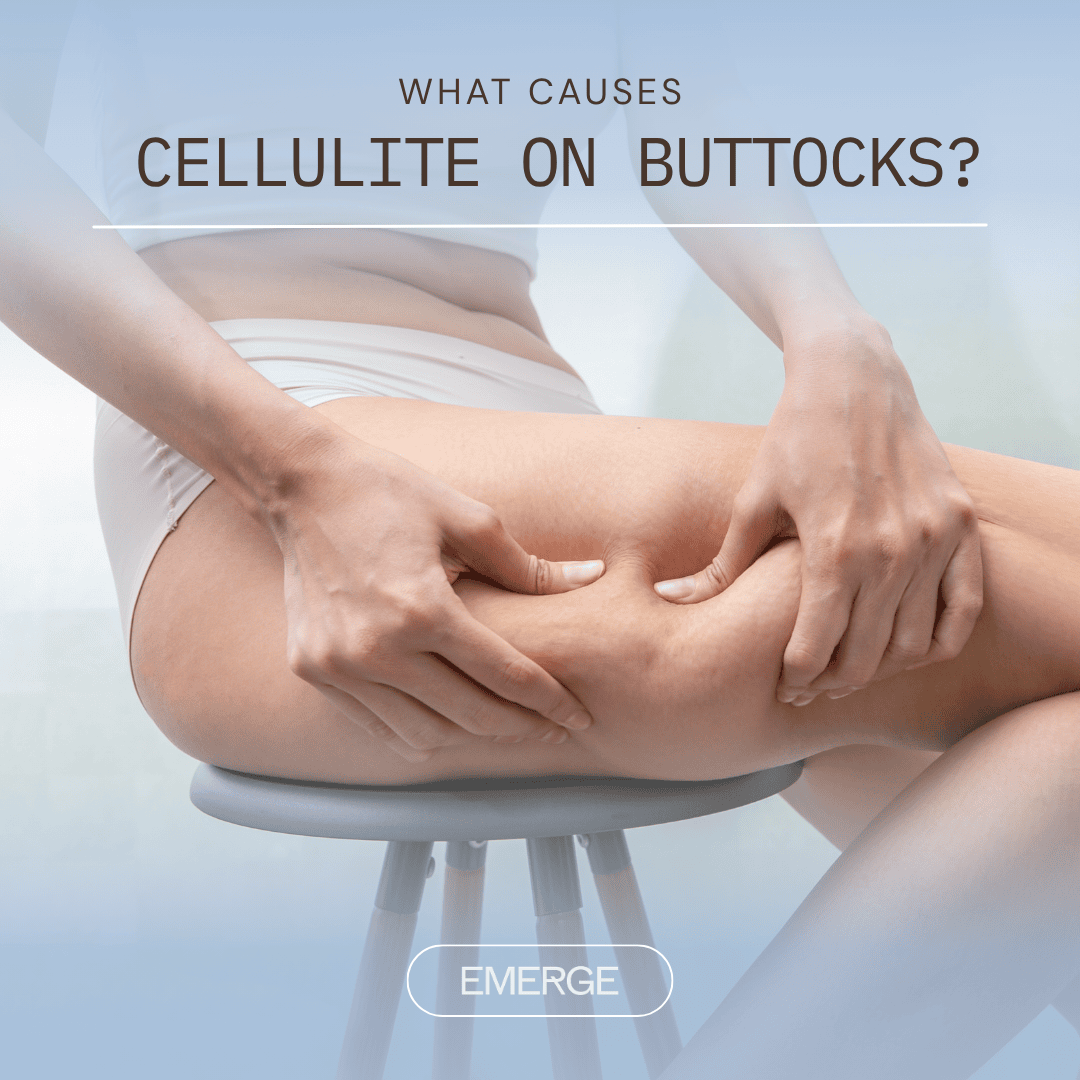
What Causes Cellulite on Buttocks?
Several factors contribute to how cellulite forms on the buttocks, including:
- Genetics significantly influence skin thickness, fat distribution, metabolic weight, and connective tissue structure.
- Hormonal changes, such as estrogen fluctuations, affect fat storage while simultaneously breaking down collagen.
- Poor circulation reduces oxygen and nutrient supply, triggering fluid accumulation that can worsen cellulite.
- Sedentary lifestyles reduce the supply of oxygen and nutrients, triggering fluid accumulation that can worsen cellulite.
- Loss of skin elasticity causes the skin to become thinner and weaker, leading connective tissue bands to pull the skin down more tightly and create deeper, more visible dimples.
As mentioned previously, cellulite isn’t the result of one single factor. It’s a combination of biological, structural, and lifestyle influences that interact beneath the skin. And with the right approach, you can change that appearance—no trendy hacks or social media influencer-driven sales pitches necessary.
Curious about learning more? Read our guide, “How Does Body Contouring Work?” next!
Can You Get Rid of Cellulite on Buttocks?
You can’t completely get rid of cellulite on the buttocks—it’s a structural characteristic, not a matter of body fat. Don’t let that discourage you, though! You can definitely reduce the appearance of cellulite with the right approach. And the best part? You don’t need plastic surgery or invasive treatments to do it.
Ultimately, as we mentioned earlier, cellulite develops beneath the skin; treating it requires more than surface-level solutions. And with innovative, advanced treatments like AVAVA laser technology, that solution may be more accessible than you realize. (Just check out the dramatic results our patients experienced after one AVAVA session!) With the right combination of lifestyle adjustments and cellulite treatment options, it’s completely possible to reduce cellulite appearance and create smoother, firmer-looking skin.
And if you are considering professional treatments, your physician matters.
Dr. Kling, Emerge Aesthetic’s double-board certified Emergency Medicine physician, doesn’t just “perform treatments.” She’s a compassionate advocate for dedicated mothers, caring grandmothers, busy professionals, or even men, all with one goal: to look and feel their best. You tell her the outcome you want, and she builds the plan to get you there.
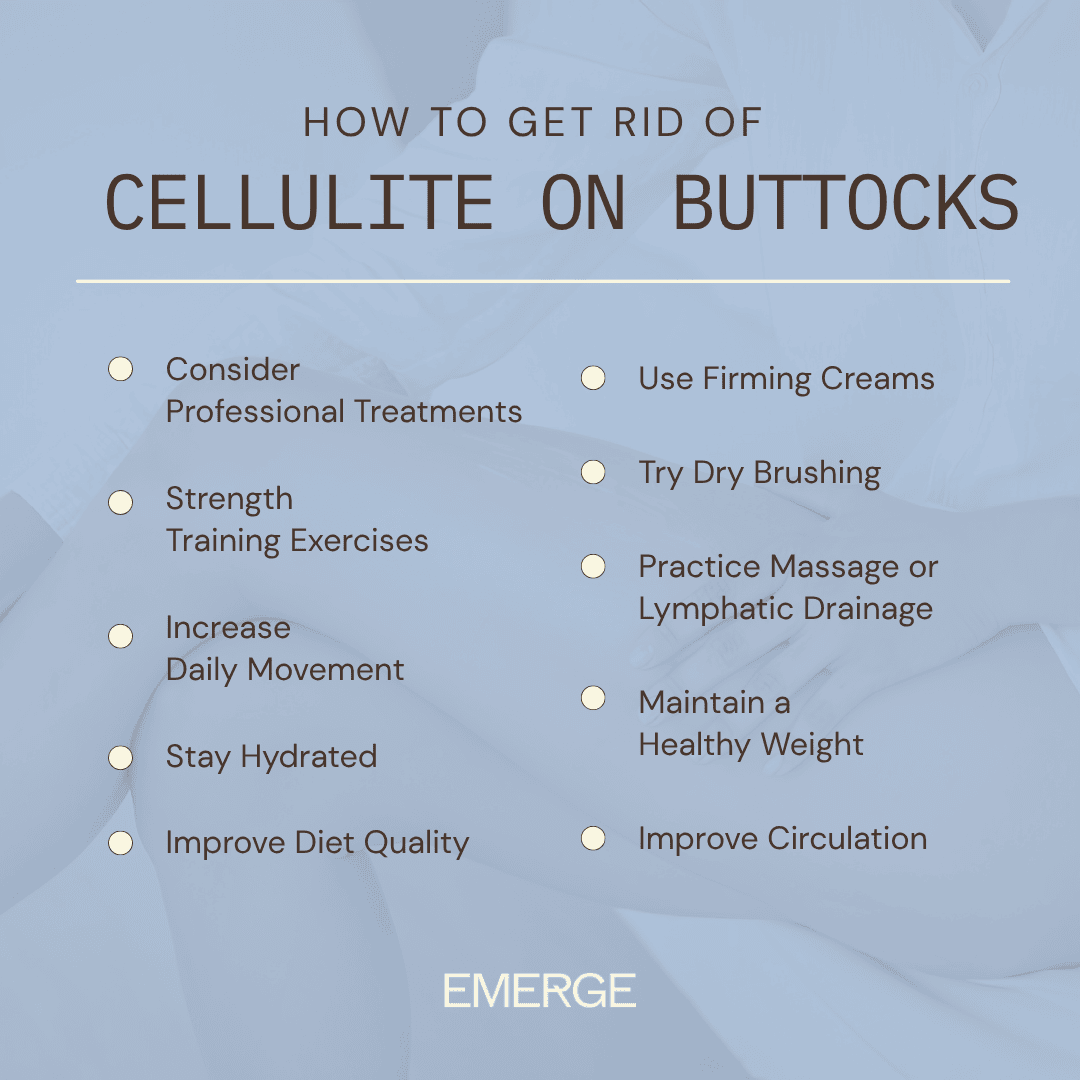
How to Get Rid of Cellulite on Buttocks
Consider Professional Treatments
If you’ve looked into professional treatments to reduce cellulite, you’ve probably come across a few common options. There’s vacuum-assisted precise tissue release (VAPTR), a device that lifts the skin and allows for tissue mobilization. There’s also Acoustic Wave Therapy (AWT), a treatment that uses high-frequency sound waves to stimulate collagen production and break down fat deposits.
Neither of those treatments is the AVAVA laser. This FDA-approved, minimally invasive, non-ablative laser system uses patented Focal Point Technology™ to deliver energy at precise depths in the skin. This technology delivers a high-energy laser beam directly into the dermis, stimulating collagen through micro-targeted thermal zones.
And unlike ablative laser procedures, AVAVA uses ComfortCool™ technology—a sapphire contact tip that provides cooling before, during, and after each laser pulse. That means tighter skin, smoother texture, and improved skin quality with less damage and less downtime. And here’s one of the best parts: you don’t have to stop at your buttocks.
AVAVA is safe for the face and body and effectively treats everything from facial wrinkles to knee skin laxity. The results speak for themselves. If you’re ready to see what’s in store, visit Emerge Aesthetics—the only practice in North Jersey with the AVAVA laser.
Strength Training Exercises
Building muscle naturally creates a firmer, smoother foundation. More specifically, it enhances circulation, strengthens connective tissues, and fills out areas where fat cells would otherwise push through.
While strength training won’t directly reduce cellulite appearance, it can make dimpling less noticeable. And when you combine it with additional lifestyle changes and professional treatments? That’s when you’ll notice real results. Plus, strength training is self-care in and of itself.
Increase Daily Movement
Increasing daily movement isn’t our subliminal way of encouraging weight loss—though that can be an added benefit! More importantly, daily movement builds muscle, improves circulation, and increases blood flow—all of which contribute to skin health.
Over time, this can help reduce the appearance of cellulite. Increased blood flow boosts collagen production, while consistent movement reduces fluid retention. Together, this builds a stronger foundation for firmer, tighter, smoother-looking skin.
Stay Hydrated
Even if you have your go-to emotional support water bottle, it can still be hard to stay hydrated. However, hydration is a key factor for reducing the appearance of cellulite. When you’re dehydrated, your skin is weaker and thinner, causing cellulite to appear more prominent. Dehydration can also lead to bloating, because your body’s trying to retain all the water it has.
Hydration helps strengthen the skin’s structure, improving elasticity and supporting circulation and lymphatic function. The more consistent you are with your water intake, the better your body can flush out metabolic toxins that lead to inflammation, congestion, and more visible cellulite.
Improve Diet Quality
This one is easier said than done, but improving your diet quality can be an essential part of reducing cellulite. Processed foods and sugars stimulate lipogenesis—the metabolic process of converting non-fat food into fatty acids. What does this mean for you? This process enlarges fat cells, contributing to a more textured appearance.
On the other hand, high-quality protein, antioxidants, and whole food ingredients support collagen production, skin health, and body composition. Weight loss and good-for-you foods won’t eliminate cellulite on their own—but they can reduce the volume of fat cells contributing to the appearance of cellulite.
Use Firming Creams
Medical-grade isn’t a marketing term; it refers to formulations designed with higher concentrations of active ingredients and clinically supported efficacy. And when you’re looking to actually make a difference in your skin health, medical-grade products penetrate more effectively and deliver targeted improvements over time.
Look for formulas that contain 0.3% retinol, caffeine, and peptides. Here’s a better breakdown of what each ingredient does:
- Retinols and retinoids increase collagen production, thickening skin and disguising underlying fat deposits that contribute to a dimpled appearance.
- Caffeine acts as a vasoconstrictor, helping shrink fat cells and boost blood circulation, resulting in smoother, firmer skin.
- Peptides are amino acid chains that signal cells to produce more collagen, repairing the connective tissue and leading to firmer, tighter skin. (Learn more in our post, “Benefits of Peptides in Skincare!”) And if you want a product to start with, Alastin TransFORM Body Treatment is the best.
Topical treatments alone won’t reach deep enough to target the structural changes needed to reduce cellulite. They can, however, work well within a multimodal approach, supporting the skin’s surface while professional treatments address what’s happening beneath.
Try Dry Brushing
Just like with everything else in this list, dry brushing alone won’t get rid of cellulite. However, it’s an excellent addition to your self-care and skincare routines. Using a firm dry brush in upward strokes can help temporarily stimulate the skin, creating a smoother, more refreshed appearance.
Plus, as a result of the mechanical exfoliation, creams and firming treatments can penetrate more effectively! Think of dry brushing as a supportive habit. It won’t replace professional treatments, but it can complement them.
Practice Massage or Lymphatic Drainage
Massages and lymphatic drainage techniques can support the body’s natural detoxification process by encouraging the movement of fluid beneath the skin. More specifically, these techniques can support blood flow, which helps eliminate metabolic waste from connective tissues.
Like dry brushing, lymphatic drainage offers temporary benefits—not permanent structural changes. However, when done consistently? It’s a beneficial upgrade to a multimodal approach for reducing the appearance of cellulite.
Maintain a Healthy Weight
Maintaining a healthy, stable weight can prevent additional stress on connective tissues beneath the skin. Whether from weight gain or loss, significant fluctuations can impact skin elasticity, potentially making cellulite more prominent.
However, remember what we said earlier! Cellulite isn’t a result of weight gain—it’s a structural response to connective tissue and fat deposits. So while it’s helpful, weight loss alone won’t reduce cellulite. The goal isn’t to drop inches or lower the scale—it’s to combine healthy lifestyle adjustments with professional treatments that support your goals.
Improve Circulation
Healthy circulation plays a key role in overall skin quality. The better the blood flow, the more efficiently skin can receive nutrients and oxygen—both of which support collagen production and improve elasticity.
And this doesn’t have to be complicated. It’s as simple as incorporating regular movement and staying hydrated. These two factors won’t single-handedly get rid of cellulite, but they can enhance the effectiveness of other treatments by supporting tissue health from within.
Cellulite is a normal, common concern—but there are lifestyle adjustments and professional treatments that can reduce its appearance.
When we say that you’re not the only woman in the world trying to get rid of cellulite on the buttocks, we mean it. It’s an extremely common concern that’s affecting people’s confidence worldwide. However… it doesn’t have to. With the right combination of lifestyle adjustments, medical-grade formulas, and professional treatments, you don’t have to just live with cellulite—you can treat it from the inside out.
Dr. Kling, our double-board-certified Emergency Medicine physician, brings surgical expertise to non-surgical aesthetics. And she does so by prioritizing safety, education, and patient anatomy. Your aesthetic plan shouldn’t feel like a group project—it should be grounded in clinical expertise, individualized assessment, and a deep understanding of your goals.
Schedule an appointment at Emerge Aesthetics and see how we can make that happen.
Until then, visit the Emerge blog for patient-focused guides on all things rejuvenation and natural restoration. Also, don’t forget to follow us on Instagram! You won’t want to miss out on all of our latest deals and updates.
You might also like: How to Tighten Loose Abdominal Skin After Pregnancy