
Laser treatments for skin rejuvenation have taken off in popularity. More people are discovering they can help with sun damage, uneven skin tone, and early signs of aging. And all without surgery. But not all lasers are created equal.
Some are better for certain skin concerns than others. Some also carry more intensity and downtime than others. So it can be challenging to know where to start when considering laser skin resurfacing for yourself. That’s why I want to break down a common question here at Emerge Aesthetics: is Moxi a CO2 laser?
The answer is no. And that distinction matters. It highlights important differences between these two resurfacing treatments, including which one may be right for you.
First, a quick introduction. I’m Dr. Rochelle Kling, a double board-certified Emergency Medicine physician. I’m also surgically trained, with seven years of residency training in general surgery and emergency medicine. I perform all of the laser treatments here at Emerge Aesthetics myself.
Additionally, I have a unique understanding of how skin is damaged, heals, and regenerates because of my training and experience in surgery. My approach to even non-surgical treatments like lasers is directly influenced by that. I want you to walk into your next consultation already understanding the basics.
Is Moxi a CO2 Laser?
Nope. Moxi and CO2 lasers are actually quite different (though they do fall into the same general category of resurfacing treatments).
Here’s a quick rundown of each one:
Moxi is a non-ablative resurfacing laser that uses a 1927nm wavelength to target water within cells. This encourages your body’s natural healing response to kick in and start gentle rejuvenation, with little-to-no downtime.
On the other hand, CO2 laser resurfacing is an ablative process. It removes layers of the dermis and epidermis using a carbon dioxide laser with a wavelength of 10,600 nm. During the subsequent wound-healing response, this promotes collagen remodeling.
That word “ablative” is the key difference between these two lasers. Ablative means that the CO2 laser actually removes (aka ablates) the top layer of your skin. Moxi does not. And that distinction has trickle-down effects on pretty much every other comparison between these two lasers. It shapes downtime, candidacy, and the skin concerns each one can effectively treat.
Thus, there are a few important things to consider before making your appointment. These include projected results, healing time, ablative versus non-ablative technology, and treatment intensity.
What Is Moxi Laser Treatment
Moxi is a non-ablative fractional laser from Sciton that’s used for skin rejuvenation on the face and body. It targets water within the skin, making it safe for all skin types and tones. Still, approach laser treatments of any kind with extra care if you have a darker skin tone.
It’s a rejuvenating treatment that may help address many of the early signs of aging, including:
- Discoloration and sun damage
- Uneven skin tone and texture
Compared to other resurfacing treatments, though, Moxi is on the milder side. That makes it a good maintenance treatment. It’s also a good starting point for younger patients who don’t need or want a more intensive treatment just yet.
Moxi is also a great option if you want to improve the tone, texture, and overall quality of your skin. And you won’t have to block off a whole week for recovery.
How Does Moxi Laser Work
Moxi doesn’t ablate or remove the top layer of your skin. But it still has the ability to initiate skin renewal and collagen production within your skin.
Here’s how:
That 1927nm wavelength we mentioned? It’s attracted to water, and your skin cells are full of it.
As a fractional laser, Moxi doesn’t treat the entire skin surface all at once. Instead, it focuses its energy in tiny columns spread out across the skin. The tissue in between those columns stays intact. That intact tissue acts as a sort of bridge, allowing the treated areas to heal faster.
By targeting the water in your skin cells, Moxi uses controlled laser energy to encourage your body to produce more collagen. (If you don’t remember from your biology days, collagen is the scaffolding that keeps your skin firm and smooth.) And it does this without removing the top layer of the skin (the epidermis) the way an ablative laser would.
That’s why Moxi can be an effective rejuvenating treatment while still remaining mild enough to barely require any downtime.
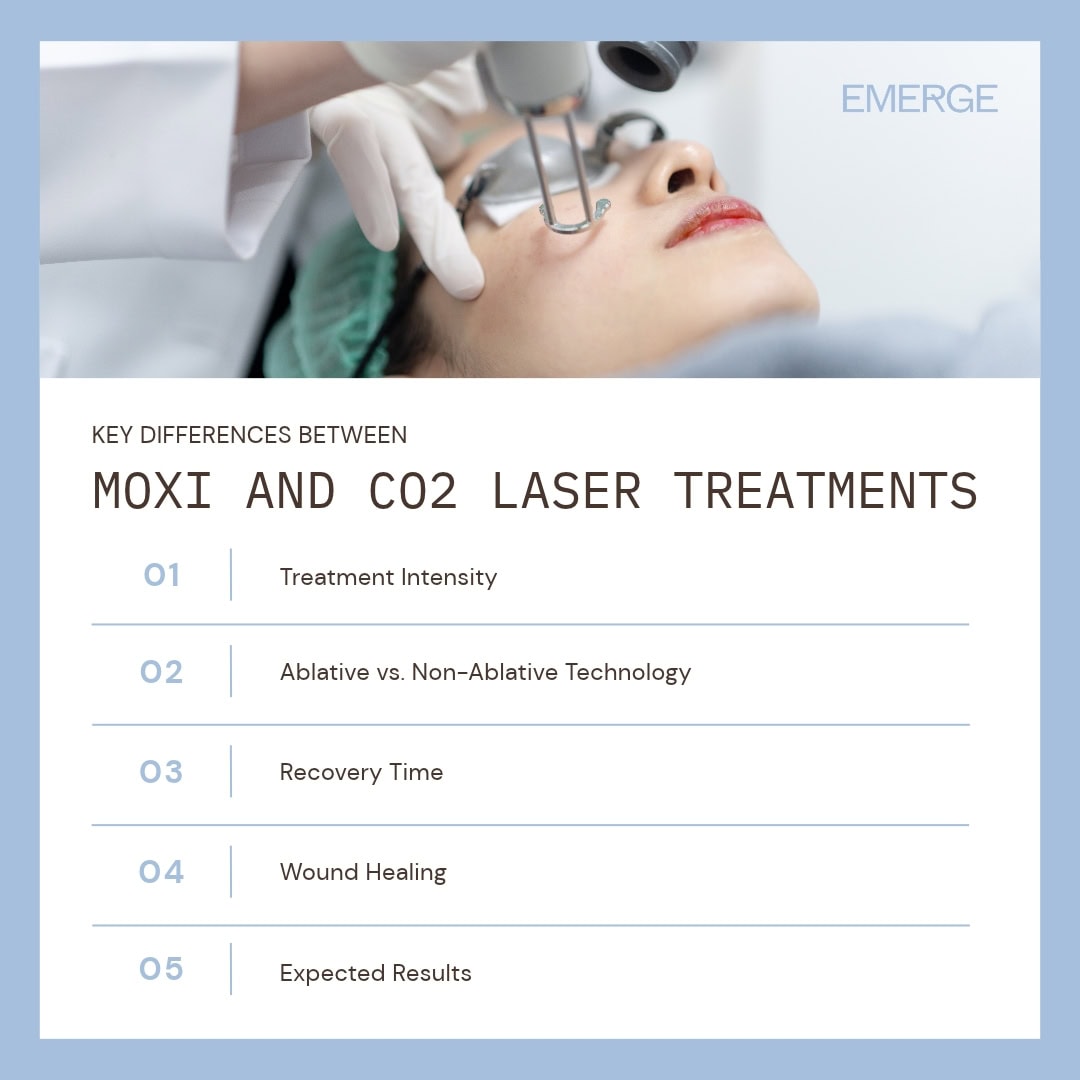
What Is the Difference Between Moxi and CO2 Laser Treatments
In terms of results, both fractional CO2 and Moxi can help improve discoloration, uneven skin tone and texture, and more. But they get there in different ways.
Treatment Intensity
Fractional CO2 uses concentrated laser energy to literally zap away damaged skin cells. It also encourages collagen production deeper within the skin. Fractional CO2 laser treatments are generally used for more severe concerns due to how intensive the treatment is. Moxi sits at the gentler end.
Ablative Versus Nonablative Technology
A fractional CO2 laser treatment is an ablative treatment, meaning it removes tissue. Fractional just means that instead of treating the entire area in one go, the laser energy is focused in columns. That’s similar to how the Moxi laser works. At Emerge Aesthetics, I use the SmartXide Pro CO2 laser.
Moxi, on the other hand, is non-ablative. It works below the skin’s surface to encourage cell turnover and collagen production without removing the surface of the skin.
Recovery Time
In terms of recovery, Moxi has minimal to no downtime. Fractional CO2 laser treatments can have a recovery period of a few days to a week or more.
Wound Healing
Because CO2 removes the top layer, it asks more of your wound healing process. With Moxi, your skin’s wound healing has far less to repair. And with advancements in fractional ablative CO2 lasers, the recovery period is not nearly as long as it once was.
Expected Results
Choosing between Moxi and a fractional CO2 laser comes down to what your treatment goals are. Are you looking for more dramatic results, such as correcting deeper scars or lines and wrinkles? Fractional CO2 may be a better option for you.
Would you prefer gradual results achieved through a series of treatments (most patients start with two to four)? Want to encourage overall collagen production to maintain youthful, healthy-looking skin? Moxi may be a better fit.
As always, results from skin rejuvenation treatments vary depending on your skin and your individual concerns. So let’s discuss your goals during a consultation. That way, we can determine together which treatments would be best for you.
Who May Consider Moxi Laser Treatment
Moxi laser resurfacing may be an excellent choice for you if you:
- Would like to improve the appearance of discoloration
- Have early signs of sun damage
- Would like to take a preventive approach to aging skin
That said, Moxi isn’t necessarily a universal fit for all skin rejuvenation needs. Your skin type, skin goals, and medical history all play a role.
Skin Type, Goals, and Medical History
Skin type is a big one. Ablative laser resurfacing treatments remove the top layer of the skin. Compared to non-ablative treatments like Moxi, they may pose a higher risk of adverse side effects. These include scarring and postinflammatory hyperpigmentation (darker patches that can appear as skin heals). The risk is higher in patients with darker skin types. For this reason, ablative laser resurfacing may not be a good choice for some patients.
Moxi may be an effective treatment option for all skin types, including darker skin tones. Your candidacy for Moxi or other laser skin resurfacing treatments will also depend on your skin goals. For example, patients who are seeking a gentler treatment for preventive skincare may be better candidates for Moxi. Patients with deeper scarring, such as pitted acne scars, may be better served with more intensive treatments.
Your candidacy may also depend on your overall health and any medications you may currently be taking. So schedule a consultation before receiving any laser resurfacing treatment. I’ll take your complete medical history and review your skin goals during your consultation. I don’t hand out treatment plans off a menu. I build them around your anatomy and biology. Together, we’ll determine the best treatment option for you.
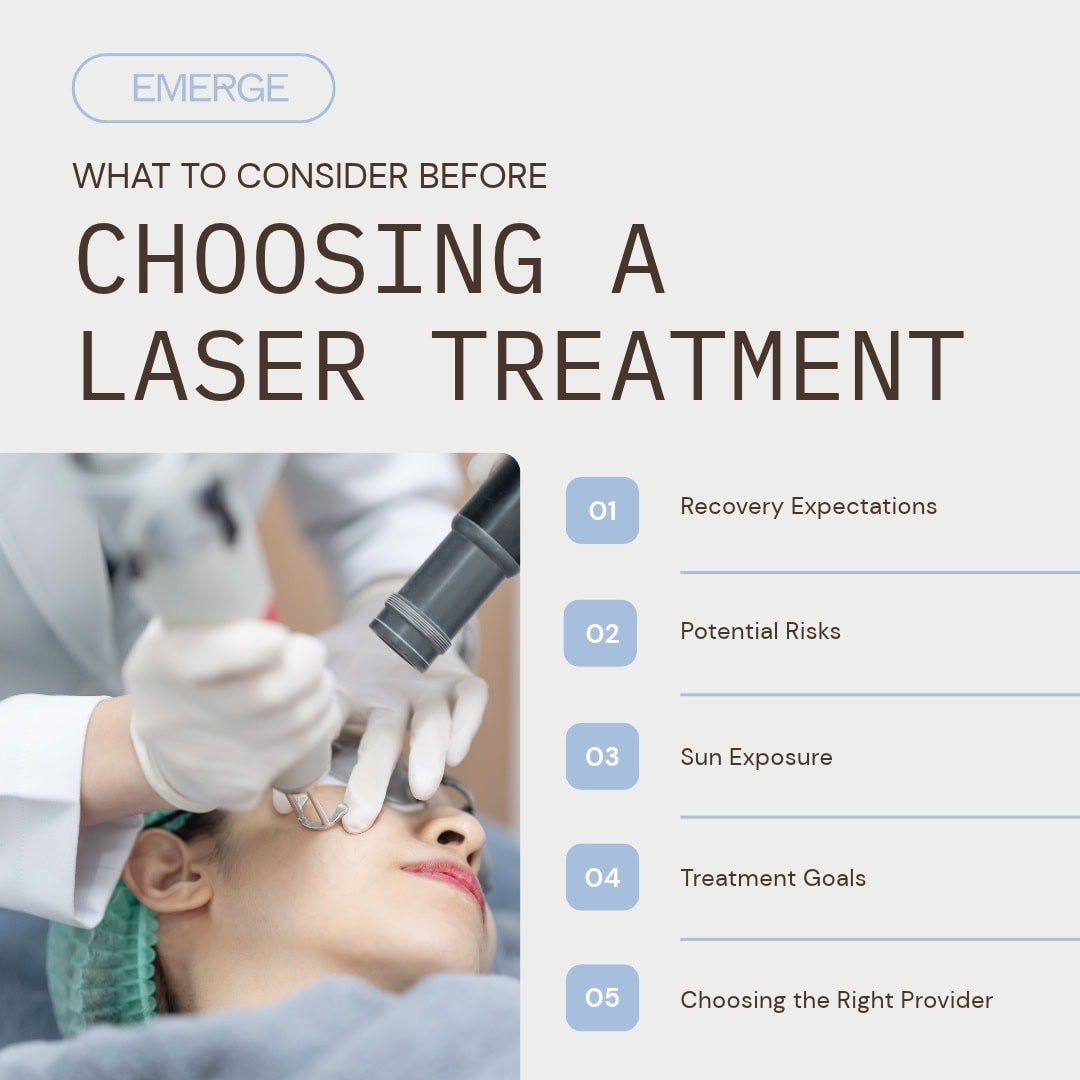
What Should You Consider Before Choosing a Laser Treatment
Wondering whether Moxi or another skin rejuvenation treatment may be right for you? Before making your final decision, give careful consideration to the following.
Recovery Expectations
What level of downtime can you tolerate? Ablative treatments like fractional CO2 resurfacing typically require more significant downtime than non-ablative treatments like Moxi. Neither option is better or worse. They’re simply different. Your recovery also depends on your own anatomy and biology. Have an upcoming event or other time-sensitive commitment on your calendar? You may want to avoid treatments that involve a more significant recovery period.
Potential Risks
Are you aware of the risks? All skin rejuvenation treatments carry some level of risk. But certain procedures carry greater risks than others. For example, Cleveland Clinic lists these possible side effects of ablative resurfacing:
- Infection
- Scarring
- Changes in skin pigmentation
- Prolonged or delayed healing
These risks can be minimized through a thorough consultation and diligent adherence to your post-treatment care instructions. Do you have any preexisting medical conditions or take any medications that may interfere with your healing process? Tell your physician and me.
Sun Exposure
Are you committed to limiting sun exposure and wearing sun protection daily? Ultraviolet (UV) damage from the sun can compromise your results. So it’s important to avoid sun exposure prior to your treatment. After your treatment, you’ll also want to be diligent about sun protection to avoid side effects like uneven pigmentation. Not applying sunscreen daily yet? Now’s the time to start.
Treatment Goals
Do you want to even out your skin tone? Minimize the appearance of scars? Improve your skin’s overall texture? Boost collagen production? Different treatments yield different results. During your consultation, I’ll get a sense of your skin goals so I can recommend the best treatment for you. That might be a gentle non-ablative laser, a fractional CO2 laser treatment, or something else entirely. Interested in using laser treatments to improve the appearance of scars? Check out our article on laser treatment for acne scars.
Choosing the Right Provider
The success of your treatment is mostly dependent on your healthcare provider. After all, lasers are medical devices. Both the type of laser used and the knowledge and skill of the professional using it will determine the outcome of your treatment. Therefore, only seek care from a reputable, physician-led med spa like Emerge Aesthetics.
At Emerge Aesthetics, I personally perform all laser treatments. And thanks to my surgical training, I’m intimately familiar with wound healing. I can take tissue response into consideration when customizing your treatment. I’ll also honestly assess your skin during your consultation. I won’t recommend treatments that aren’t right for you.
Why a Comprehensive Skincare Approach Yields the Best Results
At Emerge Aesthetics, we believe that a comprehensive skincare approach yields the best results. That means combining professional treatments with medical-grade skincare at home.
For example, laser resurfacing can be performed in combination with treatments like:
- Biostimulatory treatments for stimulating collagen and supporting deeper structure
- Microneedling to improve the appearance of skin texture
…as well as an ongoing medical-grade skincare regimen. One treatment addresses the surface while another works deeper.
Skincare really is the foundation of all of it. I’d rather you invest in medical-grade skincare than in Botox, since it typically uses higher concentrations of active ingredients. Ready to take your skincare routine to the next level? These three medical-grade skincare ingredients deserve a place in your daily regimen:
- Retinoids (ask about our Emerge RX Club prescription retinoid program)
- Sunscreen
- Vitamin C
If you use nothing else, at least use these. Vitamin C is often the underappreciated one. And while vitamin C products are available everywhere these days, not all vitamin C is created equal. Invest in a quality product like the Alastin C-Radical Defense Antioxidant Serum, available in our shop. Alastin purchases also earn Aspire points toward in-office treatments.
Pro Tip: Have your at-home skincare dialed in before you ever sit in the chair. Prevention is always easier than correction, and consistency is the best treatment.
Ready to Find the Right Laser for Your Skin
SO, is Moxi a CO2 laser? No. Moxi is a mild, non-ablative fractional laser designed to prevent early aging and brighten tone. For deeper issues, a CO2 laser is a more extensive, ablative resurfacing procedure. Your skin type, your objectives, and your medical background will determine the best option. This is why a customized evaluation is so important.
Are you in Bergen County or its surrounding areas? Glen Rock, Ridgewood, Wyckoff, Franklin Lakes, Saddle River, Upper Saddle River, Ho-Ho-Kus, Paramus, and New York City are all included in this. I would be delighted to assist you in personally evaluating your alternatives. Call us today at 201-383-5299 to schedule a consultation.
Follow us on Instagram for our latest deals, discounts, and updates. Browse our skincare shop for the products I trust. For more guides like this one, browse our blog.
About Emerge Aesthetics
Emerge Aesthetics is a physician-led, physician-owned medical spa serving Bergen and Westchester counties. Dr. Rochelle Kling personally administers each treatment. She has seven years of general surgery and emergency medicine residency training and is a double board-certified surgeon. Additionally, she used to work as an attending physician in the Ridgewood, New Jersey, Valley Hospital Emergency Department. She is certified in face esthetics, dermal fillers, and neurotoxic. She provides non-surgical, regenerative esthetic care with surgical accuracy.
This blog is for educational purposes only and is not medical advice. It is not a substitute for a professional consultation. Results vary from person to person. A consultation with Dr. Kling determines whether any treatment is right for you. If you take medications or have a medical condition, please discuss laser treatments with Dr. Kling and your physician before proceeding.
Rochelle Kling MD