
Raise your hand if you’ve looked up “How to remove cellulite on thighs” at LEAST one time before. No shame—it’s basically a universal experience. And, chances are, you’re met with DIY hacks, trendy influencer-driven advice, and products promising dramatic results overnight. It’s frustrating. It’s discouraging. And 9 times out of 10, it’s full of nothing but empty promises and marketing tactics.
The reality is that cellulite is completely normal. Even people who exercise regularly, maintain a healthy lifestyle, and have a lean body composition still experience cellulite. That’s because cellulite isn’t a matter of body fat—it involves the interaction between fat cells, connective tissues, hormones, circulation, collagen production, and skin structure.
That’s not something that a single cream or drinking 8 glasses of water a day will fix on their own.
Medical aesthetics is reaching new heights, with medical-grade skincare and skin-tightening treatments like AVAVA laser leading the way. And here’s the thing: they actually do provide meaningful, noticeable results.
Below, we’re sharing proven ways to reduce the appearance of cellulite on thighs. We’ll discuss how normal it is, what it looks like, what causes it, and treatment approaches and lifestyle habits that make a difference. (Hint: it just takes a little strategy and intention.)
How to Remove Cellulite on Thighs: Tips for Smoother Skin
Before discussing specific strategies, it’s important to understand what you’re actually treating. Cellulite on the thighs is influenced by a variety of factors, just as we mentioned above. Think genetics, skin structure, hormones, circulation, and aging. This is why people with similar body compositions can have very different degrees of cellulite.
You’ll often hear people say that there’s no guaranteed permanent “cure” for cellulite. And while it’s true, we’re not looking for a “cure.” We’re looking for a meaningful strategy that visibly smooths skin, reduces the appearance of cellulite, and maintains natural results.
The most successful approach focuses on realistic expectations and long-term improvement—not chasing quick fixes. And to do that, you have to prioritize multimodality: making gradual lifestyle changes, investing in medical-grade skincare, and scheduling professional regenerative treatments.
Let’s talk about how common cellulite is and what steps you can take to get rid of it:
Is Cellulite Normal on Thighs?
Cellulite on the thighs is incredibly normal, affecting roughly 80-90% of women and particularly prevalent in the thighs and buttocks. And in that number are women of all different body types, shapes, ages, and fitness levels. In other words, cellulite isn’t something that specifically affects one demographic, weight, or shape.
Even still, one of the biggest misconceptions is that cellulite only affects those who are considered overweight. In reality, almost every woman will develop cellulite at some point in her life. And, if nobody else will say it, allow us! Factors like connective tissue, hormone levels, microcirculation, and lifestyle habits often play a much larger role in cellulite than weight alone.
But fortunately, because it’s so common, there are plenty of treatment options available—like the industry’s newest skin rejuvenation treatment, AVAVA laser system. Minimal downtime, safe for most skin tones, and inside-out repair, long gone are the days of scheduling liposuction and thigh lifts. Don’t worry, more on this below.
How Much Cellulite Is Normal on Thighs?
There’s no specific amount of cellulite that’s considered abnormal. Mild dimpling when sitting or squeezing the skin is normal. Visible cellulite when standing or walking is normal. Cellulite that appears only in certain light is normal. These are all normal—and incredibly common—experiences.
Beyond this, cellulite can naturally become more noticeable with hormonal shifts, aging, weight fluctuations, periods of dehydration, and loss of muscle tone. So, no, cellulite isn’t a sign of poor health, excess weight, or accumulated toxins. Instead, cellulite develops when fibrous connective bands beneath the skin pull downward while the underlying fat pushes upward.
It’s both biological and anatomical—which is exactly what Dr. Kling, a double-board-certified Emergency Medicine physician, prioritizes here at Emerge Aesthetics. (More on that later!)
What Does Cellulite Look Like on Thighs?
There are a few different ways cellulite can appear, depending on genetics, skin thickness, age, circulation, muscle tone—the list goes on. That said, you can commonly hear cellulite described as:
- Dimpled or uneven texture
- Cottage cheese appearance
- Soft skin puckering
- Visible dimples when standing or sitting
- Orange peel appearance
There are also different stages of cellulite, impacting everything from appearance to treatment efficacy. Here’s a quick breakdown:
- Grade 1: Mild Cellulite. While standing or lying down, the skin appears relatively smooth. However, subtle “orange peel” textured dimpling can appear when pinching the skin.
- Grade 2: Moderate Cellulite. Dimpling is present when standing, but tends to smooth out when lying down. If you run your fingers over the cellulite, you’ll probably notice it feels slightly uneven in texture.
- Grade 3: Severe Cellulite. Dimples are deep, pronounced, and visible almost at all times. Additionally, the skin may feature the “peak-and-valley” texture, resulting in a noticeably bumpy or rough texture.
Regardless of which stage you find yourself in, there are cellulite treatments that can smooth the skin, reduce dimpling, and promote better blood flow. And the best part? They’re all minimally invasive and non-surgical—no scalpels, scissors, or anesthesia required.
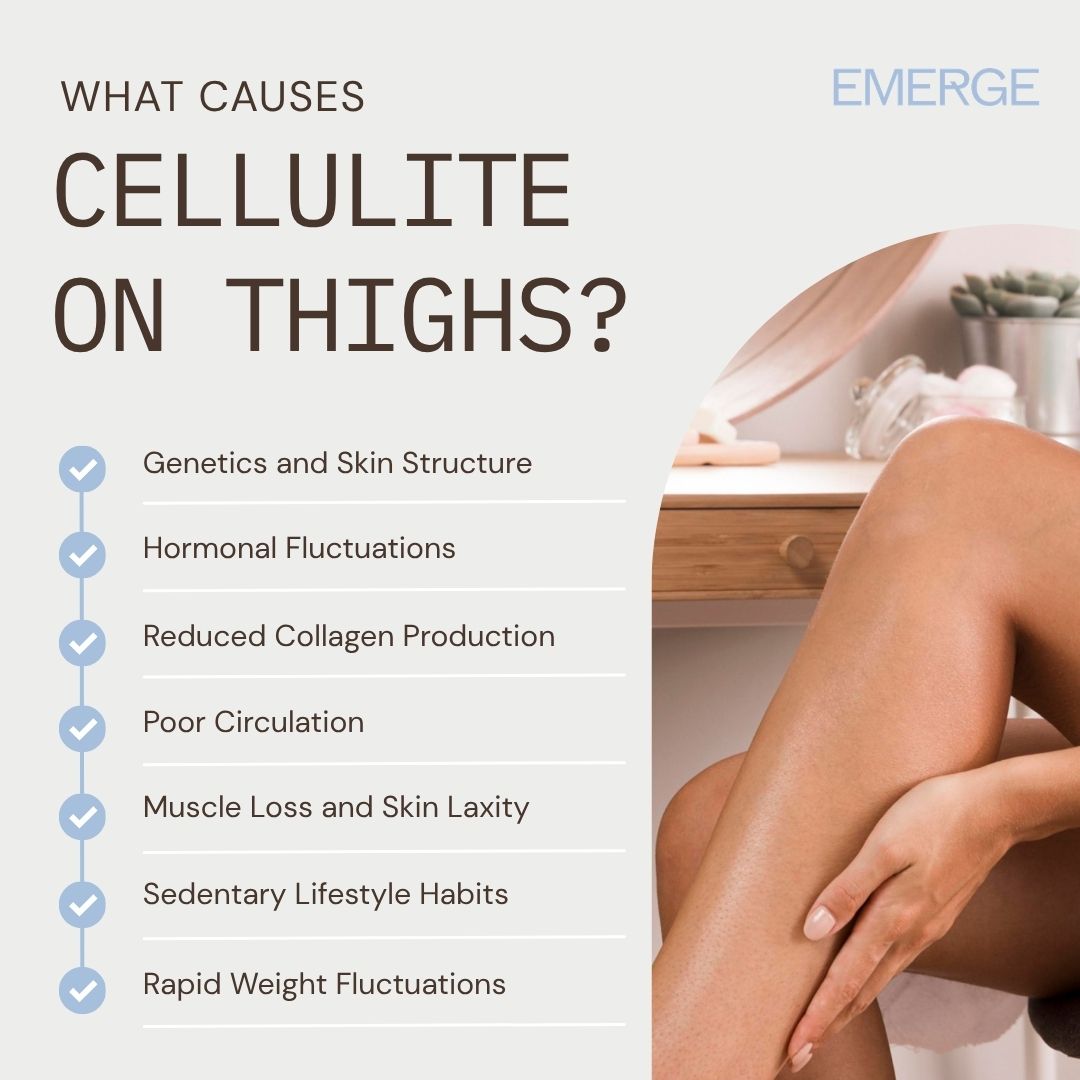
What Causes Cellulite on Thighs?
Cellulite develops when fat cells push upward against the skin while tough bands of fibrous connective tissue pull downward. This is standard across the board, and it’s what causes that uneven, dimpled texture. What changes, though, is what makes cellulite more likely to develop or become more noticeable.
Genetics and Skin Structure
Both genetics and skin structure play a major role in the development of cellulite. Your genes are responsible for dictating things like fat distribution, connective tissue strength, metabolism, and circulation. Your skin structure, on the other hand, dictates factors such as collagen production, skin thickness, and connective tissue orientation.
Together, genetics and skin structure essentially determine where and how your body stores fat and how effectively connective tissue structures tether the skin to the muscle. This is one of the primary reasons why cellulite persists despite exercise, healthy diets, and good sleep habits.
Hormonal Fluctuations
Your hormones influence fat storage, collagen production, circulation, fluid retention, and even lymphatic drainage. And, for women, between puberty, pregnancy, and menopause, this can be particularly disruptive.
For example, estrogen promotes fat storage in areas like the hips, thighs, and buttocks. Insulin can cause fluid retention. Progesterone can exacerbate poor lymphatic drainage. It’s all one big cycle that can make cellulite look and feel more pronounced.
If this is something you’re trying to manage, check out our guide, “How to Tighten Loose Skin After Pregnancy!”
Reduced Collagen Production
By age 25, we lose 1-1.5% of collagen yearly. And that doesn’t always show up as hollow spots, fine lines, or wrinkles. It can also impact everything from the upper arms and chest to the thighs and knees. When you begin to experience collagen loss, your skin slowly loses its scaffolding.
In other words, the skin becomes thinner, less elastic, and less capable of resisting the underlying structural changes that contribute to cellulite. Think of this process as a see-saw. The weakened collagen fibers pull the skin down toward the deeper tissues, while underlying fat deposits protrude outward.
We’ll cover treatment options below. But if you want an in-depth guide, read “How Does Body Contouring Work? A Guide to Non-Surgical Sculpting” next!
Poor Circulation
The skin needs an adequate supply of oxygen and nutrients for cell turnover, acne prevention, collagen production, and a plumper complexion. The way it gets this? Proper blood flow. If you have poor circulation, the blood can’t flow nearly as effectively. As a result, you may experience things like fluid retention, collagen degradation, and fat cell enlargement.
Think of it this way: fat cells grow larger, collagen begins to slow and lead to thin connective tissues, and fluid retention causes fluids to pool. Any of these factors can contribute to the development of cellulite. But together? It’s not uncommon to begin to notice an uneven, dimpled texture.
Muscle Loss and Skin Laxity
Strong underlying muscle naturally provides support beneath the skin, while skin laxity keeps the surface smooth and even. Knowing this, a lack of muscle mass can ultimately increase the distance between the muscle and skin. The result? Fat cells have a larger area to accumulate, grow, and shift.
At the same time, skin laxity can make cellulite more apparent. As the skin loses firmness, it becomes less able to mask the structural changes occurring beneath. Together, this creates the perfect environment for stubborn, visible cellulite.
Sedentary Lifestyle Habits
Sitting for extended periods plays a surprisingly big role in cellulite development. The more you sit, the more the muscles weaken, and the connective tissues impair healthy blood flow. Beyond this, prolonged sitting can slow circulation, degrade collagen and elastin over time, and lead to fluid retention.
Don’t worry, sitting itself doesn’t directly cause cellulite. However, it can play a contributing role to several factors that make cellulite more noticeable. (Looking at you, fluid retention and loss of collagen and elastin.)
Rapid Weight Fluctuations
Remember what we said earlier! It’s a (far too) common misconception that cellulite is a result of excess weight alone. Both weight loss and weight gain can contribute to cellulite development. More specifically, the problem generally lies in rapid weight fluctuations.
Gaining and losing weight in short periods can ultimately lead to fat storage imbalances and damaged skin elasticity. For example, significant weight loss can leave behind loose or elastic skin, making underlying dimpling more visible. On the other hand, rapid weight gain can enlarge fat cells, increasing pressure on the skin’s surface.
In both cases, the structural changes beneath the skin may become more noticeable, contributing to the appearance of cellulite.
Can You Get Rid of Cellulite on Thighs?
Yes, you can absolutely get rid of cellulite on thighs—with realistic expectations.
As we mentioned earlier, there’s no universal “cure” for cellulite. So while you may exercise frequently, eat well, apply topical creams, and stay consistent with your medspa appointments, cellulite can return over time. It’s natural, normal, and happens to everyone.
What matters is your approach. At Emerge Aesthetics, Dr. Kling brings surgical expertise to non-surgical aesthetics. Regenerative medical aesthetics is medicine, which means your physician should understand your anatomy, listen to your goals, and create a thoughtful plan to get you there. In other words, stop focusing on treatments—focus on your goal. We’ll build the plan!
Beyond science-backed skincare, we also prioritize compassion. Dr. Kling understands the busy mom, overworked young adult, and active grandmother—and she builds a tailored plan to help you look refreshed, restored, and renewed—with cellulite reduction included.
Beyond this, multimodality is the key to achieving inside-out results. If you want to support your skin, you have to support your body. If you want to support regenerative treatments, you have to support your skin. See the cycle? Stay consistent, treat skin quality from every angle, and trust the process. We’re here to remind you that investing in yourself is always worth it.
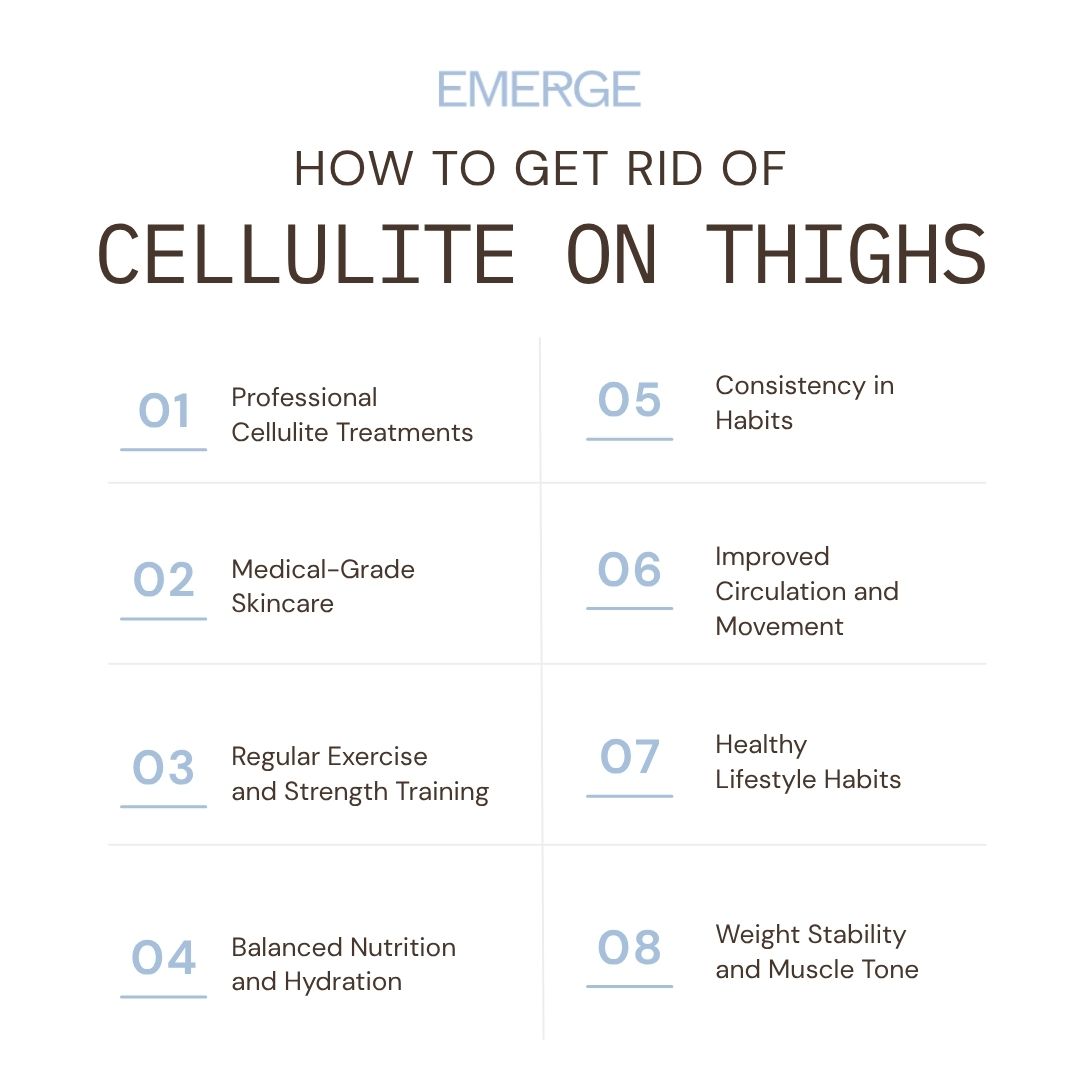
How to Get Rid of Cellulite on Thighs
Professional Cellulite Treatments
Medical Aesthetics isn’t just about Botox and fillers anymore—though those are highly popular and effective treatments! That said, we’re seeing the rise of industry-changing tools, like the AVAVA laser system.
This isn’t your average laser. It’s an advanced, non-ablative skin rejuvenation treatment that delivers high-energy laser beams directly into the dermis, stimulating collagen production and reducing damage to the surrounding tissues. AKA, less downtime, safe for all skin tones, versatile for different treatment goals, and provides natural results.
For cellulite and/or crepiness, AVAVA uses Focal Point Technology™ to create coagulation zones beneath the skin. And in areas that experience constant movement, like the thighs, this can prove incredibly effective. Just listen to how impressed Dr. Kling was with AVAVA laser results!
Want to see what else this powerful regenerative treatment is capable of? Read our post, “How To Reduce Cellulite On Buttocks.”
Medical-Grade Skincare
Medical-grade skincare doesn’t just belong on your face—it belongs on your entire body. More specifically, your skin is an organ and should be cared for as such! Broad-spectrum sunscreen, retinoids, peptides, ceramides, hyaluronic acid, vitamin C—these should all find their way into your body care routine.
But it’s important not to grab the first thing you spot on the shelf. Instead, invest in medical-grade products—ones that use higher concentrations, have been guided by a licensed physician or dermatologist, and use clinically proven ingredients. Need a place to start? We recommend checking out Dr. Kling’s collection of curated medical-grade skincare. But if you want a head start, here are some of our favorites for cellulite prevention:
- Alastin TransFORM Body Treatment: Winner of multiple awards, this product hydrates the skin from the inside out and supports the production of new, healthy elastin and collagen.
- Alastin C-Radical Defense Antioxidant Serum: Formulated with a novel form of vitamin C, this serum is proven to reduce the effects of free radicals by 74%. It also contains 15 proven antioxidants to protect against UV damage and environmental stressors!
Don’t have a prescription for a retinoid just yet? No problem! Join the Emerge RX Club, where you can receive customized formulations, professional guidance, and a convenient membership model. No hassle—just quality skin(care).
Regular Exercise and Strength Training
Strength training will always be one of the most effective ways to improve the appearance of cellulite. Remember what we mentioned about the separation between muscle and skin. If you want to reduce cellulite, you need to fill out that area with more muscle.
And this doesn’t mean you have to start benching hundreds of pounds or running miles on the treadmill. Start with something you’ll stay consistent with, like yoga, swimming, pilates, or barre. In fact… we’re huge fans of those last two. Check out our Sweat, Sip, and Glow event with Forme House NJ! (And stay up to date with the Emerge Instagram so you can attend the next one.)
Balanced Nutrition and Hydration
When we say “balanced nutrition and hydration,” we don’t mean crash dieting and drinking the newest, trendiest electrolyte mix. Instead, we mean supporting your body with protein, whole foods, and unprocessed ingredients—all of which can help reduce inflammation and support collagen production.
Water is equally important here. Not only does proper hydration help flush out toxins and promote lymphatic drainage, but it also boosts elasticity. In other words, it helps plump the skin up, reducing the appearance of cellulite. Plus, if you want your medical-grade skincare and regenerative aesthetic treatments to be as effective as possible? You have to take care of your skin barrier and skin quality.
Consistency in Habits
Consistency is the best thing you can do for your skin, your body, and your lifestyle. If you want to see meaningful, lasting results, you have to stay consistent with what you do. For example, you won’t gain significant muscle from one visit to the gym, right? The same idea applies to your skin.
If you want better cellular turnover, use your retinoid consistently. If you want glowy, radiant skin, reapply SPF multiple times throughout the day. (Alastin Hydratint Pro Mineral Broad Spectrum Sunscreen, to be exact!) And if you want consistently smooth, dimple-free skin, don’t skip on scheduling your appointments at Emerge Aesthetics. Prevention is always easier than correction.
Improved Circulation and Movement
Improved circulation feels like it should tie in with exercise, but not necessarily. Does exercise help improve circulation? Absolutely! But you should also incorporate mindful movement throughout your day to support healthy blood flow and minimize fluid retention.
This can include walking, stretching, or even taking breaks during prolonged sitting. Improved circulation can enhance oxygen delivery and nutrient transport to the skin and underlying structures—a crucial factor in cellulite reduction.
Healthy Lifestyle Habits
We’ve talked a lot about healthy lifestyle habits above, like exercising, avoiding processed ingredients, and incorporating daily movement. But sometimes, the biggest glow-up comes from the little things you do consistently.
Get more sleep. Take care of your skin. Reduce stress. Hydrate aggressively. Don’t smoke. Limit alcohol consumption. These aren’t make-or-break rules, but they are the beauty and wellness habits with the highest ROI. And, ultimately, they will show up in how your skin looks and feels.
Weight Stability and Muscle Tone
Repeated cycles of weight gain and weight loss can ultimately place stress on the skin and supporting structures. Think: connective tissues, elasticity, collagen reserves, and the underlying framework that helps keep skin firm and resilient. Weight fluctuations are common. And, as women, they’re entirely expected.
However, rapid weight fluctuations are the focus here. If you’re able to maintain a stable weight while building lean muscle mass, you’ll often see more favorable aesthetic outcomes—especially in cellulite.
You don’t have to just “deal” with cellulite; you can visit Emerge Aesthetics for a multimodal treatment plan.
Cellulite can feel aggravating, overwhelming, and confidence-disrupting. And even though you now know that it’s common and normal, that doesn’t mean you don’t want a solution. With a multimodal treatment plan, you can both prevent and treat cellulite on the thighs. Prioritize movement, drink enough water, invest in medical-grade skincare, and consider non-surgical medical aesthetic treatments that can actually make a noticeable, long-lasting difference.
Skin rejuvenation doesn’t have to be complicated. At Emerge Aesthetics, Dr. Kling prioritizes every client’s unique anatomy and biology, creating a treatment plan that protects their skin and helps them reach their goals. The goal isn’t to change your appearance—it’s to help you love it again. Located in Bergen County, New Jersey, schedule your appointment at Emerge Aesthetics today!