
When people think of a defined jawline, they usually associate it with things like facial harmony, structural balance, and a more sculpted appearance. But gone are the days when improving jawline definition automatically meant scheduling a neck lift or pursuing more invasive surgical intervention! Minimally invasive medical aesthetics is entering a totally new era—one defined by natural-looking results and lesser downtime.
While genetics does contribute to jawline definition, they’re far from the only factor at play. Skin laxity, collagen depletion, posture, and age-related changes can all soften the jawline. But this doesn’t have to be something you just live with. Targeted techniques, lifestyle habits, and intentional skincare routines can all influence a better balance and more definition.
And the best part? This isn’t something you have to figure out alone. In today’s guide, we’re discussing all of the different ways you can get a more defined jawline—from professional skin tightening treatments to neck and jawline exercises.
We’ll also let you in on a little expert-backed secret: multimodality is key. Skin structure isn’t a one-size-fits-all approach—and we’ll get into why below.

How to Get More Defined Jawline: Non-Surgical Options That Work
Improved jawline definition isn’t all about aesthetics—though that definitely matters. Ultimately, the appearance of the jawline is also closely tied to posture, body composition, skin quality, and muscle tone. Naturally, as collagen declines and tissues shift, that initially sharp transition between the jawline and neck can begin to soften.
But fortunately, treatments are much more advanced than they once were. That means you don’t have to compromise for invasive surgeries, like chin implants or neck liposuction. (Thankfully so, right?) With the right approaches and guidance, gradual yet meaningful jawline definition is entirely attainable.
What Does a Defined Jawline Look Like?
A defined jawline appears as a sharp angle, distinctly separating the lower edge of the face and neck. The mandibular angle (where the jawline meets the neck) isn’t rounded or soft, and the submental area (the space beneath the chin) is tight. In other words, the jaw border looks more taut, and the overall facial profile appears more structured.
By comparison, a softer jawline has less visual contrast between the jaw and neck. The neck and chin meet more fluidly, appearing as a rounded, continuous curve. This can be the result of several factors, which we’ll discuss in more detail below.
Most importantly, there’s no “perfect” result. Every person’s face has its own unique architecture, including bone structure, facial movement, skin quality, collagen levels, volume patterns, and natural features. The goal isn’t to erase individuality—it’s to enhance it.
What Causes a Weak or Undefined Jawline?
A weak or undefined jawline? Extremely common. The causes? Not always universal. Here’s a more comprehensive look at what exactly causes a lack of jawline definition:
- Genetically Recessed Chin. Some people naturally have a softer mandibular projection or a less angular lower-face contour. Think of DNA as the baseline for your skeletal structure.
- Collagen and Elastin Loss Due to Aging. As we age, collagen and elastin production decline. It’s normal, it’s natural, and it can have a direct impact on jawline definition. The skin essentially loses the structural support it needs for firm, taught angles.
- Excess Subcutaneous Fat Beneath the Chin. Subcutaneous fat is the tissue stored directly beneath the skin, accounting for around 90% of total body fat. In many cases, this layer is essential for energy, muscle protection, and body temperature regulation. However, it can also create a “double chin” effect, erasing the sharp transition between the neck and chin.
- Fluid Retention. When excess water pools in the lower face, it naturally blurs the contours around the jawline. This is often a result of hormonal fluctuations, high sodium diets, and dehydration—all of which we’ll discuss below.
- Muscle Tone and Posture. If you’re constantly looking downward, it compresses the soft tissue under the chin. You’ll probably hear this called “tech neck,” which is just another term for a blurred jawline.
- Medical Conditions. Conditions like TMJ and bruxism (teeth grinding) can absolutely impact jawline definition over time. TMJ misaligns the bite, whereas teeth grinding can widen the masseter muscles.
As you can tell, there are many contributing factors that play a significant role in jawline definition—or lack thereof. However, there are just as many ways to create facial balance, improve overall structure, and create the appearance of a more defined jawline.
Can You Make Your Jawline More Defined?
You can absolutely make your jawline more defined—but results depend on your anatomy.
A softer lower face isn’t always caused by the same underlying issue. For some, overall body composition may be contributing to a reduced contour. For others, the culprit may be skin laxity, collagen depletion, and general age-related structural change. So while one patient may benefit from collagen-focused treatments, such as Sculptra or Radiesse, another may achieve the greatest improvement with AVAVA laser technology.
But here’s what’s most important: your anatomy and bone structure are always baseline. Both serve as the structural framework for your lower face, determining which treatments will truly make the biggest, most meaningful difference.
And this is exactly why jawline definition isn’t a one-size-fits-all approach—and who your medical aesthetic physician is matters. Dr. Kling, Emerge’s double-board-certified Emergency Medicine physician, brings surgical expertise to not surgical aesthetics. She doesn’t simply “do treatments;” she practices medicine with precision, artistry, longevity, and, above all, compassion. (AKA, we follow the Emerge Ethos around here!)
Below, we’ll explore steps you can take to get a defined jawline. We’ll talk lifestyle changes, exercises for the neck area and jaw muscles, and professional, non-surgical, minimally invasive treatments.
Remember: The goal isn’t to create an artificially shaped appearance; it’s to improve overall facial balance. And the way to do that is through a multimodal approach that targets every layer of the skin.
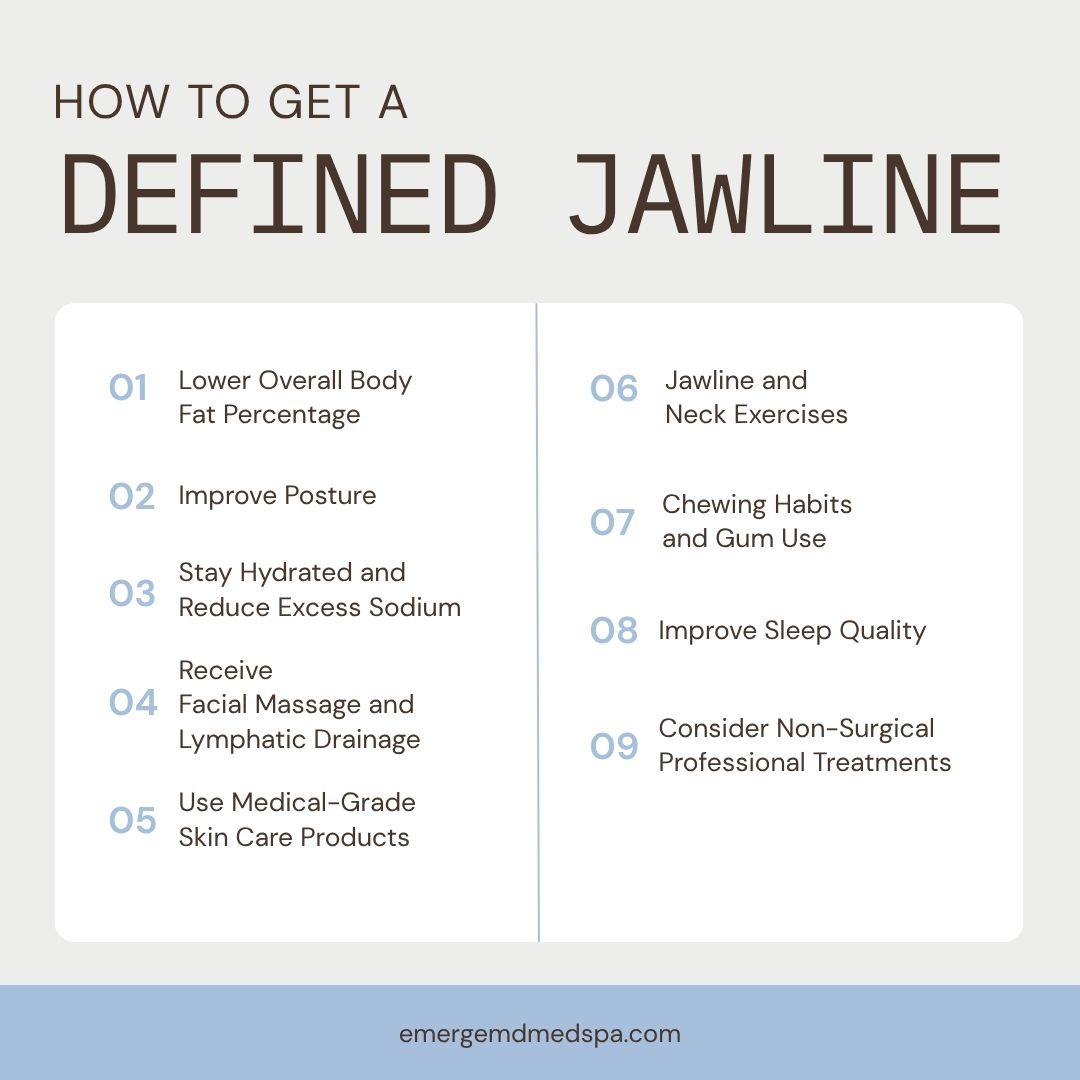
How to Get a Defined Jawline
Looking for the beauty and wellness habits with the highest ROI? Advanced aesthetics can do a LOT, but it’s not a catch-all. Here’s how to combine intentional lifestyle shifts with professional rejuvenative treatments to support structural change inside out:
Lower Overall Body Fat Percentage
Realistically, this is one of the most impactful factors for achieving a more defined jawline. If fullness beneath the chin is contributing to softer contours, body composition is generally one piece of the puzzle.
As body fat decreases, so does the additional subcutaneous fat that often blurs the neck and jaw together. As a result, you’ll start to notice more defined features. But here’s where it’s important to switch the mindset: physical exercise isn’t a chore—it improves how you feel, function, and age over time. If you want to fuel your skin, you have to fuel your body.
That said, this isn’t a guaranteed formula. Different people have different structures, regardless of their body composition. This is an essential reason why we avoid overly simplistic conversations around aesthetic medicine. Body composition can contribute—but it’s rarely the entire story.
Improve Posture
Posture has a surprisingly visible effect on the lower face appearance, and it’s not something people even realize. In the age of technology, a lot of us are constantly looking down. Phones, tablets, e-readers, laptops—the list goes on. But ultimately, that tilted posture pulls the fascia downward, leading to a weaker, saggier jawline.
Forward head positioning can change things significantly—and the adjustment is simple. Here’s how you can practice:
- Shoulders: Pull your shoulders back and down—not up and close to your ears or jaw area. This helps reduce that “hunched” position.
- Head: Align your ears directly over your shoulders. You won’t realize just how much you’re pushing your head forward until you consciously fix it!
- Tongue: The tongue should be resting flat against the roof of your mouth—not pushed against the teeth or on the bottom of the lingual frenulum.
Make a habit of implementing this posture as much as you can. Consistency is the most important treatment, regardless of what you’re targeting.
Stay Hydrated and Reduce Excess Sodium
Not every soft jawline is the result of structural anatomy or skin laxity. In some cases, temporary fluid retention is the primary culprit.
Dehydration, excess sodium intake, alcohol, and hormonal fluctuations can all contribute to facial puffiness. Especially in the lower face and neck area! When fluid accumulates, the natural separation between the jawline and neck can appear less defined.
Not only does this soften the jawline, but it also disrupts the moisture barrier, triggers inflammation, and accelerates aging. Basically, it’s not just adding to your problem—it’s creating new ones. Combat this by drinking plenty of water and swapping out sodium for herbs, acids, potassium-rich foods, and unprocessed ingredients.
Receive Facial Massage and Lymphatic Drainage
Can facial massages and lymphatic drainage permanently sharpen the jawline? No—it’s not a permanent solution. They can, however, temporarily reduce excess fluid, release muscle tension, push trapped toxins away from the jaw, and tone sagging areas.
The lymphatic system doesn’t have a pumping organ. In other words, it relies on movement, muscle activity, and manual stimulation to effectively circulate lymph fluid. Professional massages help drain that excess fluid that causes bloating and tissue swelling, temporarily slimming and sculpting the jawline.
The BEST time to do lymphatic drainage massages is in the morning. After lying flat all night, fluid pools around the face, jawline, and neck, giving us that classic morning puff. Massaging the fluid out and back into the lymph nodes essentially kickstarts circulation for the day.
It’s definitely an effective way to help reduce jawline softness—and boost immune function! But for long-term structural change, it needs to be one of the many tools in your aesthetic arsenal.
Use Medical-Grade Skin Care Products
We’re swimming in a sea of brands, influencer-promoted hacks, and products that overpromise and underdeliver. But here’s what a lot of brands and influencers forget to mention: skincare is science.
Healthy skin is built through small, intentional habits. Think: cleansing at night, using retinoids, protecting your complexion with SPF, supporting collagen with active ingredients, and, above all, using medical-grade skincare.
When you invest in medical-grade skincare, you’re investing in yourself. These are science-backed products that use clinically validated ingredients, deliver proven active concentrations, maintain strict manufacturing standards, and penetrate more deeply into the skin. It’s not marketing—it’s medicine. And the best place to start is with the 3 pillars of skincare:
- Retinoids: Vitamin A derivatives that accelerate cellular turnover and boost collagen production. Tazarotene and tretinoin > everything else. (Learn more in our guide: “Retinol vs. Retinoid!”)
- SPF: The most effective anti-aging treatment. It blocks harmful UV rays from penetrating the skin, which can cause wrinkles, fine lines, and sagging. One of our favorites is Alastin Hydratint Pro Mineral Broad Spectrum Sunscreen. (Listen to Dr. Kling discuss the benefits of a tinted sunscreen formula!)
- Vitamin C: One of the best multitasking ingredients in skincare. It brightens the skin, fades dark spots, stimulates collagen production, and protects against environmental damage.
In the market for quality skincare to help improve skin firmness, quality, and elasticity? (We hoped so.) Check out Dr. Kling’s curated collection of medical-grade skincare products next!
Jawline and Neck Exercises
When you’re looking to improve definition, jawline and neck exercises are key. They help strengthen the muscles (like the masseter and platysma) to promote firmer, sharper features. Here’s where to start:
- Vowel Exercises: Open your mouth and make exaggerated vowel sounds, starting with O. This isolates the facial muscles, improves muscle awareness, and helps promote a more neutral head and neck position.
- Tongue Twister: Start with your head in a neutral position. Next, apply tension by firmly pressing your tongue against the roof of your mouth. Start making a humming sound from your throat—you should begin to feel the muscles flexing and vibrating. Do this 3 sets of 15, holding the tongue pressure for 10–15 seconds. This facial exercise targets the neck muscles, helping build tone and definition.
- Neck Curls: Start by lying flat on your back, arms resting at your sides. Now, press your tongue firmly against the roof of your mouth, bring your chin to your chest, and slowly lift your head about 2 inches off the ground. Hold this position for a few seconds, then lie back down. This is a great exercise for strengthening the deep neck flexors and firming the area under the chin.
- Chin-Up: Close your mouth and slowly push your jaw outward. Now, lift your lower lip until you feel gentle stretching from your collarbone, back up to the chin and jaw. Hold this for 10–15 seconds, then repeat for 3 sets of 15.
These won’t replace medical aesthetic treatments or reduce overall body weight. However, incorporating these into your daily routine can be extremely beneficial for overall muscle tone and posture improvement.
Chewing Habits and Gum Use
We’ve all heard the claim that chewing gum can enhance jawline definition. Trendy? Of course. Science-backed? Let’s talk about it.
According to research, chewing gum can improve masticatory performance. In simpler terms, it improves how effectively your jaw muscles can break down food. But as far as visible aesthetics is concerned, studies show that chewing gum doesn’t have much of an effect on mandibular shape.
Ultimately, consider it a (super, super) minor contributor to your overall plan for enhancing definition.
Improve Sleep Quality
Sleep quality does have a visible impact on facial appearance—including jawline definition. Poor sleep can contribute to elevated cortisol levels, increased inflammation, and fluid retention. Which, just like we mentioned above, can all make the lower face appear puffier. Over time, chronic disrupted sleep can also affect skin quality and the body’s natural repair process.
Will getting more sleep suddenly create a sculpted jawline? Of course not—and realistic expectations are important factors in achieving meaningful results! However, if temporary swelling, inflammation, or poor skin health are contributing factors, improving skin quality can definitely support a healthier, more defined appearance over time.
Consider Non-Surgical Professional Treatments
Just like we discussed above, lifestyle changes can absolutely support better jawline definition. But that doesn’t mean they’re always enough to create noticeable, meaningful change.
If reduced definition is being driven by skin laxity, structural anatomy, tissue descent, or stubborn fullness beneath the chin, at-home strategies may not cut it. Non-surgical professional treatments, however, will. Collagen-stimulating skin tightening, strategic injectables, and other anatomy-conscious approaches can help address the underlying cause—not just mask visible aesthetic concerns.
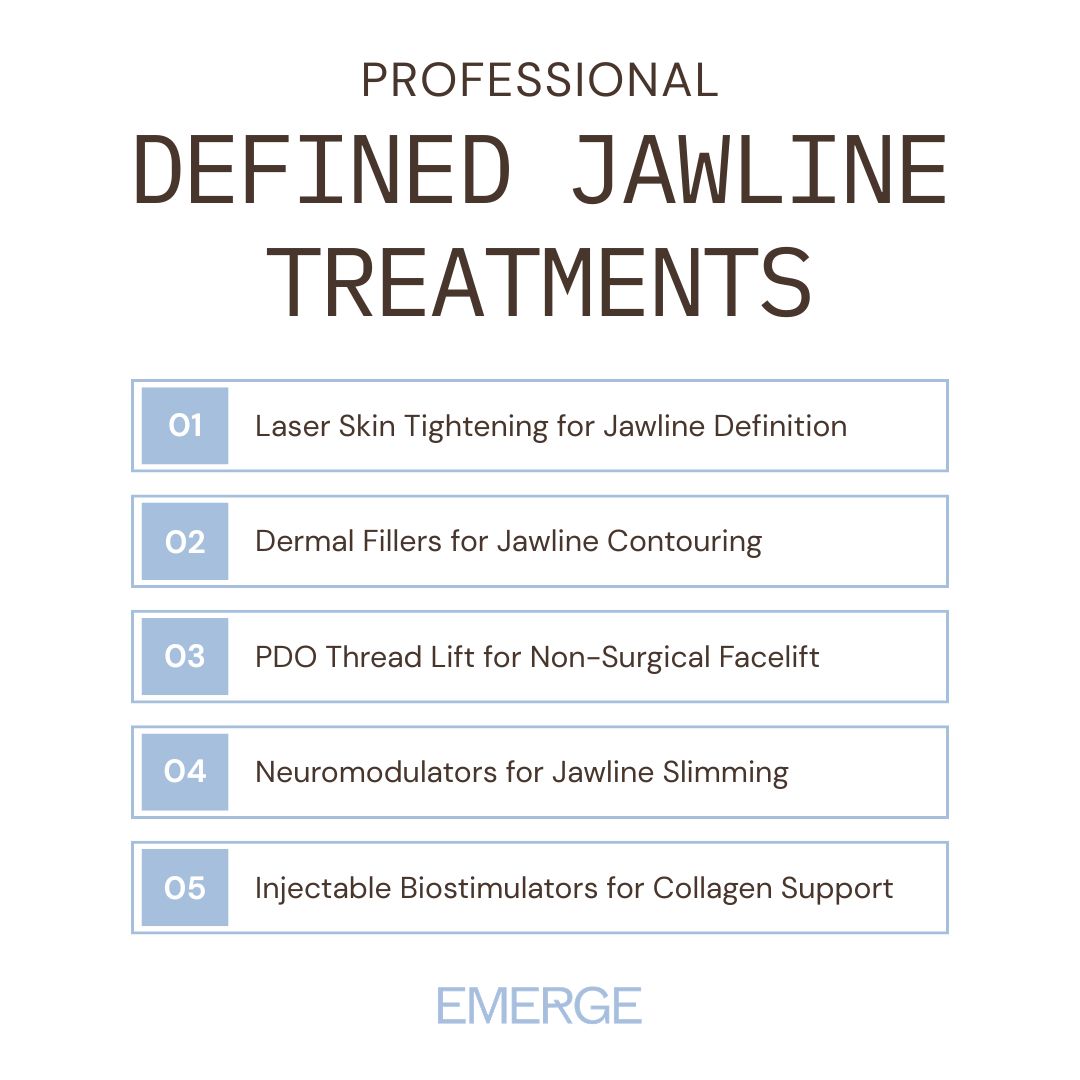
Professional Defined Jawline Treatments
Laser Skin Tightening for Jawline Definition
If reduced jawline definition is driven by laxity, collagen-focused skin tightening is often one of the most anatomically appropriate non-surgical solutions. But unlike previous generations of treatments, laser skin tightening doesn’t always have to involve extensive downtime or prolonged recovery.
AVAVA laser technology consistently outperforms more traditional ablative lasers—and we don’t say that lightly. Using conical energy, AVAVA delivers precise thermal energy to the dermis, triggering the body’s natural healing process. Not only does this minimize unnecessary tissue trauma, but it also allows for more precise collagen stimulation and a more intentional healing response.
AVAVA isn’t a standard treatment—it’s about better quality, better structure, and long-term improvement. And best of all? AVAVA is only found in 2 locations in New Jersey, and Emerge Aesthetics is one of them. See what other benefits this treatment offers by reading our posts, “Can You Get Rid of Loose Skin Without Surgery?” and “How To Reduce Cellulite On Buttocks.”
Dermal Fillers for Jawline Contouring
Not every patient with a softer jawline is managing skin laxity. For some, the issue is structural. A naturally softer mandibular angle, reduced chin projection, or age-related volume loss can all contribute to reduced lower face definition.
In these cases, dermal fillers can help improve contour, balance proportions, and create sharper transitions throughout the jawline. The key? Restraint. Jawline filler should enhance facial harmony, not create an artificial or overfilled appearance. Strategic placement and a strong understanding of anatomy make all the difference.
Interested in learning more? Read “What is Sculptra and How It’s Different from HA Filler.”
PDO Thread Lift for Non-Surgical Facelift
For patients experiencing mild to moderate tissue descent, PDO threads can offer a highly successful non-surgical option for lower-face support. (There’s a reason people consider it one of the best non-surgical facelift options.)
Rather than adding volume, thread lifts work by repositioning the soft tissue while stimulating collagen production over time. This can create subtle lifting through the jawline and lower face, particularly when tissue descent—not volume deficiency—is the primary issue.
You can learn all about how this treatment works by reading our patient-focused guide, “What Is PDO Thread Lift?” We also talk all about recovery, candidacy, and expectations.
Neuromodulators for Jawline Slimming
Jawline definition isn’t always about excess skin or subcutaneous fat. In some people, enlarged masseter muscles contribute to a broader or heavier lower-face appearance. It’s extremely common, but most people aren’t entirely informed. (Don’t get us started on how unregulated the med spa industry is!)
Nonetheless, this is an especially common problem in patients who clench, grind, or naturally develop stronger jaw muscles. Strategic neuromodulator placement can help relax overactive muscles, gradually softening width and creating a slimmer lower-face profile.
Injectable Biostimulators for Collagen Support
Some aesthetic concerns benefit less from immediate volume replacement, and more from long-term structural support. In these cases, injectable biostimulators stimulate the body;s natural collagen production. The result? Gradually improved skin quality, firmness, and foundational support over time.
Results aren’t immediate in the same way traditional filler is—but they’re not designed to be immediate. For the right patient, collagen stimulation often creates a more natural, durable improvement in overall facial structure.
With advanced medical aesthetics and intentional lifestyle changes, it’s completely possible to achieve a more defined jawline.
We all have things we first notice in the mirror. For some, it’s crepiness around the eyes and fine lines around the forehead. For others, it’s a softer jawline and a lack of definition around the neck and chin. But here’s the good news: gone are the days of having to book a plastic surgeon to target visible, meaningful change. Modern medical aesthetics is reaching new heights defined by precision, safety, and minimally invasive treatments.
At Emerge Aesthetics, Dr. Kling understands the tired mom, busy professional, and active dad—and that level of compassion reflects through each personalized, multimodal treatment plan. Our goal isn’t to copy-and-paste results; it’s to improve skin quality, prioritize patient anatomy, and achieve the results you didn’t think were possible. This isn’t marketing—it’s medicine.
If you’re ready to achieve lasting change, schedule your appointment at Emerge—proudly serving patients throughout Bergen County! And, of course, don’t forget to visit the Emerge blog for patient-focused guides and follow the Emerge Instagram page for all of our latest deals, discounts, and updates!