
Loose abdominal skin after pregnancy is one of the most common and least openly discussed postpartum concerns. The body spends months stretching to support a growing baby. And for most? It doesn’t just return to its pre-pregnancy state overnight. It’s a normal, beautiful process. But it also impacts everything from confidence to how you feel when you look in the mirror.
There are ways to tighten loose skin—and they don’t require risky surgeries, plastic surgeons, or long downtime.
Medical aesthetics is entering a new era, one defined by precision, collagen remodeling, and advanced, minimally invasive treatments. Technologies like AVAVA laser are leading the shift, supporting the body’s natural ability to regenerate and rebuild. When combined with intentional lifestyle strategies, you can minimize excess skin and improve skin firmness.
And we’re here to tell you exactly what to do. In this guide, we’ll walk through what causes loose skin after pregnancy, what it looks like, and how to approach skin tightening in a way that’s both realistic and effective.
How to Tighten Loose Abdominal Skin After Pregnancy
Tightening loose skin after pregnancy is about more than appearance—it’s about restoring strength, comfort, and confidence. And as a gentle reminder: many women are going through exactly what you’re experiencing. Stretched skin, weakened abdominal muscles, changes in skin elasticity—it’s a universal experience.
That said, your body won’t return to its pre-pregnancy condition overnight. The process takes time, patience, and realistic expectations. It also requires a multi-modal approach—one that prioritizes a healthy diet, hydration, consistent movement, and advanced, non-surgical treatments. Skin tightening happens gradually, especially when you’re working with your body rather than against it.
At Emerge Aesthetics, our approach is rooted in supporting long-term skin health—not quick fixes and trendy treatments. And Dr. Kling, our double board-certified Emergency Medicine physician, brings surgical expertise to non-surgical aesthetics. Here, you’re not just “getting treatments.” You’re working with a compassionate advocate who builds a unique, tailored plan to help you reach your goals.
Here’s what you need to know about post-pregnancy belly:
What Does Loose Belly Skin Look Like After Pregnancy?
Loose belly skin after pregnancy can vary from person to person, but there are a few common characteristics. You may notice things like:
- Sagging or hanging skin around the abdomen
- Wrinkled or crepey texture
- Reduced firmness and elasticity
Some post-pregnancy bellies return closer to baseline over time—others may experience more persistent laxity. Neither is “better,” it’s a simple difference in anatomy. However, that’s why understanding your treatment options is important! You don’t have to head down the traditional “mommy makeover” path, full of surgeries and extended recovery, to see meaningful improvement.
Today’s most advanced approaches focus on rebuilding the skin from within, using technologies like AVAVA laser to stimulate collagen, improve skin firmness, and support gradual, natural-looking tightening. Interested in learning more? Read over our patient-focused guide, “How Does Body Contouring Work?” next.
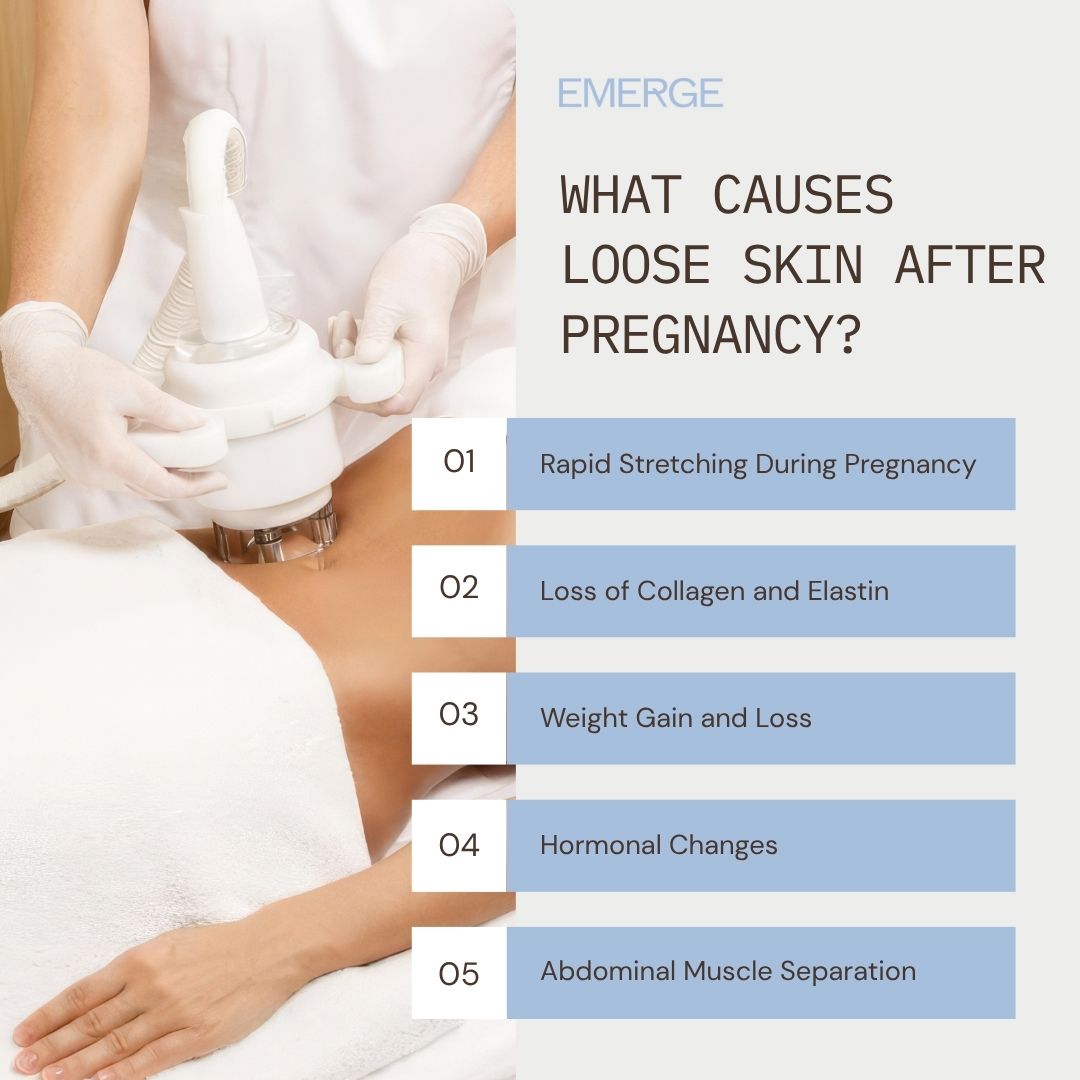
What Causes Loose Skin After Pregnancy?
Rapid Stretching During Pregnancy
As the body accommodates a growing baby for 9 months, the skin stretches. Quickly. This overstretching is generally beyond the skin’s natural capacity, making it difficult for the skin to fully retract and leading to loose skin. Your underlying uterine expansion is gone, but you still have stretched, damaged skin left behind.
Loss of Collagen and Elastin
Over the course of 9 months, during which the belly expands rapidly, collagen and elastin fibers can’t keep up. The more the abdomen expands, the more it ruptures fibers and causes them to lose their “recoil” ability. Instead of helping your stomach adapt, collagen and elastin direct their attention to the uterus, supporting a growing fetus. Great for a healthy baby! Not as ideal for the loose skin we’re left with afterward.
Weight Gain and Loss
Weight gain during pregnancy followed by postpartum weight loss can contribute significantly to excess skin. First, the stomach expands beyond its normal limits, damaging the dermis. After giving birth, as you begin to lose weight, the body can’t always adapt as quickly. More specifically, if you’re dropping weight fast, the subcutaneous fat shrinks quicker than the stomach can tighten.
Hormonal Changes
Hormones drive everything, even loose abdominal skin after pregnancy. While you’re pregnant, your body produces high levels of relaxin—a hormone that prepares the body for childbirth. However, as it does this, it also relaxes the connective tissues and ligaments throughout the abdominal wall. In other words, your stomach becomes less firm to support the intended stretching.
After you give birth, postpartum hormones drop rapidly, impacting the body’s natural ability to repair itself. With hormones all jumbled, it’s extremely common to experience stretch marks, loose, lingering skin, and a noticeable loss of elasticity.
Abdominal Muscle Separation
During pregnancy, your body goes through abdominal separation—formally known as “diastasis recti.” To briefly explain what’s happening, the “six pack” muscles separate, and the uterus relaxes the connective tissue. This is what often leads to that persistent “belly bulge” or skin laxity even months after giving birth.
Can You Tighten Loose Skin After Pregnancy?
You can tighten loose skin after pregnancy, but it’s not a one-size-fits-all approach. Ultimately, the extent to which tightening is possible depends on factors such as skin elasticity, the degree of stretching, and your body’s natural healing process.
With this in mind, mild loose skin often improves over time, especially when supported by consistent habits. Think: strength training, hydration, and a healthy diet. Exercise can help build muscle, while hydration and nutrition support skin elasticity. It still takes time and patience, but it’s a much more straightforward process.
When laxity after pregnancy is more significant, however, lifestyle changes alone may not be enough to get rid of loose skin. This is where non-surgical options, such as advanced skin tightening treatments, make a noticeable impact. These approaches focus on stimulating collagen beneath the surface, helping the skin rebuild structure over time. This makes additional lifestyle changes, like nutrition and diet, that much more impactful.
Removing excess skin doesn’t have to mean booking an appointment with a plastic surgeon. Here are a few different ways to firm up loose skin after pregnancy:
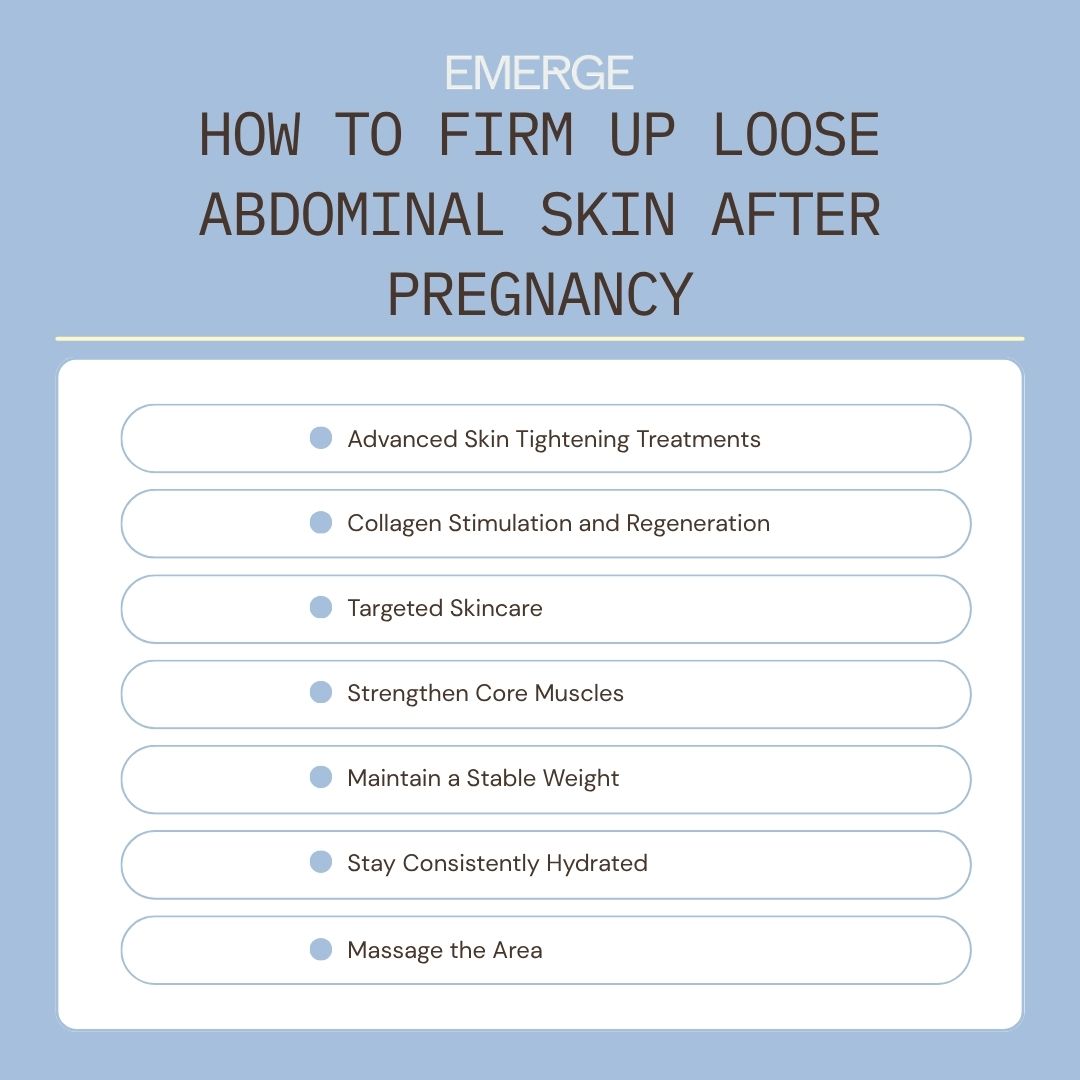
How to Firm Up Loose Abdominal Skin After Pregnancy
Advanced Skin Tightening Treatments
Lifestyle changes can definitely be an impactful way to firm up loose skin. Ultimately, however, they have a limit. When this happens, advanced skin-tightening treatments like AVAVA become a highly effective option.
The AVAVA laser system is a minimally invasive, non-ablative laser designed to target deeper layers of the skin, where collagen production occurs, without damaging the surface or surrounding tissues. Using technologies like the ComfortCool™ and Focal Point Technology, AVAVA delivers precise energy into the dermis to stimulate collagen and improve skin firmness.
What sets this treatment apart is its ability to customize treatment depth and intensity based on specific needs. This isn’t about looking “done,” it’s about restoring structure and improving skin quality in a way that looks natural. Just listen to Dr. Kling discuss how impressed she is with AVAVA laser results!
And if you’re ready to see just how powerful this non-surgical treatment is, schedule your appointment at Emerge Aesthetics. (AKA, the only practice in North Jersey with the AVAVA laser.)
Collagen Stimulation and Regeneration
In some cases, minimally invasive collagen stimulation treatments can be a valuable addition to AVAVA. Consider them supportive medical aesthetic modalities that enhance overall skin tightening and optimize long-term results. They won’t remove excess skin or reposition the ligaments—they just strengthen the foundation.
Our top recommendation for tightening loose abdominal skin (in addition to AVAVA) is collagen biostimulators such as Sculptra and Radiesse. They don’t just add volume; they help rebuild the skin’s structural foundation. When you address the root cause (a lack of collagen and elastin fibers), you can better improve overall skin quality.
Interested in learning more? Read our post, “What Is Sculptra and How It’s Different from HA Filler.”
Targeted Skincare
Medical skincare is an investment, but it’s an investment in your future self. Topical products alone won’t target, treat, or get rid of excess skin. They can, however, improve skin quality, enhance treatment efficacy, and support skin repair. Here are a few things that may be missing on your postpartum skincare shelf:
- Retinoid: If you read “Retinol vs. Retinoids,” you know how important this vitamin A derivative is. But it’s not just beneficial for your face—you can use it all over your body to promote collagen synthesis and improve skin firmness.
- Hyaluronic Acid: Known for being ultra-nourishing, hyaluronic acid deeply hydrates and plumps the skin, helping it appear firmer and smoother. If you don’t know where to start, check out the Alastin Transform Body Treatment!
- Peptides: Peptides act as signaling messengers that stimulate collagen and elastin production, helping firm and tighten loose abdominal skin. Learn more in our post, “Benefit of Peptides in Skincare,” and check out Skinceuticals P-TIOX!
Remember: skincare alone isn’t a cure-all treatment—topical products can only go so far. Instead, they’re the foundation to better skin quality and more effective medical aesthetic treatments.
Strengthen Core Muscles
Cardio exercise can help burn fat—strengthening exercises help build muscle. And when you’re trying to tighten loose skin after pregnancy, building the abdominal muscles is one of the most important steps.
When you tighten the core, you essentially fill in those “gaps” in your underlying structure. This makes looser, sagging skin look smoother, tighter, and firmer. Beyond appearance, strengthening your core can help with things like chronic back and spine aches. It’s not just about looking “better,” it’s about feeling like yourself again.
Maintain a Stable Weight
Fluctuations in weight are an entirely normal, expected part of pregnancy. The worst thing you can do, ultimately, is be hard on yourself about this. While you were pregnant, your body did exactly what it was meant to: support the growth of your baby. So step one: drop the shame, embarrassment, or insecurity.
Step two: do your best to maintain a stable weight. Persistent fluctuations can make it more difficult for the skin to adapt and for collagen and elastin fibers to stabilize. Maintaining a stable weight supports long-term elasticity and can help prevent further stretching.
Stay Consistently Hydrated
Hydration is essential for improving skin elasticity, supporting collagen production, and helping skin cell regeneration. And that goes for whatever area you’re trying to target! However, for those trying to tighten loose abdominal skin, hydration is non-negotiable. Here are a few specific examples of how it helps:
- Helps skin remain more elastic
- Maintains the integrity of collagen fibers
- Makes skin look plumper and firmer
- Helps repair tissues that have been damaged during pregnancy
- Improves circulation
Ultimately, upping your water intake is important. However, you can also increase hydration through nutrition and diet, too! Incorporate water-rich foods such as spinach, watermelon, zucchini, cucumber, broth, and Greek yogurt.
Massage the Area
Massaging the stomach seems like one of those “too simple to be true” practices, but it truly is effective. And you don’t have to book an expensive, professional massage to reap the benefits. Just grab a little bit of oil, like jojoba, almond, or coconut oil, and apply light, consistent pressure.
Regular abdominal massages boost blood flow, encourage lymphatic drainage, aid in collagen production, enhance circulation, and break up adhesions that may contribute to scar tissue. Always check with your doctor before doing this, though—especially if you’ve had a C-section.
How Long Does It Take to Tighten Loose Skin in the Abdomen After Pregnancy?
The timeline for tightening loose skin after pregnancy varies—just as it does with treatment efficacy! It’s important to consider things such as skin elasticity, the extent of stretching, and the approach you take.
With consistent lifestyle habits like strength training, hydration, and a healthy diet, some improvement can be seen within a few months. However, more noticeable changes, especially in the case of moderate-to-severe loose skin, often take longer.
This is where targeted advanced treatments, like the AVAVA laser, can prove invaluable. Unlike traditional laser therapy, clients are seeing noticeable results after just one session—just look at a few before-and-after examples! Less downtime, less damage, and firmer, tightened skin. Medical aesthetics is just that—medicine.
And with the right physician, targeting loose abdominal skin after pregnancy isn’t about quick fixes. Instead, it’s about supporting your body through a thoughtful, layered approach that prioritizes skin health, skin quality, and long-term results.
Don’t book your plastic surgery appointment—these minimally invasive, non-surgical treatments can tighten and firm post-pregnancy skin.
Moms everywhere are all wondering one thing: “Is it really possible to improve loose abdominal skin without surgery?” And the answer is, absolutely! Today’s approach to skin tightening isn’t solely centered on removing excess. Instead, it’s focused on rebuilding and supporting the skin from within. And with the right combination of nutrition, strength training, and an advanced, multi-modal approach, it’s possible to improve skin firmness, minimize excess skin, and feel more confident.
At Emerge Aesthetics, treatment isn’t one-size-fits-all. Dr. Kling analyzes each patient’s anatomy and goals and creates a targeted strategy to support long-term, natural-looking results. She understands the pressure—and importance—of maintaining beauty amidst life’s demands. And with a compassionate, patient-oriented approach, she’s here to help you through every step. Book your appointment at Emerge Aesthetics today to feel good in your skin tomorrow.
For now, don’t forget to scroll through the Emerge blog, where we create educational guides that help you learn more about treatments, skincare, and modern-day rejuvenation. Also, don’t forget to follow Emerge Aesthetics on Instagram—you don’t want to miss our deals, discounts, and updates!