
Body contouring is one of the most misunderstood treatments in medical aesthetics—and we get it. When you hear words like “HA fillers” and “Sculptra,” you probably think of facial rejuvenation and anti-aging treatments. However, more and more people are choosing aesthetic medical treatments over surgical procedures for body contouring, and it’s time to talk about why.
Let’s be clear: body contouring is not weight loss. It’s not a shortcut. And it’s definitely not designed to override individual biology and anatomy. Instead, body contouring is a minimally invasive approach to refining shape, improving tissue quality, and addressing specific areas that feel “untreatable.”
Everyone deserves to feel good in their own skin, and you don’t need a tummy tuck or liposuction to get there. Today, we’re sharing how body contouring works, what it can realistically do, and how results develop over time—all through the lens of aesthetic medicine.
How Does Body Contouring Work? A Guide to Non-Surgical Sculpting
A lot of people research body contouring without understanding what treatments do—or what they target. And this isn’t their fault! Social media and trendy procedures make it feel like non-surgical body contouring is a one-size-fits-all solution.
Let us be the ones to tell you: it’s definitely not.
Some treatments target fat cells, some target skin laxity, and others target muscle tone. There’s no single approach to body contouring, and there shouldn’t be. Your anatomy, physiology, and biology matter—regardless of what treatment you’re interested in. And at Emerge, that’s exactly what Dr. Kling prioritizes.
Bringing surgical-level expertise to non-surgical aesthetics, Dr. Kling emphasizes strategy, precision, and tailored treatment plans. That includes non-invasive, non-surgical body contouring through FDA-approved dermal fillers. But before we discuss your options, let’s first talk about the science, process, and preparation for body contouring. Trust us, this is the most important part.
What Is Body Contouring?
Body contouring, also known as body sculpting, refers to surgical or non-surgical treatments designed to reshape and refine specific areas of the body. (In this case, we’re focusing on the non-surgical portion.) These treatments focus on reducing fat, improving skin laxity, and enhancing contour in targeted areas resistant to diet and exercise. Think: the abdomen, legs, thighs, arms, and buttocks.
What body contouring procedures don’t do is result in significant weight loss. They can, however, tone, define, and offer structure. And when you’re dealing with a frustrating, resistant treatment area, that can make all the difference.
Here’s the takeaway: body contouring is refinement. And, as with all other aesthetic treatments, it works best with a multimodal approach.
Types of Body Contouring: Non-Invasive, Non-Surgical Enhancements
- Non-Surgical Fat Reduction: These treatments target fat cells beneath the skin using energy-based technologies, like cooling, heat, radiofrequency, or ultrasound. The goal is to selectively destroy fat cells in specific areas without affecting the surrounding tissue. They don’t focus on overall weight loss—just on reducing and contouring fat pockets.
- Skin Tightening and Tissue Quality Improvement: For some, body contouring focuses more on improving elasticity and firmness rather than fat reduction. Skin tightening treatments deliver targeted energy deep into the skin’s layers to trigger collagen and elastin production. By supporting collagen stimulation, these treatments can help improve the appearance of mild to moderate loose skin.
- Muscle-Tone-Enhancing: Certain non-surgical technologies stimulate muscle contraction in targeted areas beyond what we can achieve through exercise. Over time, muscle density and volume increase, enhancing muscle metabolism and definition.
Regardless of which body contouring treatment makes the most sense for your body and goals, it’s important to understand how they work. As a quick overview: most sessions are quick (30–60 minutes), spaced weeks apart, and offer gradual results.
Beyond that, here’s exactly what non-surgical, non-invasive body contouring does, how it works, and what you can expect:
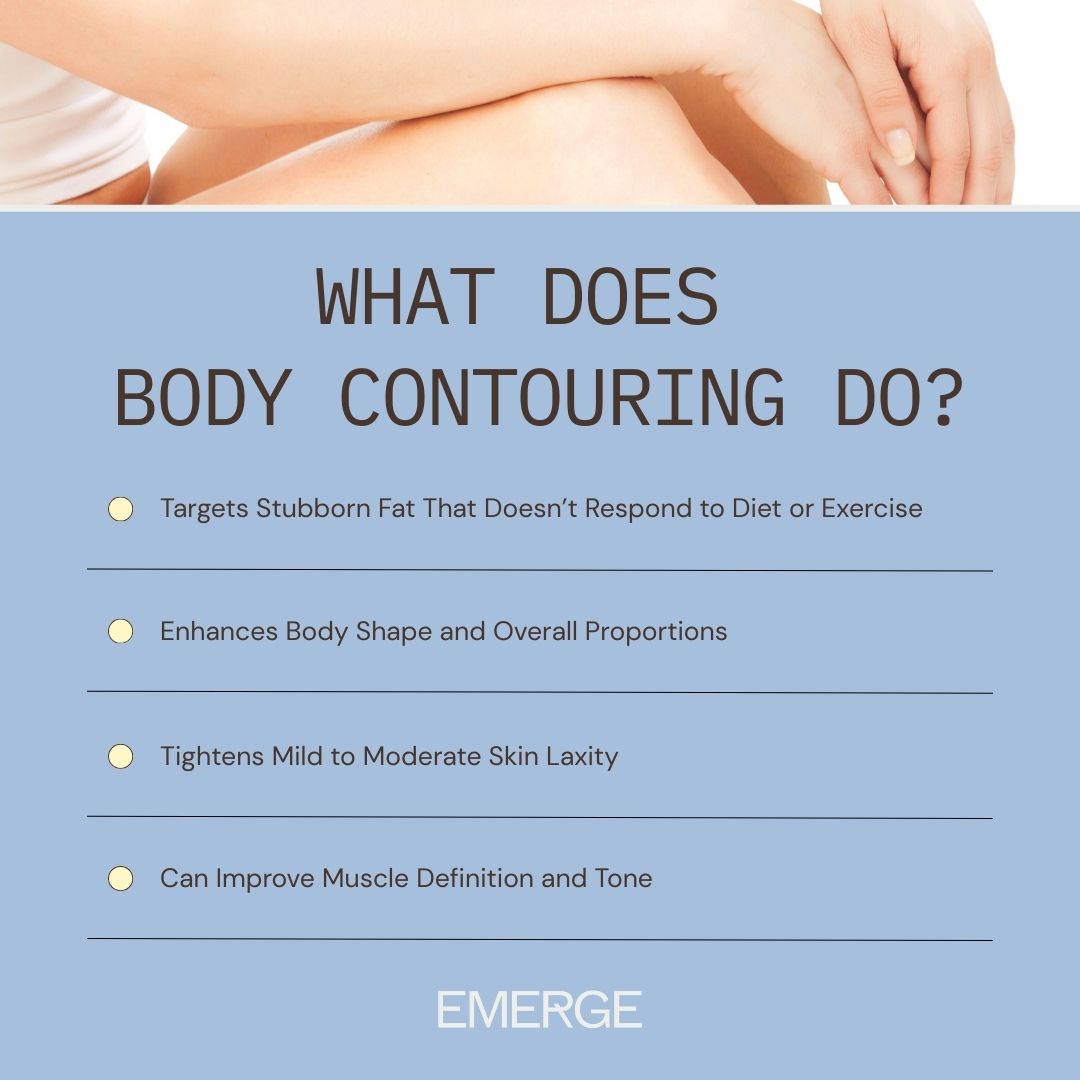
What Does Body Contouring Do?
Targets Stubborn Fat That Doesn’t Respond to Diet or Exercise
As we mentioned earlier, body contouring isn’t a weight loss solution. You won’t experience significant weight fluctuations, and they shouldn’t replace physical activity or nutritional adjustments. What it does, however, is use non-invasive methods to destroy fat cells in stubborn areas without affecting surrounding tissue.
And when we say stubborn, we mean specific areas that are generally resistant to diet and exercise—like the abdomen, thighs, and arms.
Enhances Body Shape and Overall Proportions
Body contouring doesn’t focus on scale measurements. Instead, it focuses on balance and proportion—just as Dr. Kling prioritizes during minimally invasive facial rejuvenation! It won’t restructure or reshape your body; it smooths, sculpts, and defines your silhouette. Those harmonized contours make the body appear lean without actually losing weight.
Tightens Mild to Moderate Skin Laxity
As we age, our skin loses collagen and elastin. It’s normal, it’s expected, and it’s absolutely nothing to be ashamed of. However, that doesn’t mean it makes us feel great. On our body, the first areas we tend to notice looseness are the abdomen, upper arms, thighs, and neck.
Maybe you noticed this after pregnancy, or maybe you lost a significant amount of weight rapidly. Maybe you’re even beginning to notice the effects of photoaging! Regardless of the cause, body contouring treatments support skin tightening by stimulating collagen beneath the surface.
They stimulate fibroblast activity, trigger a wound-healing response in the brain, and produce new, fresh, and firm collagen and elastin.
Can Improve Muscle Definition and Tone
Some treatments, typically those that use High-Intensity Focused Electromagnetic (HIFEM) technology, induce intense, involuntary contractions in the treatment area. During this process, the muscles engage over time (generally 30 minutes), improving tone and definition. These treatments work best as a complement—not a replacement—for an active lifestyle.
Related: How to Reduce Cellulite on Buttocks
How Body Contouring Works
Body contouring uses precise, localized treatments to target specific areas of tissue while preserving skin and underlying anatomy. No surgeries, no anesthesia, no scary side effects, and no lengthy recovery time. However, if you look up how body contouring works? You find a bunch of technical terms that make the process feel intimidating rather than supportive and safe.
Here’s a client-focused overview of how body contouring works through doing what we do best: analogies, examples, and easy-to-understand definitions:
Fat Cell Disruption in Targeted Areas
If your main goal with body contouring is to reduce fat, non-surgical enhancements can be incredibly beneficial. Using controlled energy (lasers, freezing, ultrasound, or heat), treatments destroy fat cells without affecting the surrounding nerves and muscles. It isn’t like muscle-tone-enhancing treatments—it only targets fat cells.
And it isn’t a total-body procedure; a licensed physician will treat specific pockets of fat resistant to diet and exercise. Doing so permanently reduces the number of fat cells, not temporarily shrinks them.
Apoptosis and Lymphatic Drainage
When fat cells are disrupted, they experience apoptosis. Apoptosis is a natural, programmed process in which damaged cells are broken down and safely eliminated from the body. It’s a gradual, predictable process, which is why results develop over time, not overnight.
After the cells die, the body essentially acts like a cleanup crew. It identifies what no longer belongs, breaks it down, and removes it quietly over time without disrupting surrounding tissue. During this process, the lymphatic system plays a supporting role by transporting cellular debris away so the body can metabolize and eliminate it.
Skin Tightening Through Collagen Stimulation
Body contouring treatments don’t just target fat cells—they also focus on improving skin quality and texture. Many non-surgical procedures intentionally damage cells deep inside the skin, triggering the body’s natural healing process.
Essentially, it tricks your brain into thinking something is injured or damaged. As a result, fibroblasts will rush to the scene of the crime, producing new, healthy collagen and elastin. Over a few months, you’ll begin to notice smoother, stronger, and firmer skin.
Gradual Results as the Body Responds and Heals
This is medicine—not marketing. Fat elimination and collagen regeneration are biological processes that take time. Dramatic, immediate results are the ones that will lead patients to enhancements that don’t fit their anatomy, expectations, or goals. Sustainable, natural-looking change happens gradually.
How Is Body Contouring Done?
Step 1: Initial Consultation and Body Assessment
Precision matters in medical aesthetics—which is why going to a licensed provider is non-negotiable. (Dr. Kling talks all about the importance of industry ethics and credentials in THIS video!) Before even booking specific treatments, you should begin with a thorough consultation.
Anatomy, fat distribution, skin quality, and overall health matter, and they’re especially important when determining what treatments are right for you. Interested in learning more? Schedule an appointment at Emerge Aesthetics and meet with Dr. Kling!
Step 2: Treatment Selection Based on Goals and Anatomy
You may notice a theme here—and that’s intentional. We all have unique challenges when it comes to maintaining self-care routines. The right physician will take that into consideration when formulating a treatment plan that’s right for you.
At Emerge, we live by a few quotes, one of which is: “Aesthetic treatments are more than skin-deep.” And yes, we really mean that the benefits extend far beyond being confident. However, we also mean that treatment selection should be carefully tailored to body type, tissue quality, and specific areas of concern—not trends or social media promises.
Step 3: Application of the Device or Surgical Technique
Think of treatments as an umbrella. Neurotoxins include Botox, Dysport, and Xeomin. Collagen biostimulators include SkinVive, Sculptra, and Radiesse. The list goes on. It isn’t your job to pay attention to treatment names; it’s your physician’s job to explain how they work with your biology.
After deciding on a treatment, the selected technology is applied to the specific treatment area. Most body contouring sessions last up to 60 minutes, but this depends on the size and number of treated areas.
Step 4: Targeted Fat Cell Disruption or Removal
We talked a lot earlier about the death of fat cells—but is that true for every body contouring treatment? The answer is: most, but not all. Some do permanently destroy fat cells via apoptosis. Others temporarily reduce the cell’s size by causing it to release fatty acids.
Ultimately, there’s no universally “better” treatment. Cell death results in longer-lasting structural contouring, while treatments that reduce cell size offer more temporary volume changes. In either case, the surrounding tissue remains intact, and the body responds naturally.
Step 5: Natural Processing and Elimination of Fat Cells
In non-surgical treatments, broken-down debris doesn’t stick around and hang out. Instead, the body processes and eliminates fat cells naturally. If you want the true, science-driven explanation?
After undergoing apoptosis, the damaged cells are consumed by immune cells. After that, they travel through the lymphatic system, the liver processes them, and they’re eliminated as metabolic waste.
For an easier-to-understand breakdown: think of it as your body’s version of spring cleaning. The fat cells lose their purpose, the body decides what stays and what goes, packs up anything unnecessary, and clears it out room by room. Simple, efficient, and completely safe.
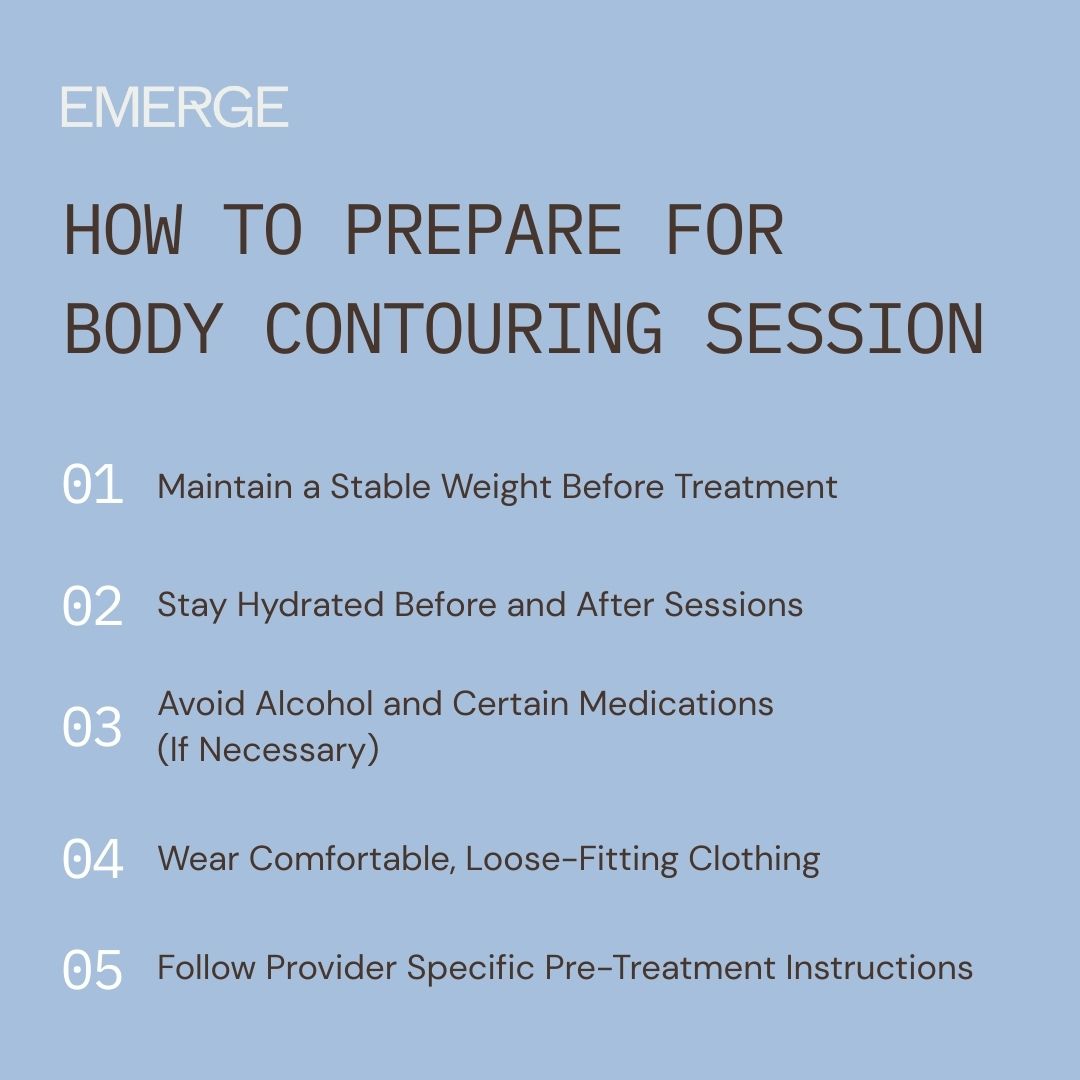
How to Prepare for Body Contouring Session
Maintain a Stable Weight Before Treatment
Remember when we said that body contouring treatments shouldn’t replace physical activity and an intentional diet? There’s a reason for that. After the cells experience apoptosis, you still have other fat cells hanging around. The goal isn’t to remove them all.
That said, if your weight fluctuates before and after treatment, those fat cells enlarge. They essentially take up that newfound room, compromising any results and definition you just received. Multimodal approaches still matter—regardless of which area you’re rejuvenating.
Stay Hydrated Before and After Sessions
Staying hydrated before and after your body contouring session is the gold standard. This is what maximizes results, flushes out destroyed cells, and supports lymphatic drainage. And, as far as side effects go, proper hydration can reduce procedure-related swelling and irritation.
Your body will do what it needs to do—hydration just speeds up and supports that process. Start increasing your water or electrolyte intake a few days before your session, and stay consistent for at least 24 hours post-treatment.
Avoid Alcohol and Certain Medications (If Necessary)
Before and after non-surgical body contouring, avoid alcohol and certain medications (like blood thinners). Alcohol, for example, prohibits blood cells from clotting as they should. Enter: worsened bruising and swelling. Plus, alcohol naturally causes dehydration, hindering healing and potentially disrupting your results.
Blood thinners can also worsen bruising and swelling. On top of this, they may even interfere with the body’s inflammatory response, which is essential for post-treatment care. Of course, follow your physician’s recommendations and adjust your routine accordingly.
Wear Comfortable, Loose-Fitting Clothing
Are you coming out of surgery? No, of course not. However, you still deserve to be comfortable! And trust us, you’ll want to be. Loose-fitting clothing reduces skin irritation and prevents unnecessary pressure. Plus, not commonly considered, loose clothing also allows physicians to reach treatment areas much more efficiently.
Follow Provider Specific Pre-Treatment Instructions
Each physician will create an individualized, tailored treatment plan after you receive non-invasive body contouring. Even though you and a friend decided to get Sculptra together, your post-procedure plans may be totally different.
It all comes down to anatomy, biology, and treatment experience. Most importantly, though, following pre- and post-treatment instructions helps minimize side effects and optimize results.
Non-surgical, non-invasive body contouring treatments use biology, precision, and time to create natural, sustainable refinement.
When used appropriately, body contouring is a powerful tool for confidence, self-assurance, and overall well-being. It’s also a powerful reminder that aesthetic medicine isn’t about changing the way you look—it’s about feeling secure in your own skin. With the right guidance and a multimodal approach, body contouring works with your body—not against it.
At Emerge, Dr. Kling bridges the gap between traditional dermatology and cosmetic enhancement. Blending science with beauty, her approach is simple: simple, mindful strategies enhance your appearance. Schedule an appointment to learn more about which treatments may be right for you.
And, of course, make sure to stick around and read over the Emerge Aesthetics blog! We break down complex aesthetic concepts into bite-sized, easy-to-understand guides designed to help you learn more about what skincare, procedures, and lifestyle adjustments are right for you. Don’t forget to follow the Emerge Aesthetics Instagram, too! You might just find deals, discounts, and top-secret info you can’t find here on the blog. (Wink, wink.)