
As we age, our skin changes. It’s natural, beautiful, and nothing to be ashamed of. Collagen production slows, hormones fluctuate, and sun damage from years past begins to appear as fine lines and dark spots. But while aging is inevitable, feeling amazing is optional.
There are many non-surgical cosmetic treatments designed to support skin health and longevity. Two of the most popular options in the country are microneedling and laser skin treatments. Both are minimally invasive, backed by science, and can deliver powerful results when used correctly.
But how do you know which treatment targets your specific skin concerns? That’s exactly what we’re breaking down. In this guide, we’ll discuss microneedling vs. laser treatments, explaining how each works and what they’re used for. This way, you can decide which option may be right for your personalized treatment plan.
No overpriced products, no trendy social media gimmicks—just physician-led medical aesthetics that offer noticeable, long-lasting results.
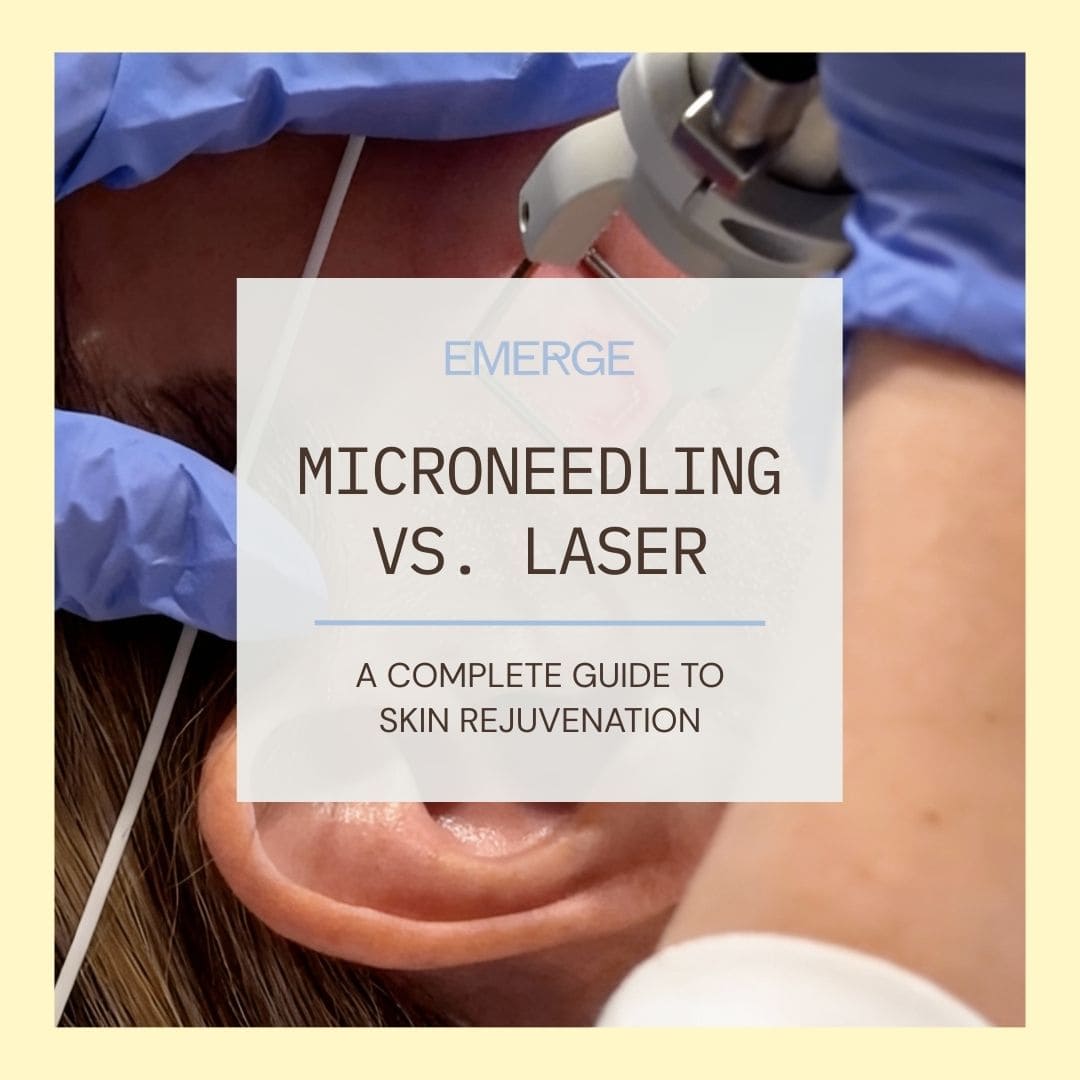
Microneedling vs. Laser: A Complete Guide to Skin Rejuvenation
When people think of cosmetic procedures, they generally think of fillers and injectables. And sure, that’s part of it—but it’s not all of it. And that’s why people end up getting results that don’t fit their face, goals, or expectations.
At Emerge, Dr. Kling prioritizes anatomy, biology, and long-term skin health when formulating multimodal plans for clients. When you’re looking to improve skin quality, what you use matters—both in your skincare routine and at a medical spa.
That said, microneedling and laser treatments do have some similarities. Both treatments:
- Are minimally invasive
- Trigger the body’s natural healing process
- Improve skin tone and texture over time
- Can address acne scars, fine lines, and signs of aging
The difference lies in how they interact with the skin, the depth of the treatment, healing times, and end goals. Here’s a comprehensive breakdown of microneedling and laser skin treatments:
What Is Microneedling?
Microneedling is a regenerative treatment that uses tiny needles to create controlled micro-injuries in the skin, stimulating collagen and elastin production through the body’s natural healing process. These micro-mechanical injuries aren’t a form of “damage;” they’re a controlled stimulation.
This treatment is generallysafe for all skin types, including those with darker skin tones, which is one of the many reasons why it’s so popular. It’s not a trend—it’s a science-backed treatment. (As long as it’s not at-home microneedling. Stay far away from that.)
Ultimately, microneedling helps remodel collagen, improve the appearance of acne scars, minimize pores, and even skin tone and texture. And even if you’re hesitant about needles, it’s a minimally invasive treatment with little pain that offers long-term results. Just look at one of the Emerge patients receiving the treatment on our Instagram!
Let’s look at a few skin concerns that microneedling helps target.
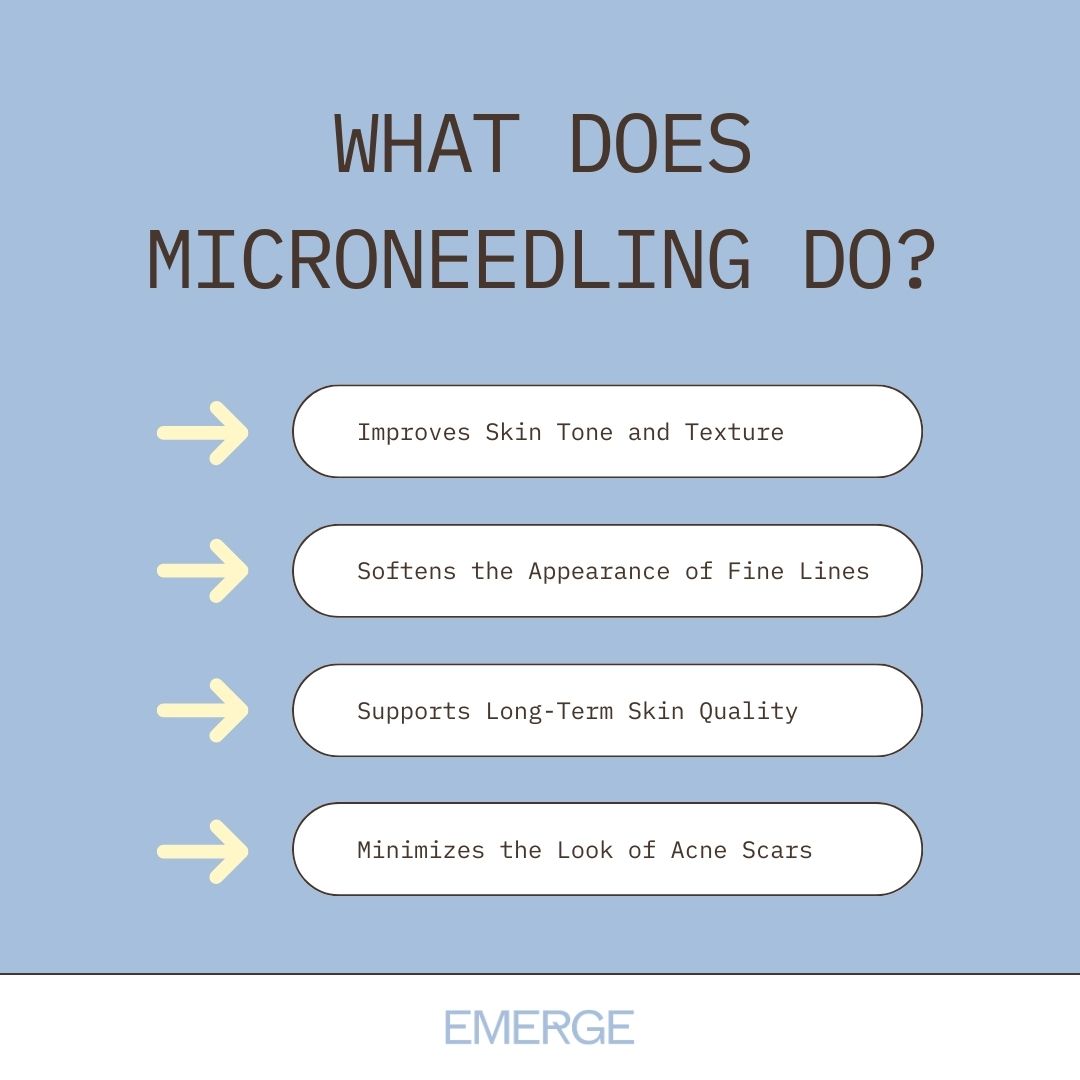
What Does Microneedling Do?
Improves Skin Tone and Texture
Over time, our skin holds onto dead cells. This is normal—it’s called cell turnover. But when your skin holds onto those cells for too long, your complexion shows it. You’ll start to notice an uneven skin tone, a rough texture, clogged pores, and visible signs of aging.
The older we get, the slower cell turnover becomes—but there’s a way to fix it. As microneedling creates tiny injuries in the skin, it triggers the body’s natural healing response. And, in turn, it triggers cell proliferation. Your skin sheds damaged cells and replaces them with new ones, resulting in healthy tissue and smoother, firmer skin.
Softens the Appearance of Fine Lines
Collagen and elastin are the proteins that give our skin a plump, firm, hydrated appearance. But by 25, you lose up to 1%-1.5% of collagen a year, making preventative treatments key. By creating micro-injuries, microneedling increases the production of collagen and elastin.
Essentially, you’re rewinding the clock by adding that structural support back into your face. Together, elastin and collagen remodel the structure beneath the skin, filling in fine lines and wrinkles for a balanced complexion.
Supports Long-Term Skin Quality
Aging doesn’t always show up how you’d expect it. Temples become hollow, the chin shrinks back, lips flatten, and the jawline blurs. As you begin to schedule microneedling treatments quarterly, you’re getting ahead of the aging process.
This regenerative procedure enhances the skin barrier, increases skin thickness, replaces old cells, and ultimately reduces signs of aging. This isn’t a short-term fix. The positive effects of microneedling last for months after treatment.
Minimizes the Look of Acne Scars
Acne scars are permanent marks left in the skin from tissue damage and disrupted collagen production. As a blemish heals, the skin’s surface tries to repair the damage, but it can appear uneven, coarse, or even jagged.
Microneedling stimulates collagen production, breaks up old scar tissue, and replaces the depressed areas with strength and elasticity. Not only does it balance the complexion, but it also smooths the surface, too.
How Does Microneedling Work?
Creates Controlled Micro-Injuries in the Skin
Microneedling uses precise, medical-grade needles to create controlled micro-injuries within the skin. This signals the body to increase blood flow to the area, delivering oxygen and nutrients that support cell renewal and collagen production. Then comes proliferation—also known as the skin’s “rebuilding phase.”
Encourages Collagen and Elastin Remodeling
During the proliferation phase, fibroblasts—the cells responsible for collagen and elastin—become more active. Growth factors are released in the treated area, supporting the production of fresh collagen, elastin, and healthy skin tissue.
Enhances Absorption of Topical Treatments
A healthy skin barrier acts as your skin’s bodyguard. It’s the protective outer layer that keeps pollutants out and products in. And the healthier it is, the more effective your topical treatments are.
Because microneedling supports this process, you can be confident that your retinoid, vitamin C, and tinted SPF are working as intended. Also known as the three pillars of skincare, according to Dr. Kling.
Works Gradually Through Multiple Healing Cycles
Consistency is the most important part of any multimodal treatment approach. Think of microneedling as you would going to the gym. Skipping sessions just slows your progress and puts you back where you were originally. Microneedling, just like all non-invasive medical aesthetic treatments, performs best with a structured, intentional schedule.
How Long Does Microneedling Last?
The exciting thing about microneedling is that results come (relatively) quickly and are long-lasting, as we discussed in “Microneedling Aftercare.” Of course, this doesn’t mean you should take a one-and-done approach; results aren’t permanent. Remember, consistency is key.
However, most patients notice texture improvements as soon as 1 week post-treatment. From there, collagen production lasts for weeks, often peaking around the 3–6 month mark. Because it’s such a slow, steady process, microneedling results tend to last for 6–12 months.
At this point, it’s time to call Emerge and schedule your next appointment!
How Much Is Microneedling?
Microneedling costs vary based on depth, technology used, treatment area size, additional healing enhancements (like PRP and exosomes), and the provider or clinic. It’s definitely not a one-size-fits-all approach, which is why contacting your physician ahead of time can help avoid surprises later.
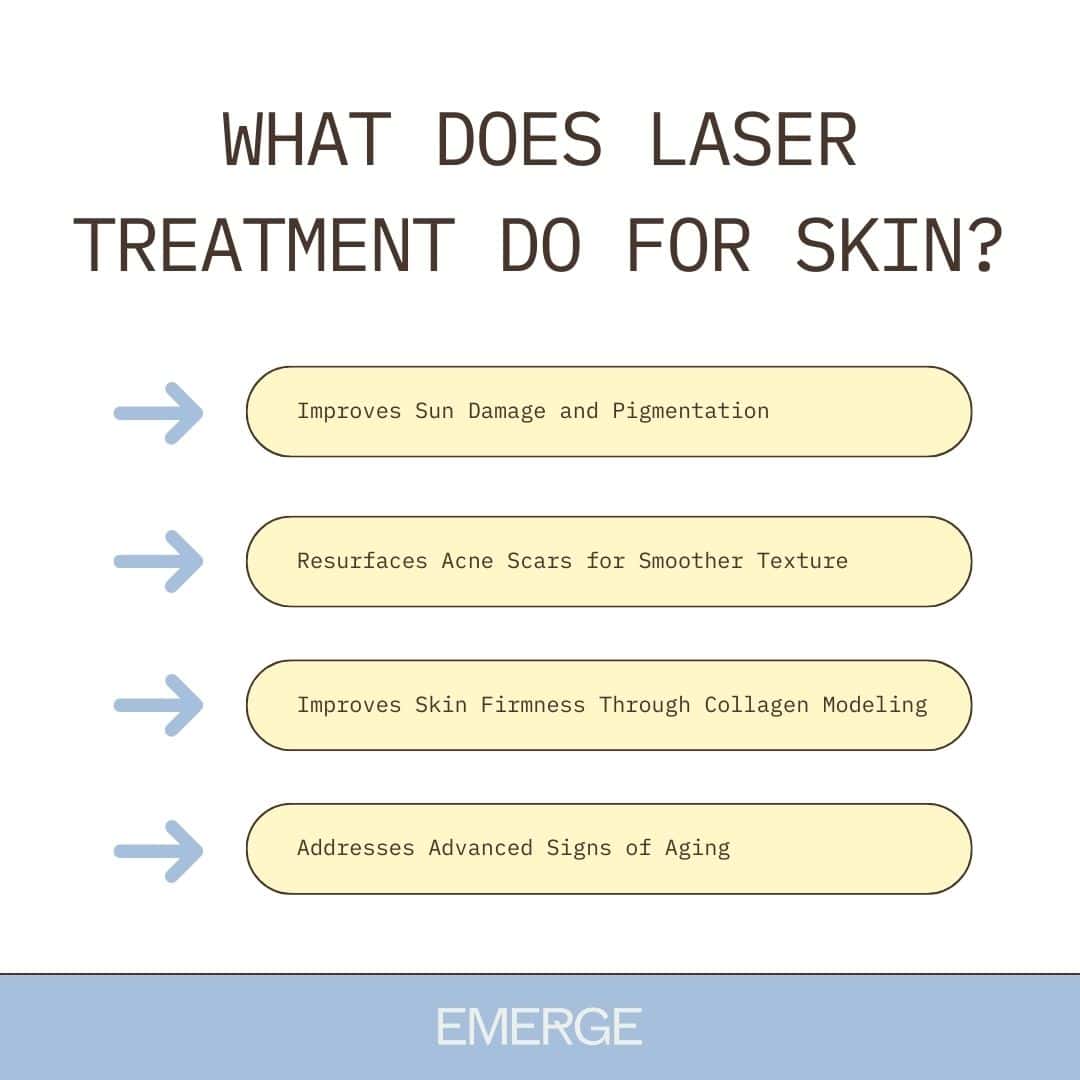
What Is Laser Treatment for Skin?
Fractional ablative CO2 laser treatments are a skin resurfacing treatment that uses a gas mixture to produce focused light energy, removing microscopic layers of damaged skin. There are different types of lasers, categorized as fully ablative (removing the entire layer of skin) or fractional (treating small areas at a time).
For non-surgical enhancements, the SmartXide Pro Technology is one of the most powerful tools in regenerative aesthetics. The fractional CO2 technology targets specific areas of the skin, creating microscopic thermal injuries that stimulate collagen production and replace damaged tissue.
CO2 laser treatments also help soften deep wrinkles, reduce the appearance of acne scarring and sun damage, and enhance skin texture. This non-invasive procedure doesn’t target the entire face at one time. It focuses on areas of concern, which inevitably reduces recovery time, lowers risk, and results in faster healing.
What Does Laser Treatment Do for Skin?
Improves Sun Damage and Pigmentation
Sun damage doesn’t always appear immediately. Instead, it shows up over time as dark spots, an uneven skin tone, and a rougher texture. At that point, you may feel like it’s too late, but CO2 laser treatments prove otherwise.
Fresh skin from the high-energy light replaces damaged areas over time. And because you can customize this treatment, you can specifically target that excess melanin to remove pigmentation and stimulate collagen production.
Visit our Instagram to see an Emerge patient receiving her first CO2 laser session for sun spots!
Resurfaces Acne Scars for Smoother Texture
There are different types of acne scars, such as icepick, boxcar, and rolling scars. All are normal, common skin concerns—but not every regenerative approach is designed to fix them. Fortunately, CO2 laser treatments can.
CO2 lasers don’t just focus on the skin’s surface. Instead, they take a “bottom-up” approach by vaporizing damaged tissue and heating deeper layers of the skin. This method addresses the structural loss—not just the surface-level concerns.
Listen to Dr. Kling discuss how many CO2 laser sessions are needed to remove acne scars.
Learn about the Laser Skin Resurfacing Healing Process in this post.
Improves Skin Firmness Through Collagen Modeling
Lately, people on social media approach sagging skin with one answer: face-lifts. However, CO2 laser treatments address this concern at the root, offering long-lasting results and a firm, strong complexion—without the need for surgery.
By delivering precise energy to sagging areas of the skin, CO2 laser treatments stimulate collagen remodeling in the deeper layers. This helps strengthen the skin’s support structure and improves firmness and elasticity over time.
Addresses Advanced Signs of Aging
Fine lines, wrinkles, thinning skin, a loss of facial volume—these are all visible signs of advanced aging. And you don’t have to get fillers, injections, or Botox to fix it. CO2 lasers trigger the body’s natural healing response to target aging for complete rejuvenation.
As light energy penetrates the skin, it removes sun spots and depressed areas, smooths fine lines, and tightens loose skin. At the same time, it also improves skin texture and appearance both underneath and at the surface. It’s not guesswork—it’s strategy.
Related: How to Even Out Skin Texture
How Does Laser Skin Treatment Work?
Uses Targeted Light Energy to Treat Specific Skin Concerns
CO2 lasers emit high-energy light that precisely targets damaged skin tissue while preserving surrounding healthy skin. This controlled energy vaporizes microscopic layers of damaged skin, prompting the body to replace them with healthier, newly regenerated tissue.
Stimulates Collagen Production and Cellular Renewal
CO2 lasers trigger the body’s natural healing response. This means that as the skin heals after treatment, collagen production increases in deeper layers of the skin. This process simultaneously supports cell turnover and strengthens the skin structure over time.
Allows for Adjustable Depth and Treatment Intensity
Another reason SmartXide Pro Technology is the golden standard is how personalized it makes treatments. Because of this, you can strengthen the skin barrier before deeper treatments, minimize unnecessary downtime, and build collagen safely over time. You can also effectively treat areas of concern simultaneously—reducing the need for different treatments.
Produces Results Through Progressive Healing
Some skin improvements will definitely be noticeable earlier on. After the swelling subsides, many clients say that their skin is noticeably smoother and firmer within a month. However, collagen remodeling progresses over time. This is what allows the treatment to deliver long-lasting, natural-looking results.
Related: Can You Get Rid of Loose Skin Without Surgery?
How Long Does Laser Skin Treatment Last?
Fractional CO2 laser skin treatments can be extremely long-lasting, especially when they’re used strategically and supported with proper medical-grade skincare. That said, we never stop aging, which means consistency is key for extending the longevity of the results.
As powerful as they are, laser treatments aren’t magic. They produce natural-looking, sustainable results, but they don’t last forever. Regular sessions ensure that you build on previous treatments, maximizing your results and enhancing your complexion sustainably.
Here’s more on CO2 recovery from Dr. Kling!
How Much Is Laser Skin Treatment?
The cost of a laser treatment varies widely based on factors like the type of laser used, the treatment depth, the areas treated, and the physician or clinic. Stronger treatments generally tend to be more expensive—but the results prove they’re worth it.
Read our comprehensive list of non-surgical face lifts that deliver natural-looking and progressive results.
Is Microneedling or Laser Better?
Microneedling and CO2 lasers shouldn’t be in competition with each other—the “better option” depends on your skin, expectations, and goals. So, ask yourself, “What areas am I trying to treat and why?”
Microneedling may be ideal if you:
- Want a subtle, gradual improvement
- Can plan for multiple treatments to achieve results
- Are experiencing early signs of aging
- Try to heal acne scars, but aren’t having any luck
- Prefer gradual, regenerative change
Laser skin treatments may be ideal if you:
- Have significant sun damage or hyperpigmentation
- Want a visible reduction in deep fine lines or acne scars
- Can accommodate a longer recovery time
- Deal with less laxity due to age and collagen reduction
- Want a dramatic improvement in skin firmness
The goal isn’t to erase age, reset your face, or alter your appearance. It’s to enhance your features, refresh your complexion, and support healthy, resilient skin over time. Remember: the best results come from a gradual multimodal approach—not TikTok trends or promising sales pitches. Radiant skin isn’t luck; it’s science, strategy, and consistency.
FAQs about Microneedling and CO2 Laser Treatments
If you’re planning your first non-invasive cosmetic treatment, it’s important to know what to expect. Here are a few common questions we get about both microneedling and CO2 laser treatments:
Can you do laser and microneedling together?
Absolutely! In fact, the combination of the two treatments is among the most powerful, strategic approaches to skin rejuvenation. However, timing matters here, which is why physician-guided planning is essential.
Can CO2 laser treatments be used on any skin type?
Yes, any skin type can benefit from CO2 laser treatments! But at Emerge, we assess patients’ skin type using the Fitzpatrick scale to ensure treatments are safe and suitable for their unique skin. For patients with more melanin, Dr. Kling recommends shorter, less intense sessions, but more frequent visits. For people with less melanin, it’s safer to increase the settings more during one session.
Can anyone of any age get CO2 laser treatments?
Technically, you can get CO2 laser treatments at any age (over 18). Dr. Kling, as she discusses in this video, really emphasizes a thorough assessment before recommending CO2 lasers. An 18-year-old typically won’t have any visible signs of aging, whereas a 25 year old would.
What should I expect during my microneedling appointment?
The process is actually extremely simple! You’ll review your skin in a consultation, apply the numbing cream, and get ready for the treatment. It really is that easy—and it’s designed to be.
Microneedling and CO2 laser treatments are powerful regenerative treatments that offer gradual, sustainable results.
If stimulating collagen production, reducing fine lines, and improving skin texture and tone are on your “To Do” list this year, consider microneedling and CO2 laser treatments! Healthy, radiant skin isn’t about getting lucky through trial-and-error—it’s about rooting your routine in science and strategy.
If you’re ready to explore your personalized multimodal treatment plan, schedule a consultation with Emerge! Dr. Kling is a double-board-certified Emergency Medicine physician—and she approaches aesthetic medicine with precision and care.
For more on skin health, transformative treatments, and science-backed tips, visit the Emerge blog! We use education, evidence-based care, and long-term strategies to help clients learn as much about their skin—and non-surgical treatments—as they can.