
When people think of medical aesthetics, they often think of Botox, fillers, and injectables. And yes, that’s part of it—but skincare is the foundation of everything we do. At Emerge, we’d much rather clients invest in good skincare than Botox—that’s how important it is.
But just like we approach all regenerative treatments, skincare routines should be multimodal, rooted in intention, and backed by science. That doesn’t mean buying another serum because “TikTok told you to” or filling your bathroom with products that overpromise and underdeliver. Instead, it means choosing products that work for your unique skin type.
Right now, you may feel like you’re swimming in a sea of brands, products, and ingredient lists. Not all of it is helpful, and not all of it is safe. So today, we’re sharing a physician-led guide on how to choose skincare products that actually work. It is possible to support your skin health and build a sustainable, effective routine—without the guesswork.
How to Choose Skincare Products to Build a Better Routine
Dr. Kling’s honest, trustworthy approach to regenerative aesthetics is what’s made her so credible as a double board-certified physician. That said, it’s no secret that non-surgical procedures, like CO2 laser resurfacing, Sculptra, and PDO threads, offer the best approach.
However, skincare isn’t just the foundation of what we do—it’s the foundation of your skin. Creating the right routine allows every treatment to work better, last longer, and look more natural.
So, in this post, we’re sharing all the essentials for building a regimen that works for you. We’ll discuss how to understand your skin type, avoid harmful ingredients, read product labels, and make decisions that support long-term results—not quick fixes.
Are All Skin Care Products the Same?
Short answer? Absolutely not. If they were, everyone would have great skin! The reality is…
Formulations vary dramatically. Potency varies dramatically. Safety varies dramatically. And stability, pH, sourcing, and efficacy also all vary dramatically. A lot of brands want you to believe that their products are one-off miracle cures. Or that their products are “clean,” “non-toxic,” and “dermatologist-approved.” Social media is FULL of routines that sound great in theory.
The truth is this: some products are scientifically sound and fantastic for your skin. Many are not.
This is why identifying your skin type, understanding ingredients, and choosing evidence-backed formulas is essential. Even more so if you have sensitive skin or are prone to allergic reactions!
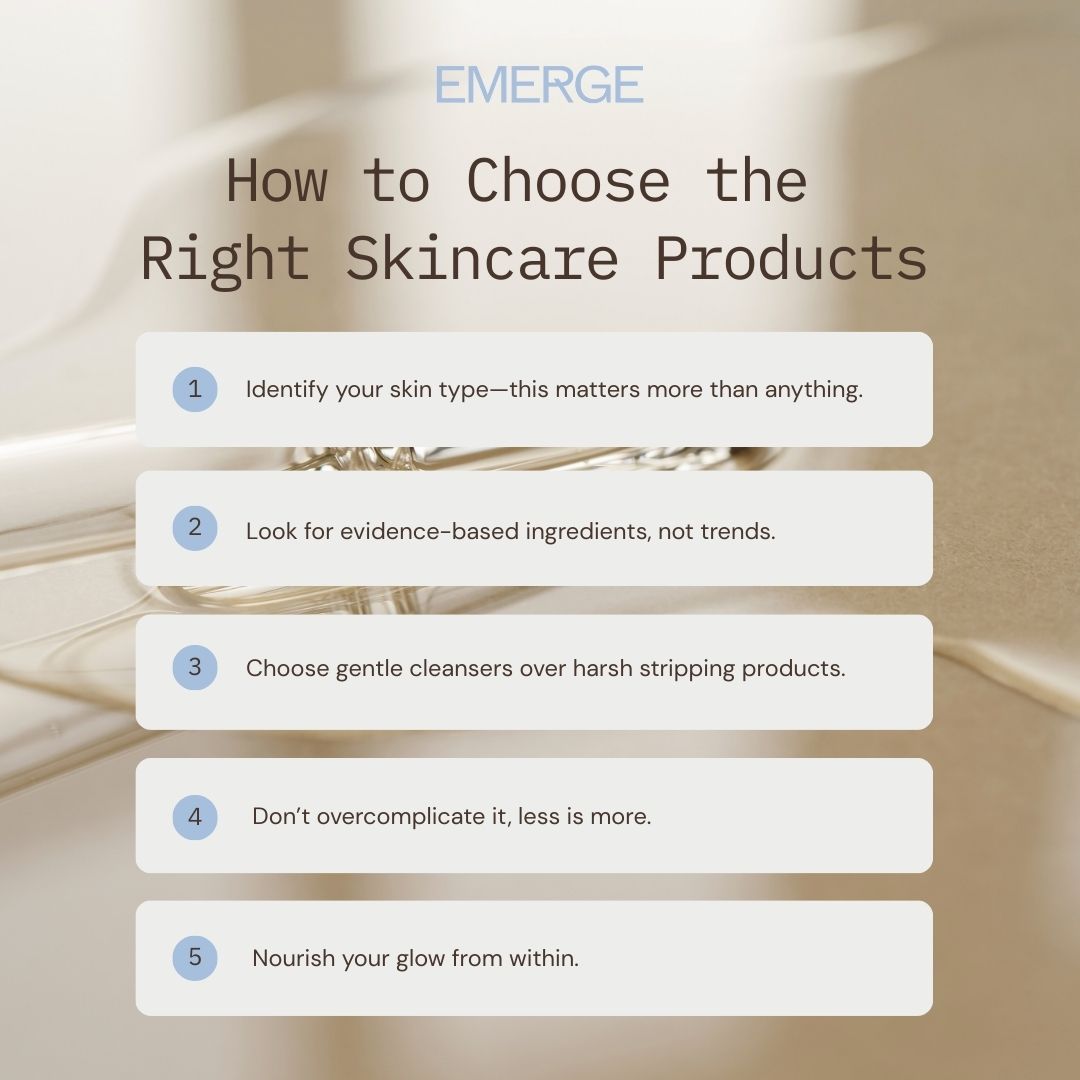
How to Choose the Right Skincare Products
At Emerge Aesthetics, Dr. Kling has curated a selection of physician-grade skincare for clients to choose from. They’re not based on trends or popularity—they’re rooted in scientific foundation, clinical efficacy, and the ability to deliver transformative results.
The ideal products and expert-backed tips are:
Identify your skin type—this matters more than anything.
Your skincare routine, most importantly, should be based around your specific skin type. There’s a reason different products will market to sensitive, dry, combination, or oily skin. What performs beautifully for one person may cause another to break out.
Schedule an appointment at Emerge for a personalized consultation and treatment plan. With physician-led expertise and evidence-based regenerative results, Dr. Kling can help you build a routine that provides long-term change and gradual, natural results.
Look for evidence-based ingredients, not trends.
Trendy doesn’t mean effective. Science does.
Ingredients like vitamin C, hyaluronic acid, retinoids, and peptides have decades of research behind them. They help rebuild collagen, brighten skin tone, improve texture, and boost overall skin health.
A holistic, regenerative approach will help you maintain results for life. We’re not interested in product hauls—we’re interested in plans. Plans use medical-grade actives strategically, not impulsively. We talk more about skincare don’ts in this Instagram post. Learn about the benefits of peptides in skincare in this post.
Choose gentle cleansers over harsh stripping products.
The beauty scene has taught us that we need to scrub our faces three times a day with 10 different products. However, this couldn’t be further from the truth. In fact, most people don’t even need an AM face wash. And you definitely don’t need a product that leaves your face squeaky.
Instead, you just need something lightweight and effective. Gentle cleansers, like Alastin Gentle Cleanser, remove environmental pollutants and make-up while also calming the skin with powerful antioxidants. Wash your face at night, pat it dry, and continue with the rest of your routine.
Don’t overcomplicate it, less is more.
Vitamin C. Broad-spectrum sunscreens. Retinoids. These are the three foundational elements that are crucial to a well-rounded skincare routine. Let’s quickly break down why each is important.
Vitamin C is the one expensive product we recommend investing in as early as possible. It fights photo-damage, boosts collagen, and enhances the effectiveness of SPF. Not just any vitamin C, though—we highly recommend Alastin C-Radical Defense Antioxidant Serum and Hydrinity Hydri-C Vitamin C Moisturizer. (Should we do a whole post about vitamin C benefits?)
SPF is always necessary—even in the shade. However, tinted SPF offers better defense against visible light and acts as a foundation for a no-makeup makeup look. Hear Dr. Kling talk about tinted SPF here!
You may have heard that you don’t need to use vitamin C and retinoid together… right? Wrong! Tazarotene is the best retinoid on the market—it boosts cell turnover, refines texture, helps keep pores clear, and minimizes the look of fine lines. Dr. Kling talks about it in this video on our Instagram!
Nourish your glow from within.
Something a lot of people forget? You should eat your skincare. No, not literally! Metaphorically. There are plenty of nutrient-rich, antioxidant-rich superfoods our skin loves.
Orange extract, grape extract, and almonds are excellent for reducing hyperpigmentation. Mangos, almonds, soybeans, and cocoa are great for reducing the appearance of wrinkles. Kale and tomatoes? Fantastic for collagen production. Green tea and soybeans are amazing for skin elasticity.
And, finally, grape, passion fruit, coffee, green tea, and soybean extracts are all incredible for skin hydration. And, just remember… This advice is coming from a board-certified emergency medicine physician, not a TikTok doctor!
How to Read Skincare Product Labels
Reading skincare product labels isn’t as intimidating as it seems—especially once you know what to look for (or avoid!). Here’s an easy breakdown:
- Active Ingredients: These will either be listed by concentration from highest to lowest or in alphabetical order.
- Inactive Ingredients: Even though they’re not the main act, they still play a performing role. Inactives typically help active ingredients, ensure shelf life, or provide general benefits.
- Product Claims: Look for things like “Hydrates for 24 hours,” or “Reduces the appearance of fine lines.” Do a little research to see if and how the claim is evidence-backed.
- Expiration Date: Skincare products past their expiration date lose effectiveness. In some cases, they can even trigger reactions.
- Formulation Type: The formula determines efficacy, stability, and experience. For example, your tazarotene won’t come as a foam (or without a prescription, for that matter!). Certain products belong in certain containers and in certain formulas. More on this below.
- Allergens: Fragrances, dyes, and botanical extracts are all no-gos in skincare. The product label will list if it contains these (or similar) ingredients.
- Non-Comedogenic Claims: There’s no regulated standard for what can or can’t qualify as comedogenic. If a skincare product claims to be non-comedogenic, it can still clog pores and cause breakouts.
What to Look for When Buying Skincare Products
Evidence-Based Formulas
There are many trendy “may work, may not” toss-ups that rely on marketing claims. Avoid those and choose products backed by clinical research. These will be the products that use scientific research that support their claims, benefits, and results.
Stable Packaging
Vitamin C in a clear dropper bottle? Waste of money. Retinol in a jar? Same problem. You want to look for airtight, opaque packaging that protects potency. Air and light can cause products to oxidize, while jars you have to dip your fingers into can lead to contamination. Both break down products and reduce efficacy.
Products That Fit Your Skin Type
Alastin Soothe + Protect Recovery Balm will produce amazing results for dry, flaky skin. (So will Dr. Kling’s secret weapon: Triple Paste Diaper Rash with zinc oxide.) For oily skin? Maybe not so much. At least not on the T-zone, forehead, and nose—places that are prone to oiliness. A product can still be amazing and not work for your particular skin type. Always filter choices through the lens of what works for you.
Compatibility with Your Routine
No product works in isolation—and no magic treatment will fix every concern! This is why Dr. Kling emphasizes a multimodal approach that addresses every layer—skin, structure, and cellular function. That said, ensure each product can easily integrate into your routine. This avoids irritation and ensures you get the best possible results.
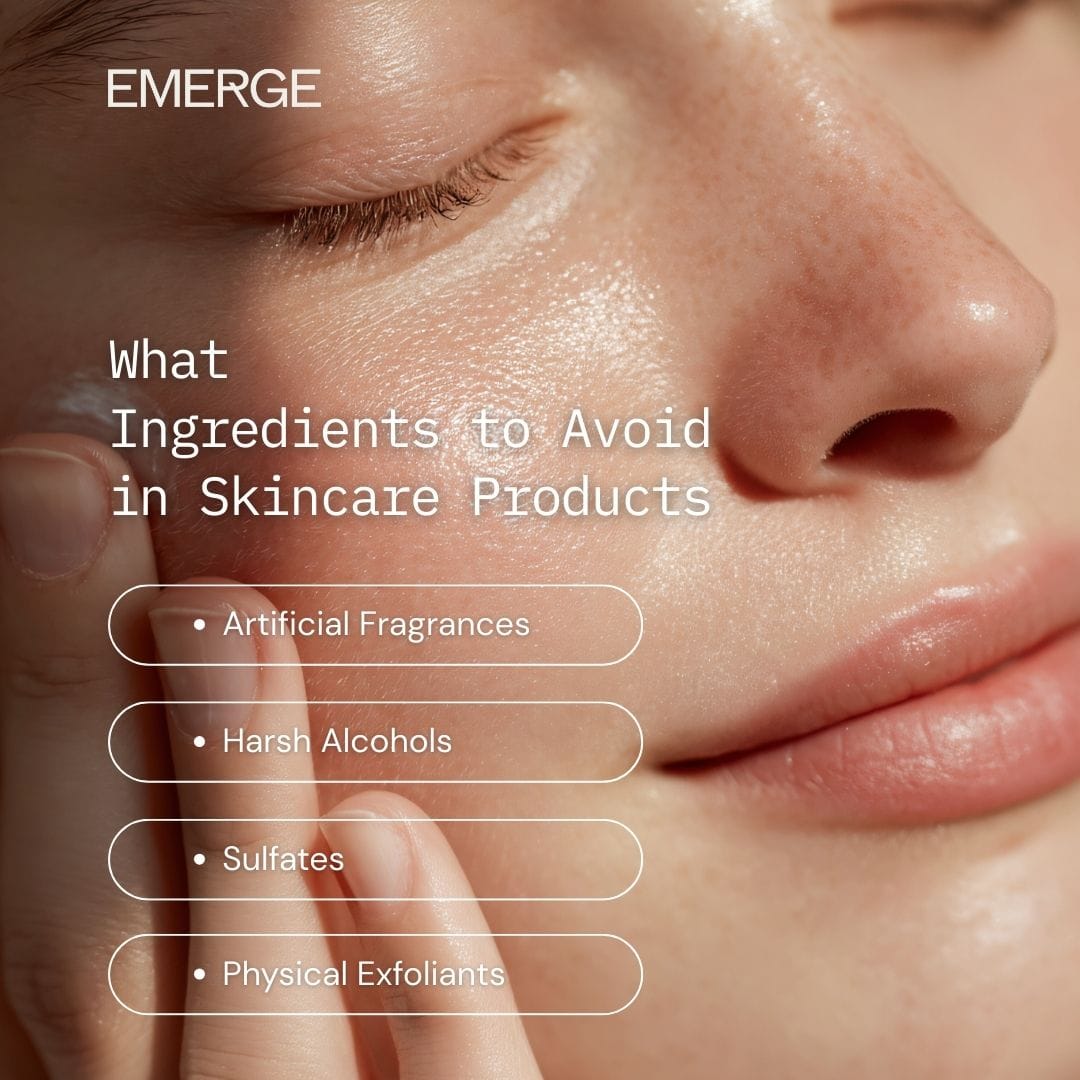
What Ingredients to Avoid in Skincare Products
Artificial Fragrances
Artificial fragrances are a no-go for skincare—even if they claim to be “natural.” (Looking at you, essential oils.) Natural doesn’t mean better; it just means unregulated! So when you’re shopping for products, avoid anything scented.
This can cause irritation and disrupt the skin barrier. And depending on the ingredients, it can even contain synthetics, like phthalates and VOCs, that can trigger redness, itchiness, or dermatitis.
Harsh Alcohols
Even if you’re not generally prone to dry skin, harsh products can strip your face of its natural, protective oils. And once your barrier becomes damaged? It can quickly lead to increased sensitivity, redness, and breakouts.
If you deal with pre-existing conditions, think eczema, rosacea, or psoriasis, harsh products can trigger and worsen reactions. Instead, look for products with fatty alcohols that support natural barrier function and support the absorption of active ingredients.
The Alastin Ultra Nourishing Moisturizer, for example, contains cetearyl alcohol, which is non-drying and non-irritating and acts as an emollient.
Sulfates
What do harsh alcohols and sulfates have in common? They can both strip the skin and disrupt your natural pH balance. (That’s because sulfates are in a lot of harsh products.)
Think of it like using sandpaper on a hardwood floor. Does it clean the dirt off? Sure! But does it also damage the surface and remove the natural finish with it? Absolutely. Plus, a brand can still claim to be sulfate-free while containing lesser-known sulfates. This is why you have to check ingredient lists!
Physical Exfoliants
When people pick up at-home exfoliants, many of them are harsh scrubs that use coffee grounds, sugar, salt, or finely crushed shells. These ingredients have historically been marketed as beneficial, but are actually creating small micro-tears in the skin.
Those microtears can slowly lead to increased sun sensitivity, skin barrier damage, irritation, and worsening acne. We actually talked about this over on our “skincare swaps” Instagram post! Instead, chemical exfoliants such as AHAs and BHAs are much better and more precise.
We would recommend something like Skinceuticals Glycolic Renewal Cleanser—a product designed to exfoliate without stripping the skin.
Don’t forget to read this post where we break down practical, realistic ways to reduce facial redness.
Skin quality is the foundation of resilient, long-term rejuvenation.
Choosing the right skincare products isn’t about buying the most expensive items or following popular trends. Instead, it’s about choosing strategically, understanding your anatomy, and formulating a long-term plan. Prevention is easier than correction—a good routine now can save you time, money, and stress later.
At Emerge, Dr. Kling is dedicated to providing accessible, physician-led aesthetic care. Through personalized consultations and technical expertise, Dr. Kling can lead each patient to long-term, natural-looking results that work for their skin. Schedule an appointment with Emerge today and get ready to look and feel your best!
For additional information, see what non-surgical treatments we offer when you’re ready for your next steps. Also, join the Emerge RX Club for prescription-strength products made easy.